

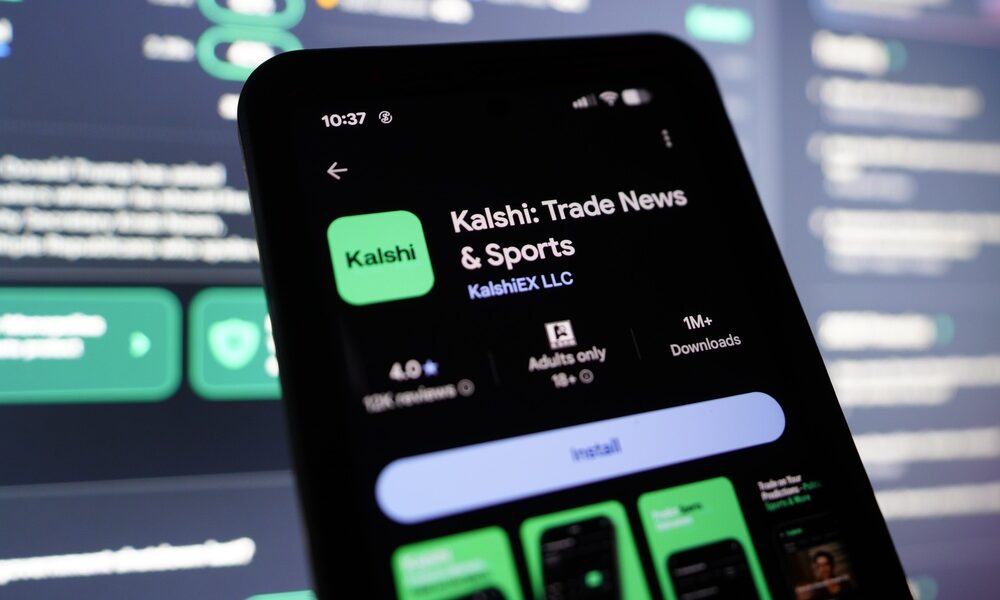

A federal appeals court ruled in favor of two California tribes Wednesday, blocking Kalshi from offering sports-event contracts on their tribal lands, a second legal defeat for the prediction market company in less than a month.
By a 3-0 vote, the U.S. District Court of Appeals for the Ninth Circuit reversed a lower court’s denial, finding that Kalshi’s sports-event contracts are gaming under the Indian Gaming Regulatory Act (IGRA).
The Blue Lake Rancheria tribe and Chicken Ranch Rancheria of Me-Wuk Indians sued Kalshi and Robinhood in 2025, arguing that sports prediction markets violated their exclusive sovereign rights to regulate gaming. The Picayune Rancheria of the Chukahansi Indians, who were part of the lawsuit, removed themselves from the proceedings last August.

A lower federal district court previously denied the tribes’ request for a preliminary injunction, siding with Kalshi’s argument that its products operate as federally regulated derivatives under the Commodity Exchange Act (CEA). That court also reasoned that the challenged transactions do not occur on Indian lands, the Unlawful Internet Gambling Enforcement Act (UIEGA) controls Kalshi’s contracts, and UIEGA doesn’t govern Kalshi’s contracts, because they are regulated by the CEA.
The lower court also rejected the tribes’ Lanham Act claim, because it saw Kalshi’s advertisement as a nonactionable opinion about legality. The Lanham Act is the main federal law that governs trademarks, service marks, and unfair competition.
On August 28, the Ninth Circuit also ruled that Kalshi was subject to oversight by the Nevada Gaming Control Board.
The two tribes operate casinos on their reservations under tribal-state gaming compacts with California, which grants them exclusive rights to offer gaming.
“Reversing the district court’s denial of a preliminary injunction in part, the panel held that the tribes were likely to succeed in their claims that Kalshi’s sports-event contracts on tribal lands violated IGRA and the tribes’ gaming ordinances,” Judge Margaret McKeown wrote in a 38-page opinion.
McKeown said the lower court erred in denying an injunction, because each Kalshi sports-event contract was “an act of placing a bet or wager,” which neither the U.S. Department of the Interior nor tribes’ gaming regulations authorized. She also rejected the argument that IGRA was supplanted by UIGEA, writing that the federal law doesn’t cover event contracts.
“IGRA thus confers upon the tribe a cause of action to enjoin Kalshi’s sports-event contracts on their lands,” McKeown wrote.
Scott Crowell, a tribal gaming attorney with Crowell Law Office Tribal Advocacy Group, called the court’s ruling a “very significant decision” in favor of tribes. “What Kalshi and others are doing is a violation of IGRA for taking wagers on Indian lands,” Crowell said Wednesday on the Indian Gaming Association’s New Normal webinar.
Daniel Wallach, a veteran gaming attorney, agreed, saying the decision provides a roadmap for other tribes throughout the U.S. and California to challenge Kalshi’s business model.
“This could open the floodgates for lawsuits against Kalshi,” Wallach told CDC Gaming. “The end game could be geofencing around tribal reservations.”
McKeown noted that in the court’s view, sports-event contracts do indeed constitute Class III gaming.
“In practice, what Kalshi labels ‘sports-event contracts’ nearly track the activities described in IGRA and its implementing regulations,” McKeown wrote. “The similarities between a sports-event contract, which even Kalshi calls ‘sports betting,’ and a traditional sports wager are overwhelming.”

The case was remanded back to the district court to evaluate remaining factors required for a preliminary injunction. As of late Wednesday, Kalshi was still considering whether to appeal the decision.
