

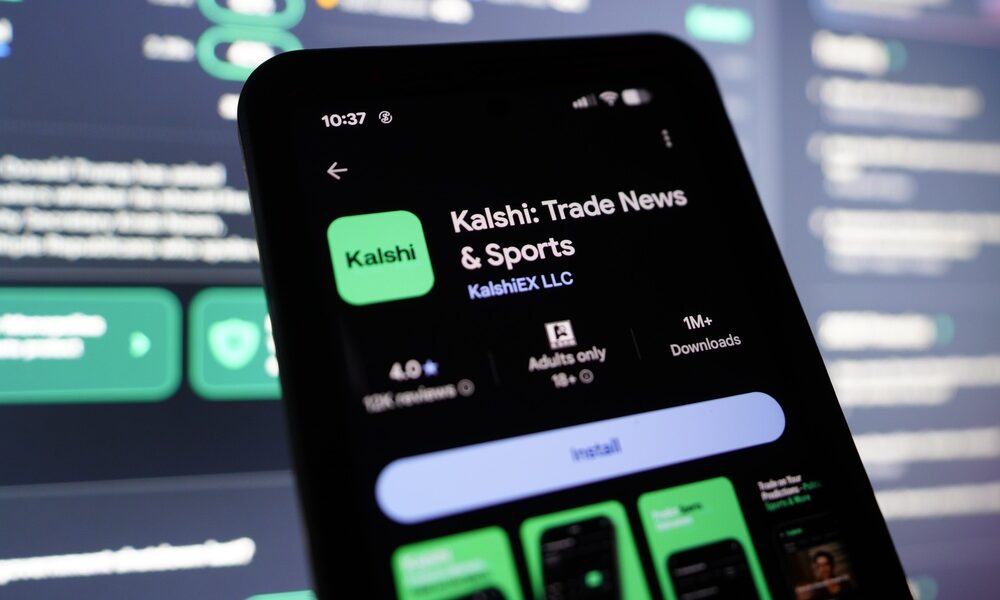

Kalshi has objected to claims that the sports event contracts the prediction market offers are equivalent to traditional sports betting as legal action by New York, Connecticut, and other states ramps up over the legality of their contracts.
The company published a detailed response to an article in The New York Times, saying the paper “ignored almost every answer that didn’t align with the narrative being pushed.”
Currently, 20 states are engaged in active litigation with Kalshi or other prediction markets. Forty-four state attorneys general signed a letter to the Commodity Futures Trading Commission (CFTC) last month arguing that prediction markets have evaded state regulations and failed to pay state taxes.
Kalshi took issue with the claim they don’t pay state taxes, noting that federally regulated companies are subject to state taxes.
“We have never said otherwise,” Kalshi wrote. “This is how almost all industries in America operate. There is nothing out of the ordinary about this structure.”
In their letter, Kalshi also took offense at the Times saying that their product was virtually indistinguishable from traditional sports betting and that Kalshi lacks safeguards required under state gambling laws.

“It’s flat out wrong to say Kalshi is ‘indistinguishable from traditional sports betting,’” the company wrote.
Kalshi admitted that like any “financial trading, there are risks.” But the company stressed they have all the safeguards from risk-management tools, including trading breaks, self-exclusion, and deposit limits.
“As a federally regulated exchange, we also place accountability limits on each market,” the letter states. “And we partner with the National Council on Problem Gambling … to limit irresponsible trading, which is a real risk in any type of financial market with retail participants.

“Most importantly, we have a national framework of regulation, not a state-by-state patchwork that enables self-excluded customers to cross state lines and open up another account.”
State gaming regulators argue that sports event contracts are the same as wagers and should be subject to licensing, taxation, minimum-age requirements, and consumer-protection regulations.
Kalshi maintains that the CFTC holds exclusive jurisdiction over contracts offered through federally designated markets.
Here are a few more issues impacting prediction markets.
Report: Federal authorities investigate prediction market trading
Federal authorities have expanded their scrutiny of prediction market trading, with investigations into military-event contracts and corporate-earnings wagers, according to an exclusive report in the Wall Street Journal. The report said federal prosecutors in Manhattan, Washington, and the CFTC have been involved in the investigations.
Federal authorities are preparing charges against a U.S. servicemember suspected of placing a Polymarket wager on military operations in Venezuela and Iran that earned him more than $1 million, people familiar with the matter told the newspaper.
Another case authorities are investigating an employee at KPMG, the global accounting and consulting firm. The Journal, citing people familiar with the investigation, say the employee allegedly bet on whether a specific public company would beat the consensus estimate for quarterly earnings. Authorities say such bets are illegal if the person was entrusted with material nonpublic information about a company’s financial performance as part of their job.
It remains unclear how many additional trades the U.S. Department of Justice and the CFTC are investigating or considering charging.
Sportradar expands Polymarket partnership
Sportradar and Polymarket have expanded their existing partnership, increasing the scope of sports data, streaming content, and integrity services available to the prediction market platform. The revised agreement covers more than 20 sports leagues and competitions worldwide and is expected to support approximately 300,000 games each year.

Under the expanded arrangement, Polymarket will receive additional official data and content from a wider range of competitions, including soccer, basketball and tennis. New leagues include Germany’s Bundesliga and the Chinese Basketball Association.
Montana judge denies Kalshi injunction
After twice agreeing to pause a case brought by Montana, U.S. District Judge Donald W. Molly denied a request for another stay and Kalshi’s preliminary injunction request.
“The parties did not provide a status update nor make any good cause showing why a third stay should be granted, stating only that the parties ‘have conferred and believe a further continuation of the stay is appropriate,” Molloy wrote in a four-page ruling.
Molloy ordered to respond to Kalshi’s compliant within 21 days. Kalshi filed suit on April 12 in federal court, arguing that Montana has no authority to regulate their operations under the state’s gaming regulations.
Malloy also ruled that Kalshi’s repeated stays undermined its claim of irreparable harm required in a preliminary injunction. He denied the motion without prejudice, allowing for Kalshi to potentially refile another request for a preliminary injunction.
Kalshi nearing Washington geolocation deadline
A deadline for Kalshi to implement stricter geo-location checks for users in Washington state has been set for September 2 to block trades on sports, elections, culture, politics, entertainment, technology, science, and public figures.
The company must fully deploy a mutli-source GeoComply geofencing solution or face daily fines of $120,000. Judges in Nevada and Michigan have also ordered Kalshi to implement geofencing to block event contracts in both states and face daily fines of $120,000.
Kalshi has already begun restricting access to event contracts in Washington. On August 21, Kalshi asked King County Superior Court Judge John F. McHale to reconsider his preliminary injunction. Alternatively, Kalshi is asking McHale to reconsider his denial of stay. A hearing is scheduled for September 2 without oral argument.
McHale’s final order found that Kalshi broke the Washington Gambling Act and the Consumer Protection Act by offering sports and other event contracts to Washington state residents.
Cantor launches event contract block trades
Cantor Fitzgerald has launched institutional trading in event contracts to increase institutional participation that has lagged the market’s growth, because investors lacked the ability to trade on a regulated exchange.
Cantor will act as introducing broker to Kalshi, arranging the execution of institutional-size block trades in event contracts for institutional clients and enabling them to negotiate block trades in event contracts for a single price. Susquehanna Predictions will provide pricing and liquidity. Cantor will facilitate block trades on Kalshi, with additional venues expected to follow.
Pascal Bandelier, co-CEO and global head of equities at Cantor, said that prediction markets are growing rapidly, but institutional participation has not kept pace, because investors have lacked the ability to transact at scale on a regulated exchange. “The liquidity is here,” Bandelier said.
