

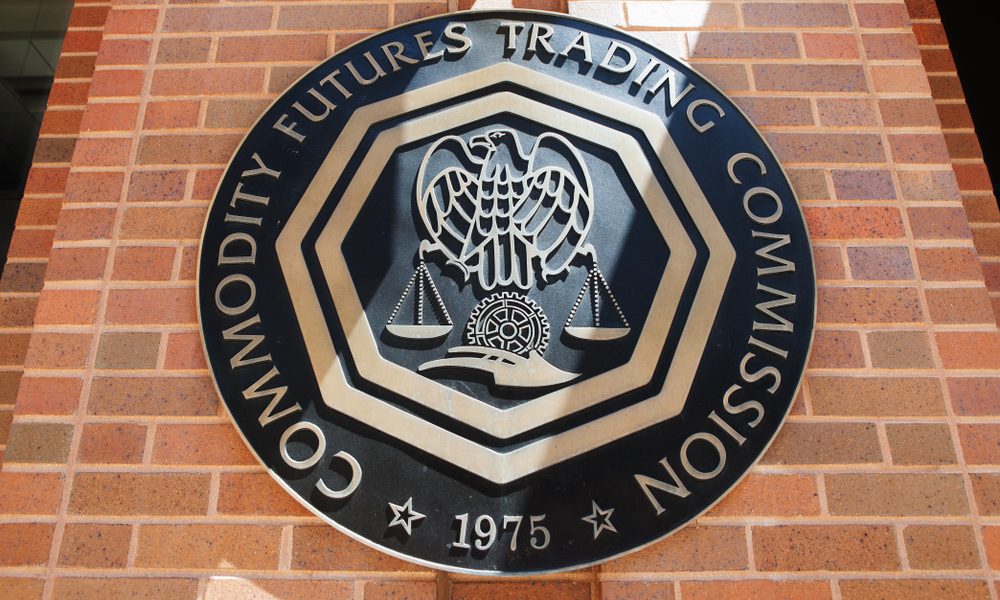

A veteran tribal-gaming attorney expressed his displeasure that the Commodity Futures Trading Commission (CFTC) would issue an emergency notice advising a prediction market company to defy a court order.
The CFTC exercised its emergency authority on August 11, when it ordered Kalshi to continue trading in New York after Kalshi itself notified the federal agency of a market emergency.
The order directs Kalshi to continue operating in line with the Community Exchange Act, the federal standards that regulate designated contract markets.
Kalshi notified the CFTC after New York Attorney General Letitia James sued the platform in state court on July 31, seeking a restraining order to prohibit event contracts and more than $36 billion in damages.
“What is going on with that?” asked Joe Webster, a partner with Hobbs Strauss. “I mean, can you imagine a tribal gaming operation doing something like that with the (National Indian Gaming Commission) running interference?”
Webster added that there have been real questions about the compliance with court orders, where a company has been ordered to basically stop taking bets on its prediction platform.
“The CFTC has put out these orders. What (they’re) suggesting is that even if a court decision instructs or directs a company to stop taking these particular contracts, they’re required to continue to do so anyway,” Webster said Wednesday during the Indian Gaming Association’s (IGA) New Normal webinar.
Webster noted that it’s the province of the courts to make these decisions and “the federal agency doesn’t get to usurp that judicial function.” He said it’s an issue in multiple states right now, where there are real questions about “compliance and the extent of that compliance.”
In Nevada, where a judge ordered Kalshi to stop offering sports, election, and entertainment event contracts by August 12, state regulators have asked a judge to impose a $120,000 per-day fine for non-compliance with the order.
In its filing, the Nevada Gaming Control Board (NGCB) said Kalshi had “profited enormously from its continued violations of Nevada law” and state investigators were able to purchase multiple event contracts in the banned categories using their mobile phones.
Kalshi’s attorneys claimed the NGCB agents “were able to place a trade because they had violated federal law by misrepresenting their residence to Kalshi and, in at least one instance, actively worked to circumvent the Kalshi restrictions that blocked the investigator from trading.”
It’s unclear when district court in Carson City will rule on the control board’s complaint.
Key CFTC legal actions
The CFTC has filed federal lawsuits against at least nine states, including Arizona, Connecticut, Illinois, Kentucky, Minnesota, New York, Rhode Island, and Wisconsin, to block state enforcement against federally regulated platforms like Kalshi or Robinhood.
Scott Crowell, an attorney with Crowell Law Office Tribal Advocacy Group, admitted that Arizona took the bold move of filing a criminal action against Kalshi, but as the litigation started to unravel, the CFTC turned around and sued the state and the two cases were consolidated in district court.
U.S. District Judge Michael Liburdi ordered Arizona to pause prosecution against Kalshi, saying in granting a preliminary injunction, “The court concludes that federal law preempts state gambling laws insofar as they seek to regulate derivatives exchange on markets regulated by the CFTC.”
Since the Nevada case has been briefed and heard by the Ninth Circuit, Crowell said the state’s position has been to “put a pause on everything until we see what the Ninth Circuit has to say.”
Nevada, Kalshi, Crypto.com, and Robinhood Derivatives are awaiting a ruling from the Ninth Circuit Court of Appeals in San Francisco that could uphold the NGCB’s effort to ban the companies from the state.
But the role of the CFTC and what they’ve been doing are interesting undercurrents to all of this, with CFTC Chairman Michael Selig directing the “entities that it’s supposed to regulate to defy court orders and be in blatant violation of them.”

Crowell also highlighted the CFTC’s role in the New York lawsuit where Kalshi lost its bid for a preliminary injunction, saying the agency’s emergency order is basically saying, “Don’t abide by any state law orders.
“But when you already have a federal court saying, ‘Kalshi, you do not have permission to operate outside the parameters of New York law,’ … that literally is a federal agency telling a regulated agency to defy a federal court order,” Crowell said. “In my 50 years of being a lawyer, I’ve never seen such blatant contemptuous disregard by a federal agency.”
Crowell and Webster were joined for the hour-long conversation by Victor Rocha, conference chairman of the IGA, and IGA executive director Jason Giles.
Suitability to offer sports betting
At some point, suitability will become an issue for DraftKings, Kalshi, and Novig should they need to pivot to state-regulated sports betting if the U.S. Supreme Court eventually rules sports-event contracts violate state and tribal sovereignty.
Giles noted that their conduct raises significant suitability questions, to the extent that a company, Kalshi, has disobeyed a court order. Both FanDuel and DraftKings have licensed sports betting operations, but are engaging in prediction markets.
Webster said it was great to see Oregon sign onto a state amicus brief, but the state lottery has a monopoly on mobile wagering, where they have a partnership with DraftKings.

“So they signed onto a brief that says what their partner is doing is literally illegal and then they sign these compacts with the Oregon tribes that impose suitability standards that DraftKings would never qualify for,” Webster said. “You know the irony of that situation shouldn’t be lost on anyone.”
Gaming attorneys believe that the companies engaging in prediction markets now, thinking they can just get a license in a regulated market once the dust settles, are taking a grave risk.
