


Kalshi’s decision to seek a rehearing of a federal appeals court ruling is likely to fail, according to a veteran gaming attorney.
Earlier this month, the U.S. Circuit Court of Appeals in San Francisco ruled that two federally recognized tribes deserved a preliminary injunction, because they would likely show that Kalshi’s contracts violated the Indian Gaming Regulatory Act (IGRA) and the tribes’ own gaming regulations.
Kalshi has filed for an en banc hearing on the ruling that benefitted the Blue Lake Rancheria and Chicken Ranch Rancheria in their legal effort to block prediction markets from offering sports-event contracts.
The ruling came on the heels of a Ninth Circuit ruling in favor of the Nevada Gaming Control Board (NGCB), which successfully banned Kalshi and other prediction markets from offering the same contracts in the state.
“They’ve already lost 6 out of 6 judges, but I think the goal there for Kalshi is to disincentivize or deter some of the states out west, such as California, from pursuing any kind of civil or criminal enforcement action,” said gaming attorney Daniel Wallach.
Wallach explained that if the Ninth Circuit ruling remains something less than final, perhaps other states won’t take aggressive action like Nevada, Washington, Maryland, and Massachusetts have done.

“I think that’s their motivation,” Wallach said. “At the end of the day, the prediction markets mostly care about California and Texas. How does that change the landscape a little out there with the Ninth Circuit?”
Wallach admitted that he didn’t believe the Ninth Circuit decision would impel any of the prediction market companies to stop offering their platforms within California, comparing it to a state attorney general’s opinion that didn’t really change the landscape for daily fantasy sports (DFS) in the state.
California Attorney General Rob Bontan released a formal legal opinion on July 3, 2024, declaring that DFS contests, including both pick ‘em and draft-style games, constitute illegal sports betting under state law.
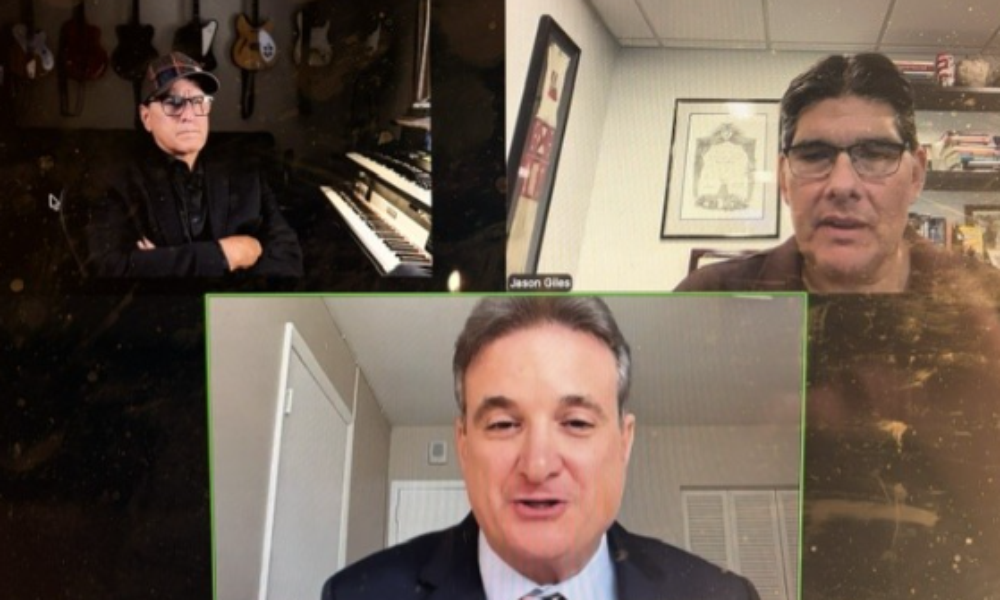
“It requires more than an opinion. It requires enforcement actions,” Wallach said Wednesday during the Indian Gaming Association’s weekly New Normal webinar.
“Unless and until … the California attorney general begins to take action, nothing is going to change in California, which makes it incumbent upon the tribes to step up and sort of fill the enforcement gap that is left by the attorney general’s unwillingness to take direct action against Kalshi,” he said.
Wallach doesn’t expect Bonta to go after Kalshi, Robinhood, or Crypto.com, because of his recent settlement involving the Paramount and Warner Brothers merger. He noted that Bonta’s outside law firm in that case was Milbank, the same law firm representing Kalshi in its lawsuits.
“He didn’t lift a finger with respect to DFS 2.0, he’s not touching prediction markets, at least not until the U.S. Supreme Court has weighed in, and by that time, these companies will probably retreat anyway,” Wallach said.
Wallach urged tribes to play a more proactive role in California, not just in filing amicus briefs, but also legal cases and maybe persuading some city or county attorneys to do what the state attorney general appears unwilling to do.
One avenue for tribes is the use of California’s Unfair Competition Law, which prohibits any unlawful, unfair, or fraudulent business acts or practices. Wallach said the law allows city and county attorneys in municipalities with at least 750,000 residents to bring enforcement actions on behalf of the people of California, a city, or a county. Among the cities and counties with more than 750,000 residents is Los Angeles, San Francisco, and San Diego.
He cited the Los Angeles city attorney’s lawsuit against Stake.us as an example of how tribes could seek to use city and county attorneys in their ongoing legal fight with prediction market platforms. The lawsuit alleges that Stake.us is unlicensed and is operating in violation of state law.
“If you’re going to look for any immediate changes to take place in California, it’s got to be through tribal and IGRA actions, and that’s only going to get you injunctive relief, not damages, restitution, discouragement,” Wallach said.
Wallach stressed that the only way to get there is if the attorney general is unwilling to act is through the city and county district attorney offices, “which makes California a very fertile ground for enforcement activity.

“I know in New York, it’s only the attorney general who is empowered to bring civil or criminal actions to eradicate or remedy illegal gambling,” Wallach said. “In California, a number of city and county attorneys and district attorneys have that statutory authority and that might be a way to get some immediate benefit from the Ninth Circuit’s decision.”
Otherwise, Wallach said, tribes will be waiting until after the Supreme Court rules more than a year from now before there is any change in the status quo.
