10 Women Rising in Gaming
September 2026
Melissa Aarskaug
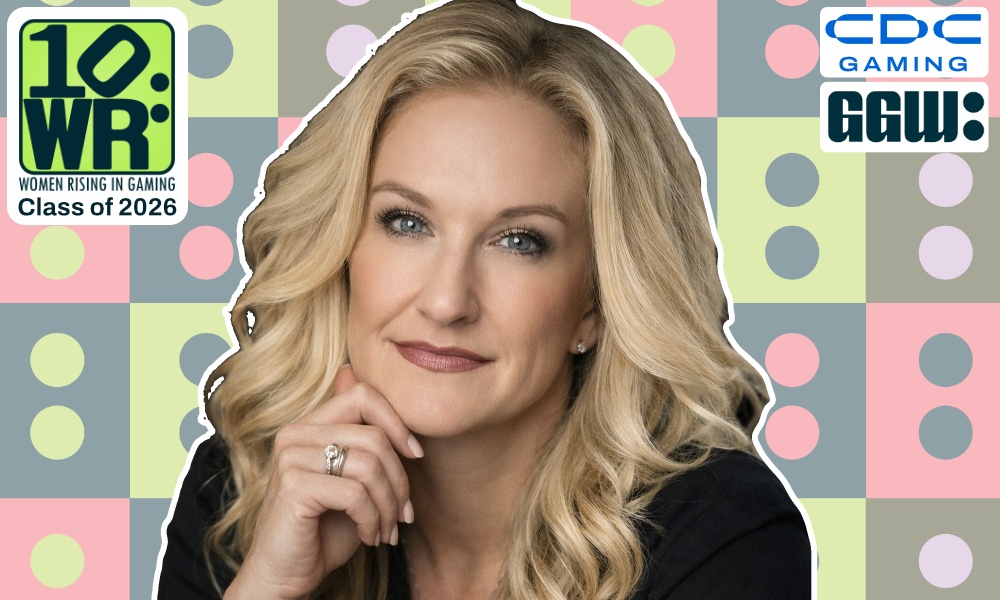
Company: Melissa Aarskaug Co.
Years of experience in the gaming industry: 15
Hometown: Las Vegas
What was your first job in the gaming industry? Did you have previous experience in other industries? What drew you to gaming?
My path into gaming was definitely not a straight line. In hindsight, that has probably been one of the greatest advantages of my career.
I started professionally in banking, and my educational background is in civil and environmental engineering. I worked as a project engineer, including on a major bridge project, before I ever set foot in the gaming industry.
On a bridge project, you learn that hundreds of independent systems, loads, materials, schedules, and people have to hold together or the whole thing fails. The first time I walked a casino floor, I saw the same thing. Everyone else saw slot machines. I saw systems.
My first gaming role was on the testing and compliance side, at the intersection of technology and regulation. At one point in my career, my work touched roughly 95% of the global casino gaming market. But I didn’t come in with years of gaming experience or a perfectly matched resume. I took a significant pay cut to make the move.
On paper, it looked like a step backward. It became one of the most consequential decisions I ever made.
What drew me to gaming was the complexity. A casino is an entertainment business, a hospitality business, a technology environment, a financial ecosystem, a highly regulated operation, a major employer, and often an important part of the community around it. Decisions rarely live in one place, and I have always been interested in how one part of a system affects another.
Engineering taught me how to break complicated problems apart and understand how the pieces connect. Banking taught me how to think about money, risk, and value. Gaming gave me a place where those perspectives could come together.
I learned quickly that I didn’t have to arrive knowing everything. I came in with curiosity, a willingness to work, and enough confidence to believe I could learn the rest.
So I built the rest.
I learned the regulations. I learned the technology. I learned from customers and operators. Over time, my career expanded across cybersecurity, business development, growth, strategy, and executive leadership. The titles changed, but the thread stayed the same: understand the problem, connect the right people and information, and move something forward.
What initially drew me to gaming was the complexity and the opportunity to learn.
What kept me here was the people.
Gaming is global, but it remains an incredibly relationship-driven industry. Colleagues became friends. Customers became long-term partners. People I met in one chapter of my career continued to show up in completely different chapters.
I never planned to build a career in gaming. But taking that financial step backward opened the door to an industry that has allowed me to keep learning, keep connecting people and ideas, and keep becoming something I hadn’t been before.
What do you like about working in gaming? What is it about the industry that keeps you engaged? What is unique about it?
One of the things I appreciate most about gaming is that it never gives you the luxury of becoming too comfortable.
Technology changes. Regulation evolves. Customer expectations shift. New risks emerge. Economic conditions change. And now artificial intelligence is reshaping conversations across almost every part of the business.
Even after 15 years, there is always another layer to understand.
That matters to me because curiosity is a big part of how I operate. I am especially energized by problems where the first explanation is rarely the whole explanation.
Gaming provides those problems constantly.
A casino is simultaneously a technology organization, hospitality company, entertainment business, financial environment, highly regulated operation, major employer, and often an important part of its surrounding community. A decision that begins as a technology issue can quickly become an operational issue, a financial issue, a regulatory issue, a customer issue, or a leadership issue.
That complexity has allowed me to spend much of my career moving between worlds that don’t always naturally speak the same language.
I have sat in rooms where a security team and an executive team were describing the exact same problem and could not hear each other. One side was talking about vulnerabilities. The other was talking about revenue. My job was to make them realize they were having one conversation, not two.
That experience taught me something I believe deeply: organizations rarely struggle from a lack of expertise. More often, the expertise exists, but the people holding different pieces of the answer don’t understand one another well enough to solve the problem together.
Gaming rewards people who can master their own discipline while staying curious about the larger system around it.
But the most unique part of this industry is still the community.
Gaming is enormous in scale and surprisingly small in relationships. Reputation matters. People remember whether you followed through. They remember whether you helped when there was nothing immediately in it for you. They remember how you behaved when something went wrong.
Over the years, I have had the privilege of learning from operators, regulators, technologists, security professionals, entrepreneurs, tribal leaders, executives, and customers who see this business through different lenses. Those relationships have shaped how I think as much as any title I have held.
The combination of complexity, constant change, strong relationships, and the chance to keep connecting different perspectives is what keeps me engaged.
Looking ahead, what impact do you hope to make in the industry, and what would you like your leadership legacy to be?
The impact I want to continue making is helping people, ideas, and expertise connect in ways that make the entire industry stronger.
We are entering a period of enormous technological change. Artificial intelligence will change how we work. Cybersecurity will continue becoming more complex. Organizations will have access to more technology, automation, and information than at any other point in history.
But I don’t believe technology alone will be the differentiator.
I believe one of the greatest competitive advantages will be an organization’s ability to connect the intelligence it possesses.
Can technical experts communicate with business leaders? Can executives explain where the organization is going and why? Can operators communicate their real problems to technology providers? Can information move across departments rather than becoming trapped inside them? Can people with completely different expertise sit at the same table and understand what the others are actually trying to solve?
A large part of my career has been spent doing exactly that.
I have translated cybersecurity into business risk. I have translated technical issues for executives and customer challenges for technical teams. I have learned that sometimes the most valuable contribution is seeing a connection, or a problem, that is difficult to recognize when you are standing too close to it.
That thinking became the foundation for frameworks I now teach, including the Human Firewall, the idea that people, not technology, are an organization’s strongest security layer.
It is also why I built Executive Connect. What started as a podcast has grown into more than 240 episodes, virtual and live events, and thousands of hours of conversations with leaders across gaming and beyond. It has given me the opportunity to bring together perspectives that might not otherwise cross paths and create space for leaders to teach one another.
I also teach cybersecurity and AI at the university level, because I believe the next generation of leaders should not have to learn these intersections the hard way.
That work is expanding into the next chapter of my career: working directly with organizations as an advisor, helping them navigate the intersection of growth, technology, cybersecurity, and leadership at exactly the moment those things are becoming inseparable.
My definition of leadership legacy has changed over the years. I think much less about titles now and much more about one question: What exists because I was there?
Did I build something meaningful? Did I make an organization or an industry stronger? Did I connect people who otherwise might never have understood one another? Did I help someone see an opportunity they couldn’t see before? Did someone become more confident, capable, or willing to take a risk because I believed in them?
Other people did that for me. They opened doors and saw potential in me before I could always see it myself. I have tried to do the same, particularly for women in gaming, while also supporting younger leaders, peers, career changers, and talented people whose potential may not be immediately obvious on a resume.
If my legacy is that I built meaningful things that kept creating value after I stepped away, helped gaming navigate change, connected people and ideas that needed each other, and helped talented people become bigger versions of themselves, I would be very proud of that.
What personal and professional qualities or traits do you believe are essential for success in the gaming industry, and which of those qualities have helped you thrive in your own career?
Adaptability is probably at the top of my list.
Gaming changes constantly. Technology changes. Regulation changes. Customers change. Threats change. Economic conditions change. Leadership changes.
If your success depends on everything around you remaining predictable, this can be a difficult industry. The people who thrive are the ones who keep learning without losing their grounding every time the environment shifts.
Some of my best training in adaptability did not come from a boardroom. It came from raising a family. Nothing teaches you to negotiate, translate, and adjust in real time like the people who live in your house.
When I entered gaming, very little of my background matched the role on paper. I didn’t arrive understanding the industry, and I certainly didn’t have decades of gaming experience behind me.
What I had was curiosity, a willingness to work, and enough confidence to believe I could learn the rest.
So I built the rest.
I asked questions. I watched people who were exceptional at what they did. I learned the regulations, technology, customers, and business. I made mistakes. I took on responsibilities I had never handled before and figured them out.
That willingness to continuously become something I hadn’t been before has probably been one of the biggest contributors to my career.
The financial risk I took to enter gaming taught me another important lesson. Over the course of my career, I ultimately grew my compensation to more than 10 times what I was making when I entered the industry.
I’m proud of that, but not simply because of the number.
I’m proud of what happened between those two points.
I kept investing in myself. I developed new skills instead of simply protecting the expertise I had. I moved between technical, commercial, operational, strategic, and leadership conversations. I built relationships. I took calculated risks.
It taught me the power of compounding. Skills compound. Relationships compound. Reputation compounds. Money compounds. Confidence compounds. Small, good decisions repeated over a long enough period can completely change the trajectory of a career.
The other quality that has been essential for me is the ability to translate.
I don’t believe leadership means being the deepest technical expert in every room. You need to understand enough to ask good questions, recognize what matters, connect the right people, and communicate the issue in a way the next audience can understand.
I can sit with a technical team and understand the problem, then walk into an executive conversation and explain why that problem matters to the business. I can listen to a customer describe a frustration and help a technical organization understand what is underneath it. I can look at cybersecurity not simply as a technology problem, but as a financial, operational, reputational, and leadership issue.
Curiosity, adaptability, resilience, integrity, calculated risk-taking, relationship building, and communication have all helped me.
But increasingly, I believe adaptability and translation will be among the most valuable skills leaders can develop.
The world doesn’t have a shortage of expertise. The challenge is connecting it.
What advice do you have for women seeking careers in gaming?
Don’t confuse being new with being unqualified.
When I entered gaming, I had maybe two real qualifications for the role. An engineering degree and a background in banking. That was it. Neither said gaming anywhere on it.
I built the rest.
Your qualifications tell people what you have done. They don’t necessarily tell you what you are capable of becoming.
Women can sometimes look at an opportunity and immediately catalogue everything they haven’t done yet. My career taught me to ask different questions: Can I learn it? Can I solve the problem? Can I add value?
If the answer is yes, don’t wait until you know everything before you raise your hand.
I would also tell women to build relationships with people who challenge and expand them. My mentors have come in every shape and size. Some were older. Some were younger. Some worked in gaming. Others came from completely different industries.
The best mentors weren’t always the most senior people in the room. They were people who knew something I needed to learn, saw something I couldn’t yet see, challenged my thinking, or genuinely wanted to see me succeed.
But there is another lesson that took me longer to learn: develop discernment about whose advice you accept.
Not every opinion deserves equal weight simply because someone is willing to give it. Some of the worst advice I received sounded reasonable in the moment. Stay in your lane. Don’t ask for that yet. Wait your turn. Looking back, that advice had less to do with my readiness and more to do with someone else’s comfort.
Look at people’s actions, not just their words. Pay attention to whether their advice expands your thinking or consistently asks you to become smaller.
Some advice will challenge you because growth is uncomfortable. Other advice will quietly ask you to shrink because your growth makes someone else uncomfortable.
Learn the difference.