


At least a dozen tribal leaders held a recent meeting with Michael Selig, chairman and the sole commissioner on the Commodity Futures Trading Commission (CFTC), the agency that considers sports-event contracts as trading rather than gambling.
But sports event contracts offered by prediction markets are seen as a threat to tribal sovereignty, the Indian Gaming Regulatory Act, and tribal-state compacts, which grant tribes exclusivity over gaming.
On their agenda, tribal leaders wanted to discuss recent CFTC rulemaking on prediction markets, as well as their concerns around sports, political, and any other type of event contracts and prediction market advertising nationally and on tribal land.

During the closed-door meeting on Monday at CFTC headquarters in Washington, Selig and his staff declined to discuss their proposed prediction market rules with tribal leaders.
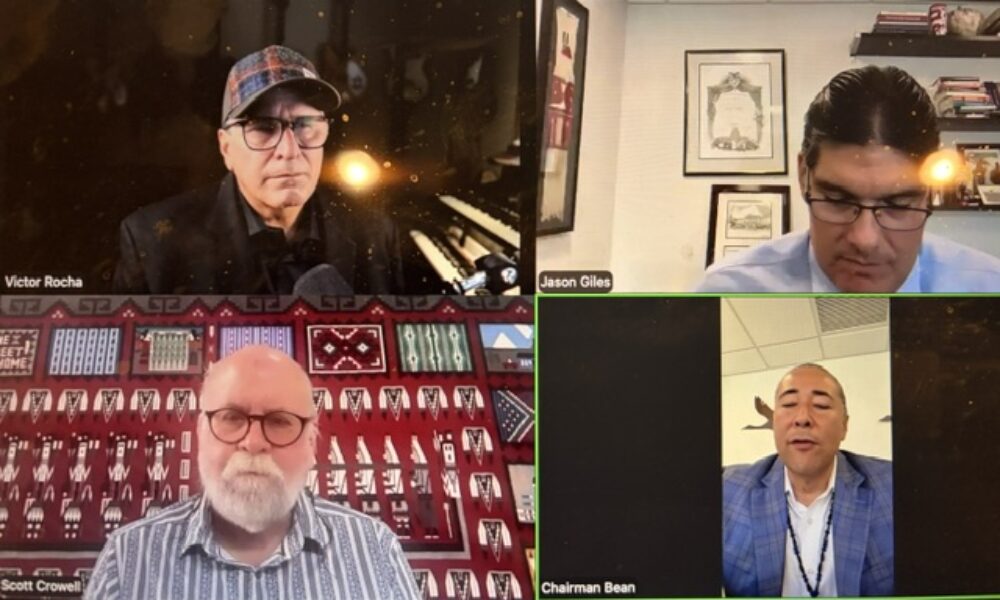
“All they would say was, ‘We can’t talk about the rule right now,’” Jason Giles, executive director of the Indiana Gaming Association (IGA), said Wednesday during the IGA’s New Normal webinar. “I’m at a loss about what law or anything is preventing [them from discussing] their ruling that they’ve taken comment on, that’s already been filed and the comment period has ended. I don’t know what their strategy is there.
In June, the CFTC published a notice of proposed rulemaking seeking public comment on amendments to agency Regulation 40.11 and the addition of Appendix F to part 40 due to the growth of contracts for trading by CFTC-registered entities, including sports event contracts.
Giles asked Scott Crowell, with Crowell Law Office Tribal Advocacy Group, what the recent losses in federal court in California and other states meant to the agency’s credibility.
“What credibility?” Crowell responded. “It’s had no credibility since (Selig) was appointed. He lied right out of the box, telling Congress he would let the courts resolve the sports betting issue, then immediately directed his legal staff to file an amicus brief in the Ninth Circuit litigation and a spate of lawsuits against states looking to enforce their laws.”
Selig has asserted that the CFTC has exclusive authority to regulate event contracts on federally licensed prediction markets.
“This outrageous circumstance has the CFTC, or Selig, because there is no commission, literally directing the entities that he’s supposed to regulate to openly defy federal and state court orders,” Crowell said.
Crowell noted that when the Trump administration loses, they double down on an issue. He speculated that the reason Selig and agency staff refused to speak about the rules is because that’s their plan B.
“The loss of the CLARITY Act and suffering losses in court, they’re going to say, oh well, there are new rules, so all of that is irrelevant precedent,” Crowell said. “We have to relitigate all of this all over again under the new rules as they’re written. I don’t think they can get away with it.”
IGA Chairman David Bean thanked Senators Lisa Murkowski, R-Alaska and chair of the Senate Indian Affairs Committee, and Brian Schatz, D-Hawaii and vice chairman, for sending a letter to get that meeting.
“But the message was resoundingly clear,” Bean said. “This is not a consultation and you should pause your rulemaking process, until you truly get a healthy understanding of tribes, tribal sovereignty and IGRA.”
Selig told tribal leaders that he was in learning mode about prediction market regulations. Bean said they pointed out that if he was still in learning mode, he really shouldn’t be moving forward as a one-man operation.

The CFTC is a five-person commission. Bean added that tribal leaders made it very clear to Selig that the agency’s proposed rules do not include comments or feedback from Indian Country.
Bean expressed frustration that the conversation kept circling back to the fact that Selig needed to honor his word to the Senate Agriculture Committee during his confirmation hearing in November.
“You said you would interact with all stakeholders,” Bean told Selig. “Tribes are stakeholders in this game and you have yet to consult with tribal governments.”
