


Prediction markets have moved into the mainstream, bolstered by a large consumer appetite for sports-event contracts and a friendly regulatory scheme with the Trump administration.
Kalshi and other companies argue that their sports-event contracts, which they claim meet the legal definition of a swap, are innovative, a position disputed by tribal-gaming lobbyists, lawyers, and state regulators.
Jason Giles, executive director of the Indian Gaming Association (IGA), questioned what several tribes that have signed deals with Kalshi are getting out those agreements.

“They all get the Kalshi talking points: ‘This is innovation and we can’t be left behind.’ I don’t know what the innovation is.”
Giles expressed his frustration that no one ever pushes back on the innovation argument.
In Nevada, Mike Dreitzer, chairman of the Nevada Gaming Control Board (NGCB), said he has been focused on innovation, true innovation. In fact, Dreitzer said, regulators want the “latest and greatest technology and innovation” to come to Nevada.
“Our former Senator Dean Heller allegedly wrote a letter,” Dreitzer said. “I’m not sure he wrote it, much less read it, but he basically said that instead of … litigating, we should be innovating. I bristle at that.”
Dreitzer said they want good safe innovation in Nevada. But if companies want to come to the state, first they must come and get a license like everybody else.
“Because that’s the way this works. We’re fair and we ensure that the protections are in place,” he said.
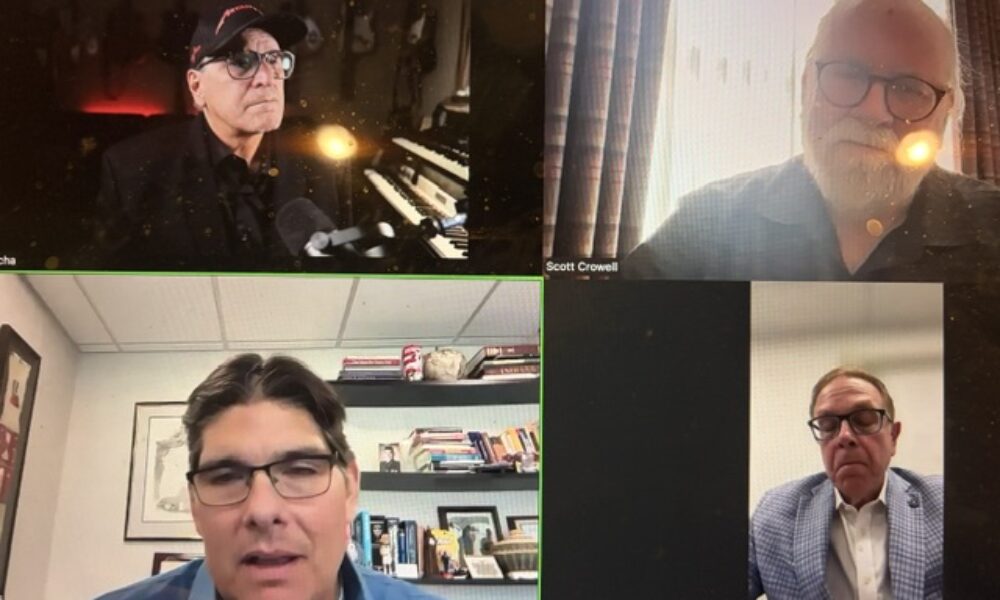
Speaking on the IGA’s weekly New Normal webinar on Wednesday, Dreitzer and Giles were joined by IGA Conference Chair Victor Rocha and Scott Crowell, Crowell Law Office, Tribal Advocacy Group.
“What’s innovative about what they do?” Dreitzer asked. “Jason, that’s a really good question and I’ve looked deeply into this. What I said at G2E and will say again here is crime and deception are not innovation.”
Most prediction markets allow trades starting at the age of 18, while most states with legal retail and online sports betting have a 21-year-old minimum for wagering. Dreitzer said 18-, 19- and 20-year-olds being allowed to wager billions of dollars is not innovation.
“Doing it in states in which it’s otherwise a penalty or should I say a violation of the penal code, that’s not innovation,” Dreitzer said. “So I don’t want people to confuse innovation with committing crime and having an unlicensed sportsbook. My answer to you, Jason, is I don’t see the innovation.”
Dreitzer added that states have the right to decide what they want. Prediction markets shouldn’t be able to dictate to Utah that they must do this or tell Nevada they have to do this without getting a license.
“We’ve said that any participation in this anywhere makes you ineligible to participate in Nevada’s gaming industry,” Dreitzer said. “So this idea that they’re innovative and we’re just protecting the industry against innovation, is complete nonsense.”

What they do, according to Dreitzer, is create illegal sports books, which is a crime, not innovation.
Kalshi’s controversial tribal partnerships
Giles said he hopped the tribes that signed up with Kalshi and signed a waiver of tribal-sovereign immunity know that they’re opening themselves up for future lawsuits, because this is all illegal activity.
Tunica-Biloxi Tribe in Louisiana and the Alabama-Quassarte Tribal Town in Oklahoma have partnered with Kalshi to launch or plan tribally branded prediction market apps powered by Kalshi’s infrastructure.
Three California tribes, Greenville Rancheria, Kletsel Dehe Wintun Nation, and Alturas Indian Reservation, have also signed agreements with Kalshi. These tribes argue that prediction markets open new digital revenue, particularly for communities lacking casinos.
The deal between the Alabama-Quassarte and Kalshi has generated conflicting messages within the tribe, with Chief Samuel Marshall Jr. saying that the tribe hasn’t partnered with Kalshi or another prediction market operator, contradicting an October 7 announcement that named the tribe among four new partners.
“One of the questions I have, when I see these announcements that these particular tribes have entered into these agreements, I’m curious as to what the tribal-gaming agencies within those tribes have done,” Crowell said. “Where’s the suitability determination?”
Only the Alturas Indian Reservation in California operates a casino, but Crowell said that even for those that don’t operate casinos, it still comes down to the Indian Gaming Regulatory Act (IGRA).
“We have some cases on both sides of the issue of whether the Community Exchange Act preempts state gaming regulations,” Crowell said. “We don’t have any court decisions that say the CEA supersedes or preempts the Indian Gaming Regulatory Act.”
Crowell said one case was overturned by the U.S. Court of Appeals for the Ninth District, so now every court that has ruled on the IGRA part of the issue has said no, the Indian Gaming Regulatory Act governs activity that occurs on Indian lands.
“And only those activities that are expressly authorized by the tribe are allowed,” he said.
Crowell said several tribes, such as the Mohegan Tribe, entered into agreements with DraftKings and FanDuel before they ever entered prediction markets.
“They had these agreements that maybe those companies were suitable at the time they entered those original agreements. But you’ve got to keep your license in good standing,” Crowell said.
Crowell was curious if any of those tribes have revisited the suitability of those companies now that they’ve been actively engaged in prediction market gaming, especially in those jurisdictions where the courts have ruled.
