

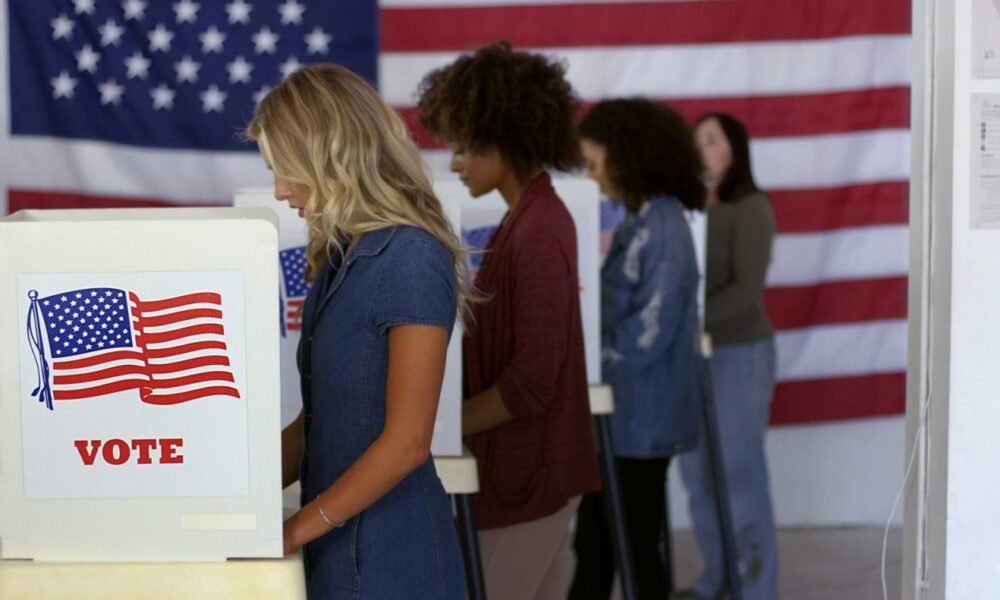

With the midterm elections now in the rear-view mirror, there are still several notable outcomes, which could still impact gaming companies, according to Jordan Bender, an analyst with Citizens.
In what Bender described as the “most shocking outcome of the night,” Republican Dan Patrick, the current lieutenant governor of Texas, lost his re-election bid. Democratic state Representative Vicki Goodwin won the race for lieutenant governor, becoming the first woman elected to the office.
Democrat Gina Hinojosa also defeated Republican Governor Gregg Abbott. Goodwin has supported a public vote on casinos and sports betting, while Hinojosa hasn’t commented on a potential vote on gaming and voted against a 2032 sports betting amendment.
To legalize gaming in Texas, legislation requires a two-thirds approval in both legislative chambers and passage of a ballot initiative by voters.
“The state has several influential figures involved directly or indirectly in legislative efforts,” Bender wrote. Those figures include Tilman Fertitta, owner of Fertitta Entertainment, whose company is in the middle of a $17.6 billion acquisition of Caesars entertainment, and Miriam Adelson and Patrick Dumont, who own the Dallas Mavericks and Las Vegas Sands.
“If Patrick had won, we would have viewed legislation of any gaming vertical as unlikely over the next four years, which was our expected outcome heading into the election,” Bender wrote. “State politics will play out over the coming years, but on the surface, Goodwin has supported the broader expansion of commercial casinos and online sports betting through voter referendums.”
In Nebraska, voters did not pass Measures 440 and 441, which would have legalized online sports betting in the state. Retail sports betting is legal in the state.
Meanwhile, voters rejected a measure authorizing a casino license in Allen, DeKalb, and Steuben counties allowing for a $500 million casino development.
Bender noted that Democrat Amy Acton’s victory in the governor’s race in Ohio may ease the road to legalizing igaming as a source of revenue for the state, which Citizens estimates could generate $2.9 billion in gaming revenue at maturity.
“iGaming legalization would represent a major milestone for the industry, although we see an uphill battle for the Democratic governor, with the Ohio House and Senate holding Republican supermajorities,” Bender wrote.
As for the effort to legalize land-based casinos in Georgia, newly elected Democratic Governor Keisha Lance Bottoms commented last month that she supports adding casinos to the state to help fund education. Any effort to legalize casinos would have to be done though a ballot referendum.
Georgia is one of the last states whose only form of gambling is the lottery and the state has made several attempts through various bills to legalize brick-and-mortar casinos and online sports betting. Bottoms hasn’t taken a position on online sports betting.
Earlier this year, four members of the Georgia Senate introduced SR 131, which would amend the state constitution, with voter approval, to create a gaming regulatory body that would be able to issue eight gambling licenses. The resolution would have also allowed those licensees to offer sports betting, but the proposal was killed and failed to advance out of the Senate Regulated Industries and Utilities Committee.
As of Wednesday morning, two referendums in Virginia, backed by Churchill Downs and which would allow the company to open two new historical horse racing locations, were too close to call, according to Bender. The referendums would allow for one location in the town of Pulaski and one in Amherst County. Amherst County was too close to call, while Pulaski is trailing in the needed votes for approval.
“As a reminder, the company has the ability to operate 5,000 machines in the state, with its current footprint just short of that allowed amount,” Bender wrote. “If passed, we would expect the company to relocate units from locations that have been impacted by new casino supply and competition.”
Bender also expected Churchill Downs to add units to reach the 5,000 allocation in those less-competitive markets with better access across the border in North Carolina, such as Winston-Salem, 90 miles from Pulaski.
On the national level, with Democrats taking control of both the House and Senate, prediction markets could become an even greater political topic moving forward. Bender noted that Democrats could advance legislation to ban sports- and political-event contracts.
“Any bill would need to be signed by the president, which we view as unlikely,” Bender wrote. “We also believe Congress lacks the ability to override a presidential veto with a two-thirds majority.”
Overall, Bender expected the U.S. Supreme Court to decide the issue, “with recent discussions suggesting a potential decision sometime between this summer and 2028.”
