



According to the American Gaming Association, this is the 28th year Responsible Gaming Education Month has been held.
With more people gambling in the United States, RGEM has become increasingly important.
“Last year, almost 60% of Americans gambled one way or another,” AGA Vice President of Research David Forman tells CDC Gaming. “And as new consumers get access to legal gaming and they see how much fun it is, it’s really important that we pair the industry’s growth with responsible gaming practices.”
Forman says the gaming industry has bought into responsible gaming practices, committing around a half billion dollars to RG programs. That has translated into more gamblers being away of RG.
“Four of five gamblers say that the industry is committed to responsible gaming and that the industry’s RG programs are effective,” Forman says. “Nearly every gambler is aware of at least one RG tool. “I think there’s never been more time and resources invested, understanding and promoting responsible gaming than there is now, and I think the research shows that it’s working and having a positive impact.”
Forman notes that operators have always been receptive to responsible gaming programs. He thinks that the reason gaming is welcomed by communities is because operators “acknowledge the risks” of gambling and emphasize benefits.
“The industry operates responsibly and it gives back through investments and taxes for local priorities, including responsible gaming services at the state and local levels,” Forman says. “Those safeguards are fundamental to maintaining the trust we have with regulators, policy makers and the communities where we operate.”
The AGA’s Play Smart from the Start consumer hub is the organization’s attempt to promote responsible gaming based on research. Launched in 2025, Play Smart from the Start has three points of emphasis:
- Right State of Mind: Start every game with the right mindset — stay present, know your limits, and play on your terms.
- Know the Game: Understand the rules, odds, and bet with intention.
- Act Intentionally: Set a budget, take breaks, and stay aware, win or lose.
“We’ve seen really good engagement on this in the first year with tens of thousands of interactions online,” Forman says. “We’ve seen our member operators and suppliers adopt this messaging, and I know you’ll see it around industry properties and websites over the next few weeks.

What’s become increasingly important over the past couple of years is the AGA’s engagement with prediction markets is a battle of what ultimately serves players’ best interests. Forman says the AGA has long emphasized that gambling is supposed to be fun, even admitting that a player will eventually lose money in the long run.
But prediction markets think if you can just be a little smarter than the next guy, you can win. “Which isn’t true when the next guy is in a Wall Street hedge fund,” Forman says.
“I don’t think that these platforms are ever going to take (responsible gaming) seriously from a consumer protection angle because if you don’t believe your product is gambling, you can’t have an honest discussion with consumers about how to gamble responsibly,” Forman says.
CDC Gaming asked experts in the responsible gaming space what they’d like to see happen in the next year.
Dr. Jennifer Shatley, executive director, Responsible Online Gaming Association
“As sports betting participation continues to grow, so does a misconception that deserves direct attention. St. Bonaventure’s American Sports Fanship Survey found that the percentage of bettors who believe they can make money wagering increased from 80% in 2024 to 86% in 2025. Confidence can feel empowering, but it doesn’t change the fundamental uncertainty of outcomes. Sports betting should be understood for what it is: a form of entertainment, not a financial plan.


Courtesy ROGA
“That distinction only lands if education connects it to concepts that are relevant to everyday decision-making. Understanding how to set a budget, evaluate risk, and differentiate between entertainment spending and income generation is foundational. Any amount wagered should be discretionary, money one can afford to lose without affecting living expenses, such as rent, tuition, or savings goals.
“This is especially true for young adults, who are often building financial skills for the first time related to budgeting, credit card management, and savings – alongside sports betting. As the Responsible Online Gaming Association expands its education programs, including an educational video series launching this month, we are designing these programs to explicitly meet this need by integrating responsible gaming within the financial decisions players are already making.
“As the field marks Responsible Gaming Education Month, I would like to see this approach adopted more broadly: education that positions sports betting within financial literacy, not apart from it, so that entertainment and income are never confused.”
Elizabeth Thielen, senior director gambling services – Nicasa Behavioral Health Services Lived Experience facilitator
“I would like to see pivot from the terminology ‘responsible gambling.’ It is something both the industry and helping professions are familiar with. But just like the terms ‘compulsive gambler’ and ‘pathological gambler’ are being moved away from (even if those descriptors are often accurate of the behavior), I think it is important to be able to demonstrate flexibility when the terminology may have unintended consequences.

Elizabeth Thielen (LinkedIn photo)
“When I was actively gambling in a disordered way, I WAS responsible. I paid my bills, even if it was by the skin of my teeth, even if I was moving money around like some sick version of the shell game to do so. I was showing up to work every day. When people hear the term ‘responsible gambling’ most will think the related concepts do not apply to them. Because, after all, they don’t see themselves as ‘irresponsible.’ Furthermore, the term ‘responsible gambling’ implies a one-sided effort: it is up to the gambler to be responsible about how they engage in the behavior.
“We know that isn’t the intention, and many industry leaders have robust ‘RG’ efforts. I am unsure how to pull in the notion that ‘RG’ is everyone’s responsibility, but I think some interesting conversations could occur if we put our heads together about it. I would like to consider terms like ‘controlled gambling’ or even ‘informed gambling.’ The latter might touch on the concept of it being not just the gambler’s role, since where would the information come from, if the term was ‘informed gambling”? It would likely come from large part from the industry. It could also come from behavioral health professionals. Maybe even advertisers.
“Second, I would like to see more cross-collaboration between the industry and gambling service providers (prevention, treatment and recovery) during RGEM. The toolkit provided by AGA has some very well-designed materials for operators.
“While many behavioral health service providers might not actively participate in RGEM, we do at Nicasa. We recognize that the majority of adults in our service area engage in some sort of gambling, and we are always eager to engage the community in discussions about how they could do that in a safer and more informed fashion.
“Campaign materials don’t lend themselves very well to a community-based approach. I would love to see some collaboration about how we can broaden the reach of RGEM campaign efforts.”
Keith Whyte, president, Safer Gambling Strategies
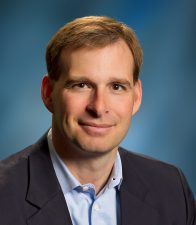
Keith Scott Whyte
“For me its one word: transparency.
“I believe the most important word in the RG field is transparency. The biggest advance would be a commitment by operators (and regulators) to make publicly available the information we need to assess their RG efforts. Of course, personally identifying information would never be revealed, and steps could be taken to protect information that was truly a trade secret. But otherwise, operators should have the courage of their conviction to provide reports, and in most cases the data as well, on key metrics like RG tool usage, employee training, self-exclusions, etc… Many companies would have a good story to tell, and those who don’t deserve the criticism and would have additional incentive to step up their programs. Regulators should collect and publish their own jurisdiction-wide data as well. Transparency is one of the best ways to win the trust of the public. “
