

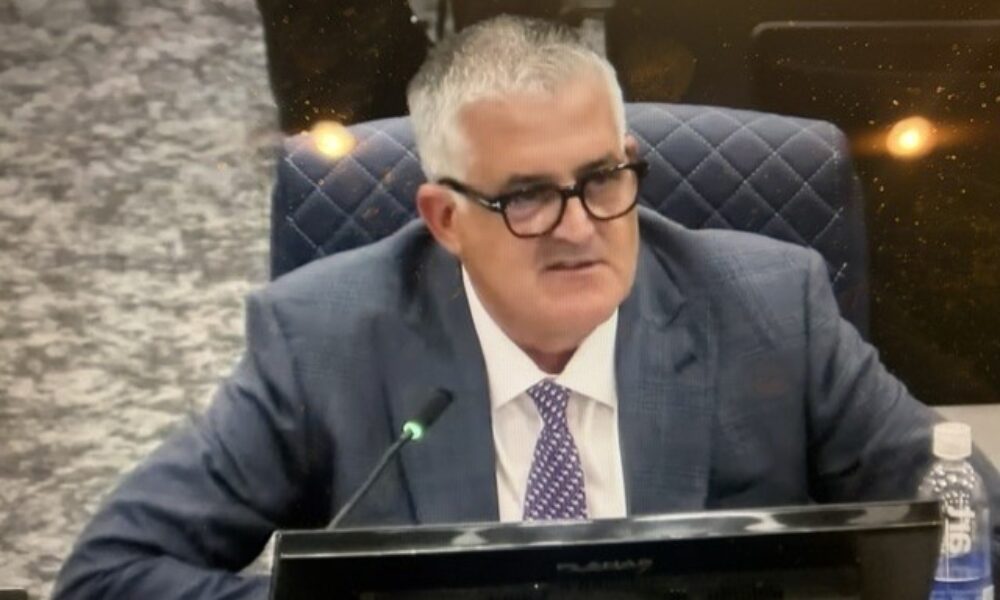

Konami Gaming President and Chief Operating Officer Thomas Jingoli has described the Nevada gaming market as among the most competitive in the world, as the company received approval for its 10th shelf renewal from state gaming regulators.
The company is eligible to continue for continuous or delayed public offerings through Regulation 16115, because it is a publicly traded company, registered with the Nevada Gaming Commission and listed on the Tokyo and London stock exchanges.
The regulation is an administrative rule that governs the authorization process for continuous or delayed public offerings, commonly referred to as shelf registrations, by registered publicly traded corporations operating within or affiliated with Nevada’s gaming industry.
Mike Dreitzer, chairman of the Nevada Gaming control Board (NGCB), described the application as routine, but asked Jingoli if Konami had ever used the shelf.
“We have not,” Jingoli said. “There have been a few times over the years where we were potentially going to, and the deals just didn’t materialize. But from a flexibility standpoint, we like to have it.”
Jingoli told Dreitzer what would happen as soon as the company let it expire: “Something would come up and we will have to do it again. It’s just good business practice for us to keep it active.”

Dreitzer then asked Jingoli for his outlook for the Nevada gaming market. He described it as “probably the most competitive gaming market in the world. You take the Strip, where they get a new customer every 72 hours compared to the local market like Station Casinos, Boyd Gaming, and Golden Entertainment where their customers are in three to four times a week,” Jingoli said.
Then there is the restricted market in the state, which Jingoli said Konami is heavily involved in and described as an “extremely competitive market.” He said they’ve seen the economy take a toll on repeat visitation by customers as gas and food prices factor into it.
Jingoli told the NGCB, which unanimously approved the company’s shelf registration Wednesday, that they’ve done a good job being flexible with financing to get product on the casino floor. “Overall, we are very happy with the market in Las Vegas and Nevada.”
Dreitzer followed up by asking about capex spend by Nevada licensees, which Jingoli admitted has slowed down a little bit, based on the same things going on in the economy.
“As a manufacturer, the onus is put on us to be as flexible and creative as we can to help the customer with getting new product on the floor,” Jingoli told the Control Board. “They all want new product at some point in time, but if they don’t have the capex budget … that’s where we need to be good partners, because they’re going to be our partners for a long time.”
Jingoli also updated the Board on the company’s casino management system, which has experienced rapid growth in recent years. He said four years ago they had 40,000 connections, which has increased to just under 160,000 this year.
“That’s significant growth that we’ve shown in that space,” he said. “A vast majority of that is taking business away from competitors. There are not a lot of new casinos being built, not a lot of new markets.”
Jingoli said they are pretty excited about where Konami is right now and where they are going.
