
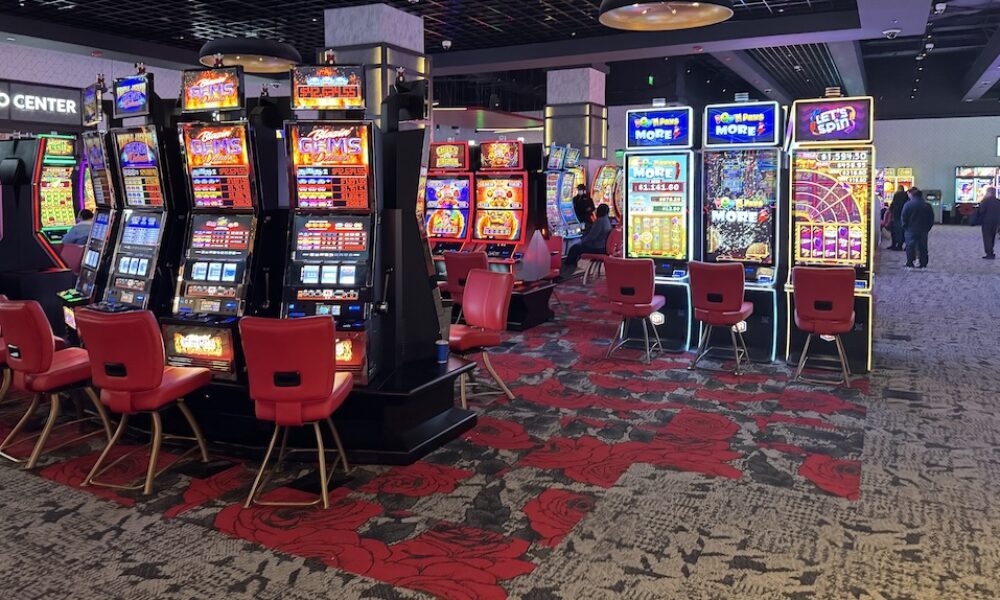

The Maryland Legislature is set on Wednesday to hear testimony on the purported need for historical horse racing (HHR) machines. The slot-like devices allow players to bet on already-run races, in parimutuel fashion. The 1 p.m. hearing will discuss SB 639, a bill with bipartisan sponsorship. It would permit HHRs at the Free State’s six casinos, the Maryland Fairgrounds, four off-track betting (OTB) locations, and racetracks.
GOP state Sen. Paul Corderman says it’s the second time around for the proposed legislation. But he is optimistic, saying, “There is definitely interest. There’s no question about it. It’s just trying to figure out a way that everyone can coexist.”
Corderman’s constituents include Alyse Cohen, owner of the Long Shot’s sportsbook in Frederick, an OTB parlor. A moving force behind the legislation, Cohen says it is needed to recoup a 40 percent drop in OTB revenue over the past three years.
That decline coincides, Cohen says, with Maryland’s inception of online sport betting, “as well as the lack of innovation in the space/capital reinvestment. Historical horse racing is the proven innovative solution.”
Cohen argues, “We’re really at a crossroads. We need to innovate or we need to shut down. So we’re trying to legislate [HHRs] as a means to preserve our businesses.”
The OTB owner contends that Maryland would realize $100 million annually through HHRs, taxed at approximately 40 percent. Cohen’s figure was predicated on the tax rate paid by Rocky Gap Resort.
Corderman explains, “It depends on the location of the particular machine. All six casinos have different tax rates. They were based on individual agreements that were made at the inception of each individual casino.”
Both Cohen and Corderman say that Maryland also needs the money — badly. The Free State is staring down a $1.4 billion budget deficit, compounded annually. The duo also emphasize education funding as a primary recipient of HHR largesse.
The bill itself is slightly more complicated. HHR taxes would be divided between Blueprint for Maryland’s Future, which funds education (to the tune of $10 billion), the general fund, which would receive five percent, and horsemen’s purses, and the Small, Minority & Women-Owned Businesses Account.

While Corderman hesitates to describe the horse racing industry as being at a crisis point, he says it “would help prop them up as well.” Cohen is less hesitant. “Maryland horse racing is constantly asking for subsidies. This year it’s $9 million. I believe it’s $7 million in perpetuity,” she says.
For the moment, the casino industry is keeping its own counsel on SB 639. Churchill Downs declined to comment, while MGM Resorts International, Caesars Entertainment, and Century Casinos did not respond at all. All operate casinos in Maryland, as do Penn Entertainment and Cordish Gaming.
“The casinos are very protective of their turf,” says Corderman. “The casinos have VLTs currently, so they see this as, at a certain point, an infringement on their slot territory.”
The Republican legislator adds that it would be naive to think gambling in Maryland will not continue to grow. HHRs, he says, would be a natural evolution, due to the niche market they would attract to casinos.
Corderman also hinted at a more-favorable tax rate for casino-based HHRs than for OTBs. That would be because casinos offer “a different experience,” including slot machines, table games, and shopping.
Entities that would be barred from participating in HHRs are all the online sports betting (OSB) operators in the Free State, predominantly FanDuel and DraftKings. “We’re looking to make this a brick-and-mortar initiative. It’s really about bringing jobs and people to existing businesses,” Cohen explains. She elaborates that the OSB providers consume 98 percent of the sports wagering revenue in Maryland and that retail wagering has been out in the cold.
Cohen makes the case that the economic impact of HHRs would be, at minimum, 100 new jobs for every 500 machines installed. The legislation specifies a statewide maximum of 4,000.
“That doesn’t include the restaurants, the hotels — all the great infrastructure and economic development that occurs around these facilities,” Cohen argues. “So we’re really looking to make this a win for Marylanders, as a broader whole.”
Like Corderman, Cohen is optimistic about the chance of passing SB 639. “I know we’ve brought a net positive,” she says, “and therefore I’m feeling good about it.”

