

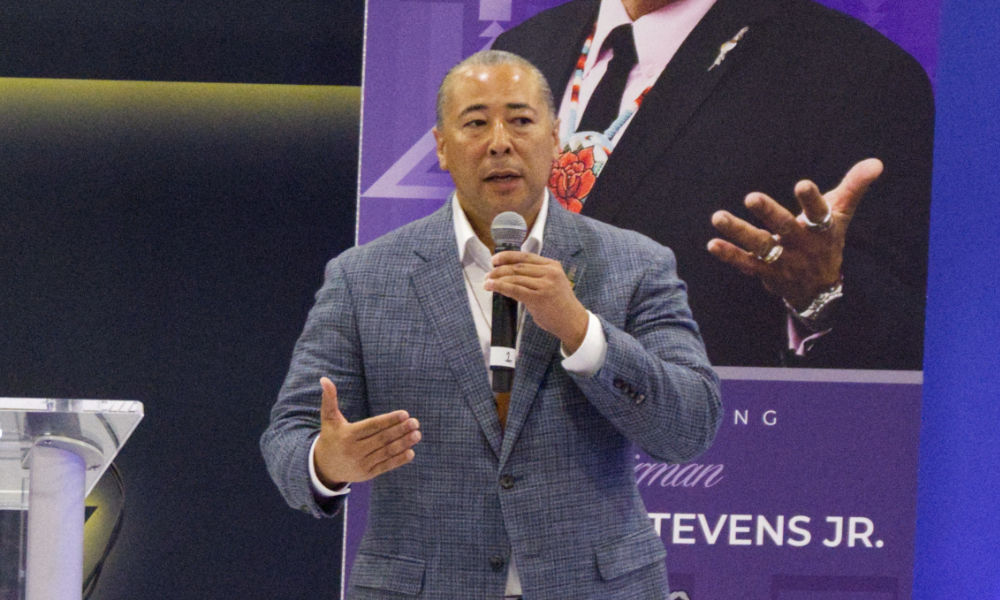

The Indian Gaming Association (IGA) recently joined with the National Congress of American Indians (NCAI) to form a task force to coordinate protection of tribal government gaming, defend tribal sovereignty, and address emerging legal, legislative, regulatory, and economic threats.
Tribal leaders and advocates recently gathered for NCAI’s national convention on Friday in Palm Springs, California.
“Our responsibility is to protect the right of Tribal Nations to govern our lands, regulate gaming, and build a future for our people,” said IGA Chairman David Bean in a statement. “This task force brings our leadership and our expertise together so we can turn shared concerns into coordinated action.”
Bean said they’ve made progress, “but we still have work to do.”
A central focus was the continued expansion of online sports betting offered through prediction markets, which the IGA describes as illegal gambling that circumvents tribal and state authority. Participants discussed potential consequences for tribal economies, government services, and the regulatory protections that underpin lawful gaming, and identified priorities for coordinated advocacy, litigation support, research, and public education.
Reactivated in 2023, the IGA-NCAI Task Force provides a working forum for tribal nations, tribal leaders, attorneys, policy advocates, and other stakeholders to address threats to tribal sovereignty and treaty rights. Co-chaired by NCAI President Mark Macarro and Bean, the task force connects national advocacy with the priorities of sovereign tribal governments.
At the meeting participants adopted a formal description of the task force’s work, covering legal, administrative, legislative, and economic issues related to gaming that affect tribal nations, including economic impacts, as threats to tribal gaming reach beyond casino operations and into the communities and government services those enterprises support.
The next phase will translate that framework into annual goals, a regular meeting schedule, and publicly accessible information about the task force’s work. Participants emphasized the need for continued coordination between national conventions, with proposed monthly calls to maintain momentum and respond to emerging developments.
“This work cannot begin and end with a convention,” Bean said. “We need consistent communication, clear priorities, and the resources to stay engaged. Our partnership with NCAI helps us bring tribal voices forward together while respecting the authority of every tribal nation to determine its own future.”

Discussions on prediction markets centered on the risks posed by platforms offering sports wagers as financial event contracts. The IGA maintains that a financial label cannot be used to evade the Indian Gaming Regulatory Act, tribal law, tribal-state compacts, or applicable state gambling laws.
Conference participants also examined the need for a coordinated response across the courts, Congress, and federal regulatory agencies.
“Calling a sports bet a financial product does not erase our sovereignty,” Bean said. “Tribal nations have built gaming systems grounded in law, accountability, and the responsibility to protect our communities. We will continue to challenge efforts to bypass those protections and to place our governments and economic future at risk.”
Participants also reviewed economic research examining potential harm from the expansion of prediction markets. The discussion emphasized the importance of explaining those risks through their effects on individual tribal nations, local employment, and essential services, rather than relying solely on national gaming revenue totals.
For tribal governments, gaming revenue supports priorities such as health care, education, housing, public safety, infrastructure, and cultural preservation. The task force identified a need for concise educational materials that help tribal leaders, policymakers, and coalition partners understand how changes to gaming policy could affect those responsibilities.
The meeting outlined priorities for 2027, including strengthening congressional engagement; coordinating litigation and amicus support with national legal partners, including the Tribal Supreme Court Project; expanding cooperation with regional gaming associations and other allies; and building sustained resources for legal advocacy and public outreach.

Participants also discussed congressional oversight of federal agency actions affecting prediction markets and the importance of aligning legal and policy messaging across jurisdictions.
Bean recognized NCAI, participating tribal nations, regional gaming associations, attorneys, and partner organizations for their continued commitment to the effort.
“Our strength comes from Tribal Nations standing together and doing the work,” Bean said. “We are protecting the progress our people fought to achieve and the opportunities our children deserve.”
Bean stressed that the IGA will continue working with NCAI and other partners to ensure that Indian Country’s voice is heard and that “tribal sovereignty remains at the center of every decision affecting our future.”
