

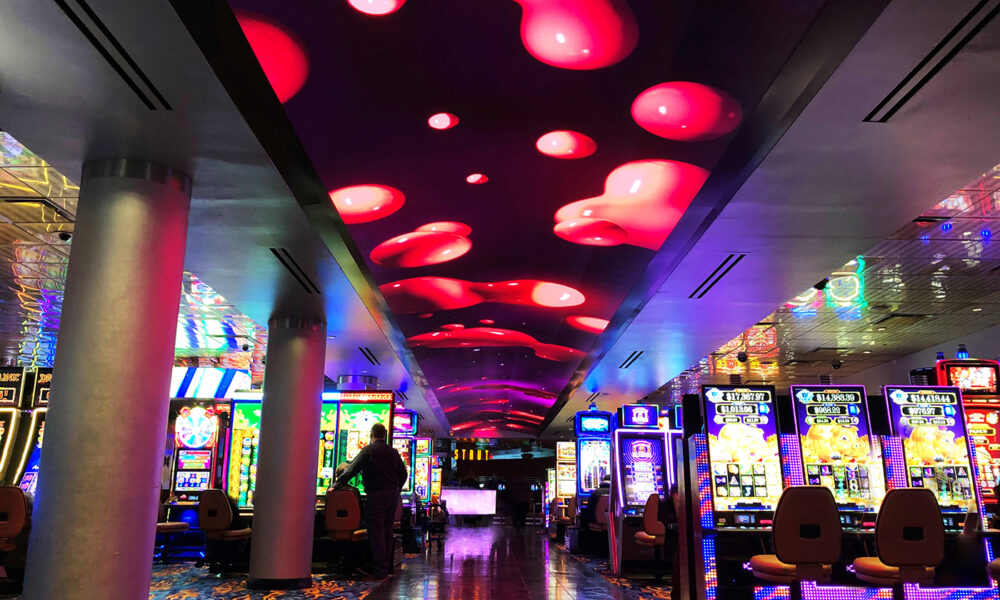

There is a moment happening across casino floors right now that feels subtle until you notice it everywhere. Static signs are disappearing. TVs mounted as afterthoughts are being replaced by intentional, architectural digital experiences. Player communication is no longer just overhead. It is layered into the space itself.
JCM Global has been part of that shift for years through its Digital Signage Solutions (DSS) business, but what surprised me most in a recent conversation with the team is just how far beyond “screens on walls” the work has gone.
What operators are really buying into now is flexibility. Not just in content, but in how signage functions inside a space.
“Each operator, each casino, will have their own goals that they’re trying to achieve with digital signage,” said JCM’s James Smith (Smitty). “This could be directional. This could be for entertainment, such as live TV sports, or it could be signage that’s just strictly informative. From there, we can help them decide what visuals are going to work.”
That problem-first mindset shows up in some of JCM’s most interesting deployments.
 When screens become architecture
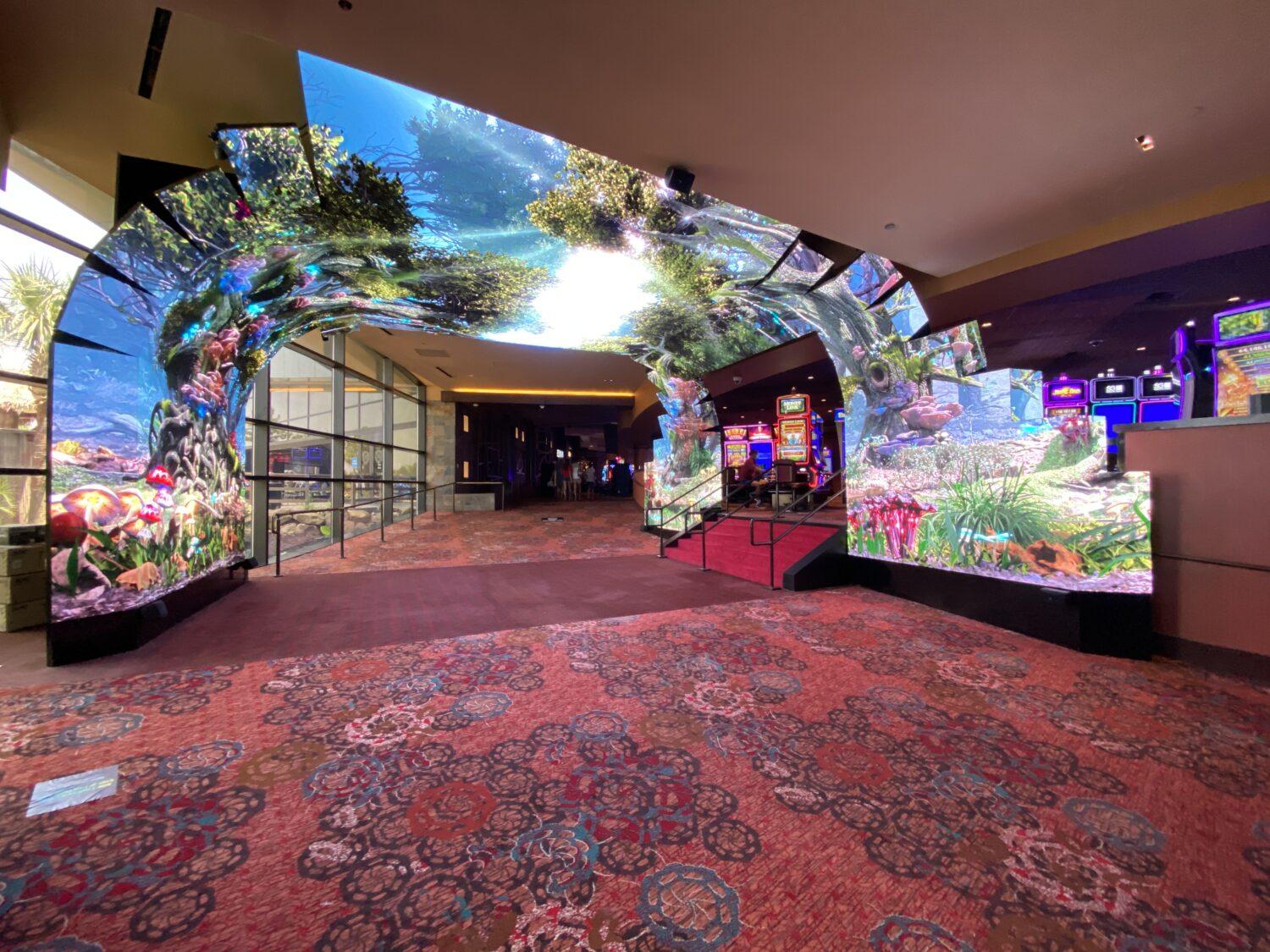
One of the more striking examples is JCM’s work at Choctaw Durant in Oklahoma, where a large-scale display called “The Link” was installed between two casino sections. The installation features overhead video, side-facing LED displays, and seasonal content that changes by time of day.
“It’s in between two sections of the casino,” Smitty explained. “So when you walk through, you see the overhead video. When you turn around and look back, you also see a digital display on the other side. It’s probably one of the most unique projects we’ve done.”
According to JCM, the display was associated with a significant increase in game revenue in that zone.
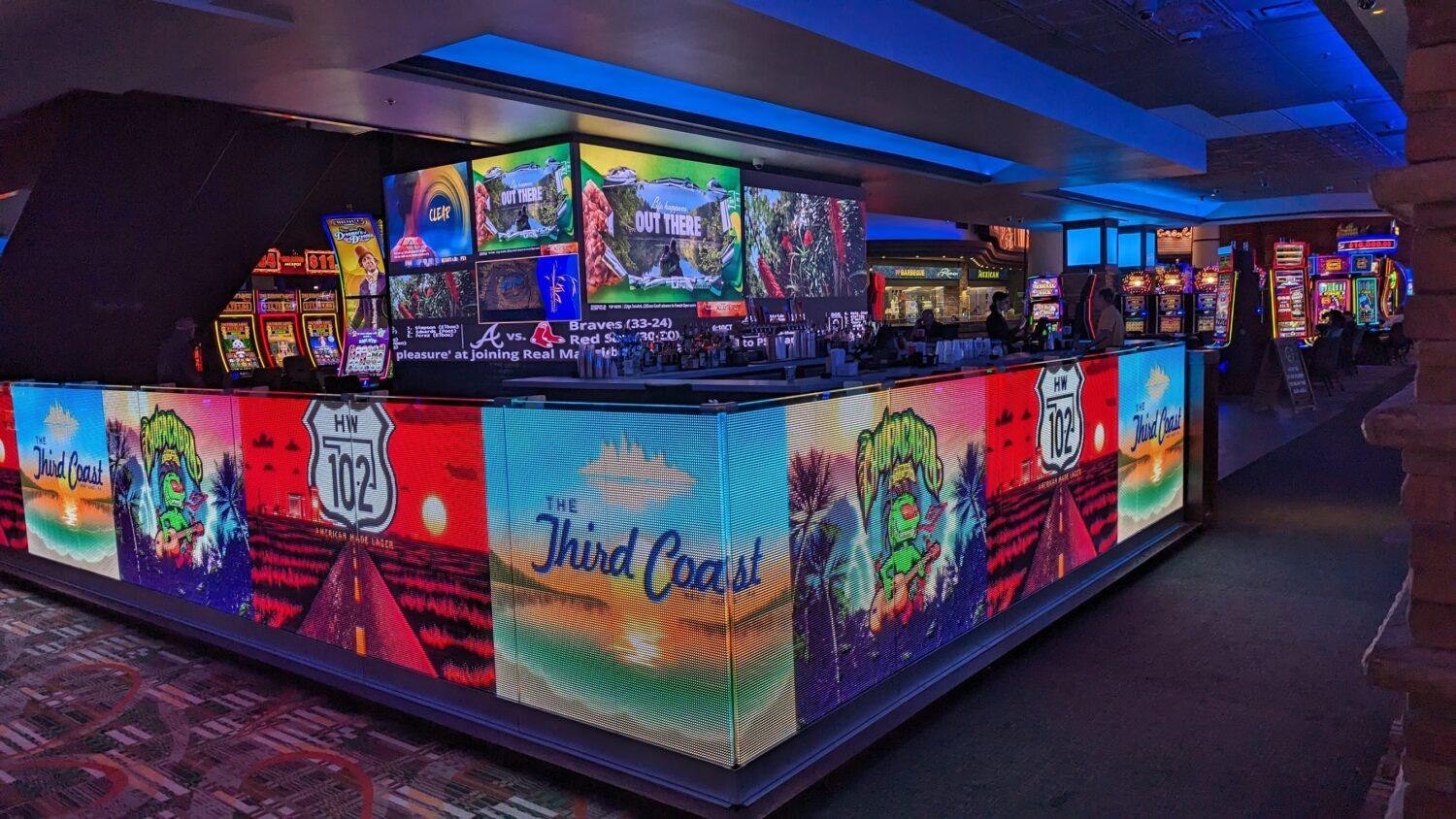
Another Oklahoma project at Grand Casino took a different approach. Around the center bar, JCM installed a three-sided LED display paired with a transparent digital barrier.
“When they installed a sports bar display around their center bar and a clear display to act as a barrier, their revenue increased almost three times what they normally ran at the bar,” Smitty said.
This combination of visual engagement and functional space design is becoming a recurring theme.
Transparent screens, two audiences, one install
One of the most compelling pieces of JCM’s portfolio is its double-sided transparent display technology, first deployed at a property in California.
The use case is simple and clever. One screen serves two audiences at once, with different content facing each side. The same physical installation can display messaging to players on the floor while showing something entirely different to guests in a bar or high-limit room.
“People always ask, ‘What does it look like on the other side?’” Smitty said. “If you want to cater to the people out on the floor, you create a message that’s out-facing. If you want to cater to the people in the bar, you just flip the content.”
This dual-facing functionality is now being used as a design element, not just signage. At Golden Mesa Casino in Colorado and FireKeepers Casino in Michigan, transparent LED displays are being used as room separators for poker rooms and high-limit spaces. The result is a visual barrier that still keeps the space open and visually connected.
In one installation between a bar and the casino floor, the transparent display also created an unexpected benefit.
“It created a sound barrier between the areas,” Smith noted. “The operators loved it.”
Beyond the casino floor
What’s also notable is how DSS is moving outside traditional gaming spaces. Resorts World New York City uses suspended LED displays above stadium-style gaming areas. Chinook Winds Casino in Oregon features curved LED displays above its high-limit room, with LED-wrapped columns to match.
MotorCity Casino in Detroit installed an 80-foot overhead LED walkway that JCM describes as “Fremont Street vibes.” The effect turns a dead corridor into a visual experience that draws traffic through the space.
Even non-gaming entertainment venues are getting pulled into the orbit. One of JCM’s most unexpected projects came from a chance conversation on a plane, leading to a full-stage LED and transparent barrier install at Bounce Empire in Colorado, an entertainment venue with over 100 inflatable attractions.
“They use the clear LED panels as a barrier, but it also enhances the concert experience,” Smitty said. “That one really surprised us.”
 ROI vs. ROO
One of the more honest takeaways from JCM’s DSS work is how operators evaluate success. Unlike slot performance, signage ROI is rarely cleanly measurable.
“In the digital signage industry, what they talk about is return on objective,” Smitty explained. “If you buy a sign to direct people to the buffet and traffic goes up, has that sign achieved your objective? That’s the way properties are thinking about it.”
That kind of framing matters. Digital signage is increasingly being treated as infrastructure, not just marketing spend. It shapes flow, sets tone, and modernizes spaces that would otherwise feel static.
What comes next
JCM showcased both single- and double-sided e-posters, transparent LED technology, and LED walls at the recent IGA show. But the real story is less about product demos and more about how casinos are starting to treat digital surfaces as flexible, programmable real estate.
From Choctaw Durant to Resorts World NYC to MotorCity Casino, the pattern is clear. Operators are no longer asking, “Where can we put a screen?” They are asking how digital can change the experience of moving through a space.
And that shift is where JCM’s DSS work feels less like signage and more like design strategy.
