

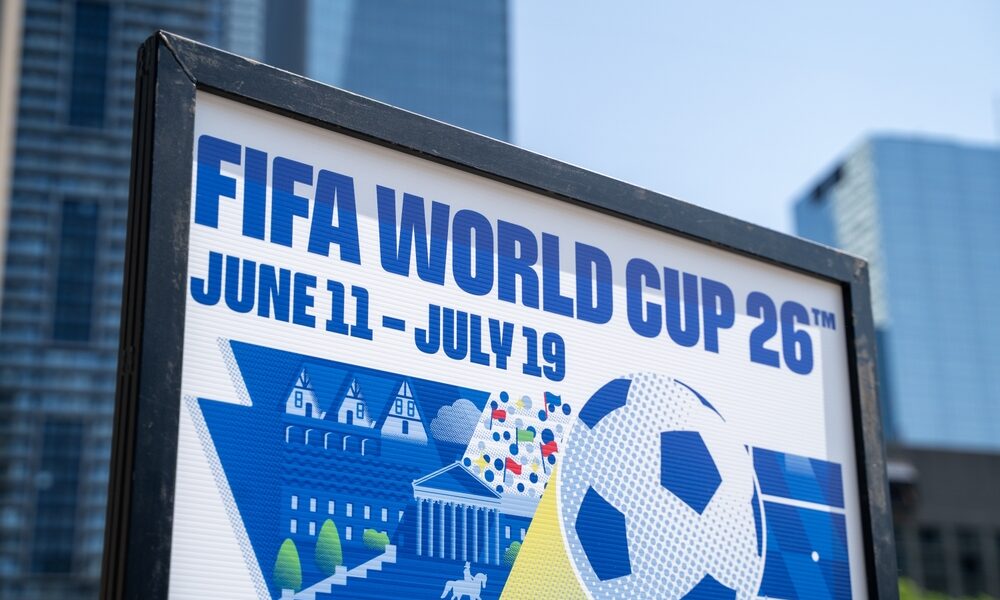

Las Vegas didn’t get a World Cup match.
My first assumption was that FIFA took one look at a July afternoon here and decided asking professional athletes to run for 90+ minutes in 115-degree heat might be considered hostile working conditions.
Fair.

Except Allegiant Stadium is indoors, the air conditioning is excellent, and we have successfully convinced football players to work in there for years.
The real issue was less dramatic and much more expensive. Allegiant Stadium wasn’t built wide enough for FIFA’s required field dimensions without major modifications, and the cost and disruption reportedly made hosting impractical. So despite having a relatively new $2 billion stadium and an increasingly aggressive claim to being the sports capital of everything, Las Vegas was left off the host-city list.
Naturally, Las Vegas did what Las Vegas does best. It found a way to make money from the World Cup anyway.
Not the matches, technically. Just everything people do before, during, and after them.
The LVCVA leaned into exactly that idea with its “Las Vegas Doesn’t Host the Matches. It Hosts the Party.” campaign. Instead of focusing on what the city didn’t get, it focused on everything it already had. Hotels. Restaurants. Pools. Sportsbooks. Entertainment.
Every major property had the matches on, along with some version of a watch party, reserved seating, and food and beverage specials. With everyone working from the same tournament, the difference came down to how each property packaged the experience and whether it gave people a reason to choose one venue over another.
Circa probably had the easiest assignment in town. Stadium Swim was already built for moments like this, so there wasn’t much need to reinvent anything. Instead, they turned the tournament into a Vegas weekend with hotel packages that included food and beverage credits, a complimentary daybed at Stadium Swim, and viewing experiences built around the matches. The package gave people another reason to make the trip.
And honestly, giant screens aren’t exactly hard to come by in Las Vegas. With all the sportsbooks, the Strip marquees, Sphere, and whatever LED wall just got installed while I was writing this, we’re basically one step away from Idiocracy.
Resorts World approached it a little differently. Rather than making one venue the center of everything, it spread the tournament over several venues before making Zouk Nightclub the destination for the championship match. Opening one of the biggest nightclubs on the Strip before noon for a soccer match is probably one of the more Las Vegas things I’ve seen in a while. Dawg House handled the sports bar crowd, Famous Foods naturally fit an international event, and Zouk gave people a reason to come back for the final.

One of the more interesting World Cup activations came from F1 Arcade. It’s obviously not a casino, but that didn’t stop it from finding a place in the conversation. The venue used the tournament as another reason for people to come in, race, grab lunch, have a drink, and spend a few hours there. Every business competing for people’s entertainment dollars has a chance to capitalize on a global sporting event, even if it’s in a completely different vertical.
It reminded me a little of Formula 1 weekend last year. One of the things I wrote about afterward was how every property interpreted the event differently. Some focused on luxury, others on nightlife or hospitality. Everyone started with the same sporting event, but the way they incorporated it into their brands looked different.
If one opportunity still exists, I think it’s with the countries themselves. The World Cup is one of the few sporting events that gives marketers dozens of distinct cultures, fan bases, and storylines to work with over the course of a month. Country-specific venue takeovers, such as menus that evolved with the bracket or partnerships with local supporter groups, would have given guests a reason to come back as the tournament unfolded.
Vegas has gotten pretty good at this. Whether it’s Formula 1, the Super Bowl, March Madness, or the World Cup, the city doesn’t spend much time worrying about whether it owns the event. It figures out how to become part of it.
Turns out you don’t need a match to make the World Cup your bit**… I mean, business.
