


The Super Bowl is considered the biggest sporting event in the United States, with wagering reaching $1.8 billion in 2026, according to the American Gaming Association.
Sportradar Vice President, Americas Brian Josephs
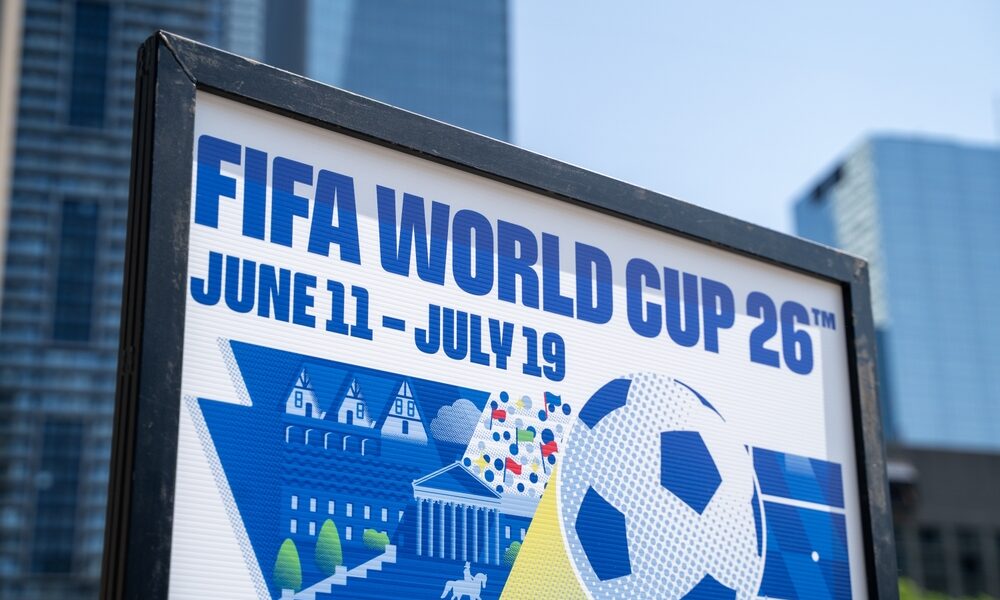
An astonishing number, but this year’s World Cup, which begins early next month, might dwarf that figure.
“The World Cup every year, regardless of where it’s based, is every time it’s played one of, if not the largest, events that could possibly take place,” Sportradar Vice President, Americas Brian Josephs said during a recent CDC Gaming Roundtable. “When you put it on U.S. soil, we see this as one of the largest customer acquisition opportunities for sports books since the legalization began in the U.S.”


Adam Bjorn, CEO for Plannatech
The World Cup transcends any other sporting event on the planet. This year, 48 teams will vie for the trophy, with nations including Curacao and Cape Verde joining traditional powers Argentina and England in quest of the championship.
Widespread participation will increase wagering interest. Adam Bjorn, CEO for Plannatech, a provider of igaming, business integration, and digital platform solutions, says projections on betting may be underselling interest in wagering in the United States.
“I’ve been saying it’s like 104 Super Bowls in 40 days,” Bjorn said. “I think they’ll really see volumes that they had no idea existed. And obviously with the prediction markets in the space, and the amount of business they’re doing right now, I don’t think anyone’s really sort of identified just how big this will be based on the time zone and the games being played.”

Robert Kraft, founder and CEO of Atlas World Sports
Robert Kraft, founder and CEO of Atlas World Sports, a sports media and technology platform that provides data, insights, and tools for bettors, said his company will be prepared for the World Cup. Kraft views the World Cup as an opportunity to expand his site’s wagering opportunities.
“For us, it’s kind of a new and exciting frontier, because we think it’s an opportunity to pick up some more of the international sports fans and betters,” Kraft said. “And then we have a whole plethora of other sports we’ve added on that will go in conjunction with that.”
Kraft mentions Formula 1 Racing as one of those add-ons. In the United States, he views the World Cup as an opportunity to increase fan engagement before football season begins. Noting that the World Cup will occur over about 40 days from early June to mid-July, he views it as an event that takes place when no major sports, save baseball, are in season.

“We actually do see it as a nice little potential shot-in-the-arm to pick up folks that maybe are huge NFL fans, but they are at the pubs on a Saturday, Sunday watching their Premier League teams,” Kraft said. “They can’t wait for World Cup.”
Josephs noted the opportunity to wager on enhancements and upgrades around same-game parleys, live player props and other micro markets will help convert the casual bettor into a far more engaged player.
“By introducing these markets, we think it’ll make soccer betting more approachable to the newer audience,” Josephs said. “Because those rely less on more technical knowledge or odds knowledge, and more on just familiarity with the game and having an interest in individual player and team performance.
Bjorn said that during the World Cup in Brazil in 2016, operators “minds were blown” by the interest generated by the tournament. He notes that in the United States, unlike the past two World Cups in distant Russia and Qatar, interest should be strong, especially through the group stage of the World Cup.
“If the U.S. gets knocked out in the group stage, the U.S. should pack up soccer, give it up,” Bjorn said. “They are in the softest group. And being Australian in that group, it is the softest group. They’ve got Turkey and Paraguay to get through. If the U.S. cannot get through that, they should give up.”
In the event the United States does not make it to the knockout stage, Bjorn maintains interest should stay strong given the presence of Major League Soccer and the addition of international stars such as Lionel Messi in the United States.
“I think (the U.S. team) getting knocked out in a group would be more on them than the event itself,” Bjorn said. “I don’t see that’ll drop off anything. As I said, I think expectations of (the World Cup) are much bigger than what a lot of people are anticipating.”
“The U.S. (wagering) activity, in the event that they’re eliminated, I think it’d be far less severe than in a more, call it, nationally concentrated soccer market, if they were hosting,” Josephs said. “I think everyone has their fingers crossed here that we can figure it out as Americans and turn this into the event that everyone wants it to be.”
Roberts expects wagering to go beyond bets for winning or losing. He notes that soccer does lend itself to in-game betting because the way a game unfolds.
But he does anticipate that fan engagement, and thus wagering, will be transcendent.
“You have bars that are blocking off streets, and everybody’s outside, and big screen TVs are set up and everybody’s watching it,” Kraft says. “And that was when it wasn’t hosted in the United States. City bars all over American urban centers are going to do that and have big time parties that are awesome.
“And not only soccer fans get pulled into it … then they become soccer fans overnight. Now that it’s being hosted in Canada, America, Mexico, I just think it’s going to go to a whole different level, because I’ve truly never been part of something, like Adam said, is like the Super Bowl day after day after day.”
