
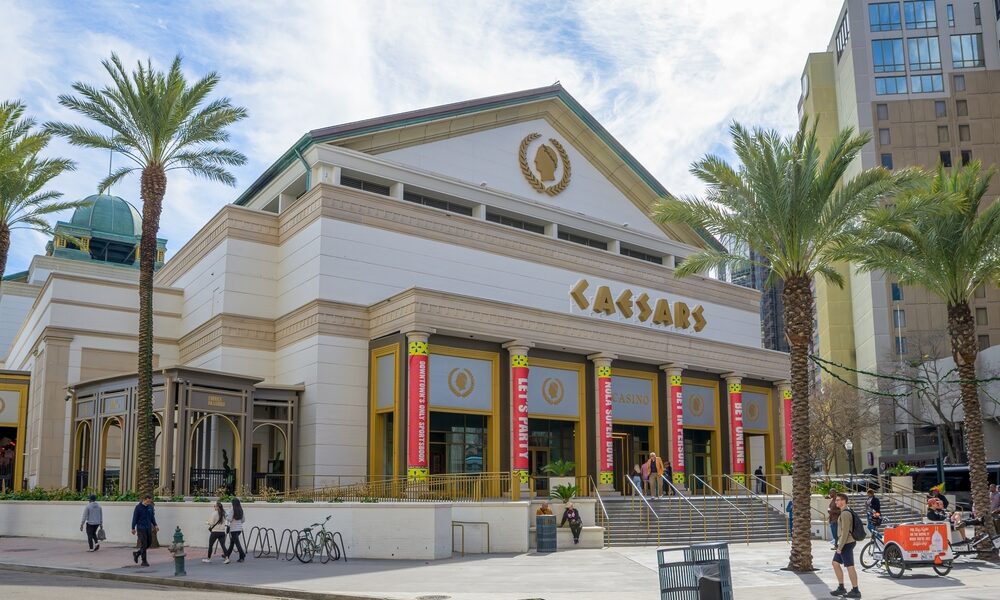

Vici Properties might cut Caesars Entertainment a break on its regional-casino rent, according to J.P. Morgan analyst Daniel Politzer. His views were expressed in a November 26 investor note.
According to Caesars’s own admission, its regional casinos are generating an annual cash flow of $750 million, whereas their rent is $730 million, a nearly one-to-one coverage ratio. Politzer called this rent “too high,” relative to earnings. He also took issue with the rent escalator pre-Consumer Price Index adjustment, calling it “a challenge. We do think a rent reduction and/or less onerous escalator is a possibility, but expect any transaction would likely have several moving parts.”
What would those parts include? According to Politzer, they would entail the sale of a land-based casino or raw real estate to Vici. Caesars would also have to assent to extending the duration of the lease by 10 years to 2045.
Politzer had happier news in the other segments of gaming he surveyed. The Las Vegas Strip was “starting to look more interesting” to investors. However, he thought it was premature to wax positive on Sin City.
Trends in Las Vegas were in line with expectations. However, “Our concern is that underlying leisure demand remains soft,” mitigated somewhat by group and convention business. He called December levels of demand “mixed” and noted that the post-Thanksgiving calendar fell more heavily on the leisure segment.
Overseas, Politzer said sentiment was varied on Wynn Al Marjan. He painted himself as being in the camp that it was premature to raise revenue projections on the Persian Gulf resort, as it’s not opening for another 15 months. But the analyst noted, Wynn’s base case of $345 million a year in cash flow and management fees presupposed a market of $3 billion to $5 billion, as well as two other competitors capturing 67 percent of that market. “At this time, Wynn is poised to capture 100 percent share, as it’s slated to be the only operator, thus it’s reasonable to assume that Wynn’s steady-state results could far exceed even its bull-case” of $460 million per year in cash flow and fees.
Finally, Politzer made an upbeat case for sports betting operators, given recent developments in the prediction markets. He noted that Kalshi had been told the day before to cease operations in Nevada. Robinhood itself is looking to offer futures/derivatives products in tandem with Susquehanna International Group.
“To us, it feels like investor sentiment on Digital Gaming stocks could finally turn more positive,” catalyzed by the entry of DraftKings and FanDuel into event contracts. This will force the disclosure of daily exchange-trading volumes, providing greater clarity, Politzer argued.

