

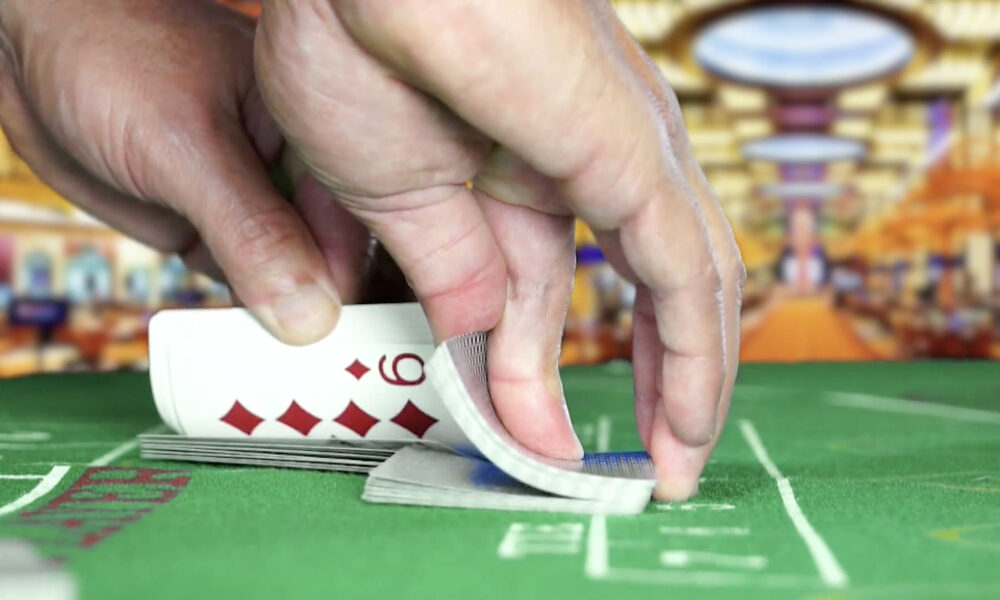

On November 27, 2025, a husband and wife from Kazakhstan were arrested for cheating at Crown Sydney Casino in Australia. They played at the casino for a couple of months and won over $1 million cheating Mississippi Stud and Ultimate Texas Hold’em.

The M.O. was simple but sophisticated. They used concealed cameras at the table to identify the dealer’s cards as they were lifted from the auto shuffler and placed face down on the table. Hole-carding is not illegal; however, using electronic devices to assist in playing the game is against the law in Australia, as it is in most jurisdictions around the world.
At the time of writing, the couple are sitting in a jail cell in Sydney awaiting court proceedings. The investigation is ongoing with questions remaining on how exactly they used the technology. What we know is that they used the camera on a cell phone they placed on the table, and later during their visit they used a concealed pinhole camera hidden inside a t-shirt. The cheats also used a miniature hearing device, so small that no one could see it in their ear.
This arrest has a number of similarities to the arrest of a cheating team in Paris, France just 15 months prior. Like Sydney, concealed cameras were used to stream the game for analysis of the dealers’ cards on a casino poker-derivative game. In my mind, that makes this scam a trend and one for casinos to be on the lookout for.
In Paris, a third suspect was involved in the scam; he was located in a vehicle in the casino parking lot. His role was to observe the stream from the game and communicate how to play the hand to the players at the table. To date, a third person has not been arrested in Sydney…yet.
From an industry learning standpoint, the news reports were not helpful. A lot of facts were left out, in particular: how exactly was the game cheated? Hopefully, authorities will release more details to the casino industry in upcoming months. Regardless of the devil in the details, casino managers should pay attention to this recent trend and develop the mindset that technology is only going to get more sophisticated – and casino cheats will be cashing in.
On the surface the M.O. is not new. Cheats have been using concealed cameras for a few decades now, either in collusion with crooked dealers or by taking advantage of incompetent dealers. Getting inside information is a dream for most big-time cheating teams, but sophisticated digital technology is increasingly turning the dream into a reality.
The future is here. Casinos cannot ignore the threat of wireless and AI-assisted technologies to their games. In fact, it’s become big business. Buying cheating devices for gambling used to be about finding somebody who knew somebody. Now websites and social network platforms like YouTube proudly display the latest cheating products. If that isn’t enough to convince casinos that tech-threats have arrived, just Google “2025 NBA cheating scandal” or “poker cheating.”
At the upcoming World Game Protection Conference, I’ll be talking about the increasing threat of cheats using devices and technology to beat casino games. In my 3-hour table games protection masterclass, I’ll show how cheats have beaten the house using electronic devices and technology.
Here’s a sneak preview of the top 3 cheating devices that I feel casinos should be on the lookout for in 2026. My selection criteria is based on 3 things: frequency of confirmed sightings, profitability potential, and difficulty for detection.
Top 3 Cheating Devices in 2026
- Concealed Streaming Cameras
Let’s start with the granddaddy of all high-tech cheating devices – concealed cameras. Players using concealed cameras to gain an edge over the house have always been and always will be a threat to table games. The two main cheating methods used are: 1) colluding with a baccarat dealer to record a sequence of cards during the shuffle and cut process; 2) taking advantage of a dealer who is lifting and exposing cards during the game.
What has compounded this threat over the last 10 years is casinos’ player-centric policies that allow players to place their cellphones and devices, like power banks, on the gaming table. This has been a golden invitation for cheats with concealed cameras to gain a bird’s-eye view of cards that any casino surveillance operator would be envious of.
Concealed camera technology has gotten so good (and miniature). Alternatives to retrofitting cellphones are now available as wearable devices in the form of clothes, jewelry, watches and glasses. These options make for a reasonable plan B for cheats but they can present challenges obtaining the right shot and maintaining steadiness. The preferred option for the modern-day cheat is concealed cameras, retrofitted and disguised as everyday items, positioned and stationary on the surface of the gaming table.
With the right dealer and the right shot, third-party assistance can be used to observe and compute winning playing and betting strategies for players. The key is communicating the inside information to the player. One of the reasons I believe these types of scams are more attractive now for cheats is the miniaturization of hearing device technology. We’re really in a golden age for Bluetooth visual and audio technologies. It’s a perfect storm.
And then there’s the emerging potential of AI-assisted computer vision technology. Putting my cheating cap on I like the idea of having a game expert guiding me through the game with the ability to freeze frame and digitally enhance video to identify card values. With streaming apps, the game expert doesn’t even have to leave their house – they could be hanging out drinking coffee in their undies on the other side of the planet.

I see a time when cheats are able to automate the third-party assistance process by using AI-assisted computer vision technology that is able to identify cards and automatically send audio messages to players’ earpieces. The technology is out there but I haven’t seen or heard of it being used for a casino cheating scam…yet.
Using concealed streaming cameras to spot hole cards is attractive to organized cheating teams right now for three main reasons: 1) the scam doesn’t involve the recruitment of a dealer (an added expense); 2) there is an epidemic of dealers who are lifting their cards high; 3) most poker-derivative games use auto shufflers that require dealers to lift cards out of the well.
- Baccarat Side Bet Apps
In the past 15 years casinos have become addicted to side bets, in particular on baccarat. Side bets have proven to be a growth opportunity, especially on a game like baccarat that attracts hardcore gamblers but moves at a snail’s pace. Side bets allow players (and casinos) to get more action on the table.
With the exponential growth of side bet options, a new device was born – the baccarat card counting app. It’s a real-time odds calculator which is usually installed in a device that looks like a cell phone. As the cards are dealt, a player enters them into the app, which calculates what the odds are of the side bet hitting in the next hand.
It’s pretty simple really. It’s a card counting device. It calculates the shifting probabilities of placing a side bet at any given time. In games like blackjack and baccarat or any card game that doesn’t require a shuffle after each round, the odds for the player are always changing. By tracking cards dealt and deck depletion, the remaining cards in the shoe can be somewhat predicted and probabilities of betting options calculated.
But not all side bets are worth counting or going to jail for. Baccarat is a slow game. Sometimes it can take an hour or so waiting for that magical time when odds are in a player’s favor and then the edge is small. What cheats are looking for are specific side bets where the mathematical calculated frequency and player gain opportunities are higher. If you’re wondering what baccarat side bets are the most profitable popular for counters (or cheaters), go to Dr. Eliot Jacobson’s website advancedadvantageplay.com.

People reading this could be thinking, isn’t someone using a baccarat side bet app easy to spot? In its simplest form, yes they are – if players and non-playing associates are bringing the app up on their cellphones to do the calculation in view of staff and surveillance cameras. But c’mon now, haven’t you been paying attention? Concealed (and streaming) cameras could easily get the snapshot of cards dealt in each round as they lay face up in front of the dealer.
Counting baccarat side bets has a lot of advantages over traditional blackjack card counting. In blackjack, if a card counter desires a long career, they play every hand as sitting out a hand arouses suspicion. Often they have to play hands even when knowing that the edge is in the house’s favor. When counting baccarat side bets, a player only places the bet when the edge is in their favor. Generally, placing an occasional side bet does not arouse suspicion from the floor or surveillance staff and is viewed by management as “feeling lucky long shot bets.”
Baccarat is just so inviting for organized cheating teams. The limits are higher, thus the reward is greater. It’s a community card game that allows team members to combine their bets on the same (known) result. Also, the pandering culture that is baccarat often allows quirky behavior by players that can camouflage nefarious activity like cheating.
Using baccarat side bet apps is attractive to organized cheating teams right now for three main reasons: 1) the scam doesn’t involve the recruitment of a dealer (an added expense); 2) there are dozens of new side bets out there that staff don’t know are countable; 3) side bets have become popular, offering more camouflage for cheats with inside knowledge.
- Marked Card Edge Scanners
This is my favorite. Most students of cheating devices call them poker analyzers. They’ve been around for over a decade but like cellphone technology, a decade is a long time. They’ve come a long way and are probably the number one selling cheating device on the internet today.
Marked card edge scanners are cheating systems that utilize marked cards, a scanner that utilizes computer vision technology for identifying the cards, analysis software that calculates who will be dealt what card, and a miniature earpiece worn by a player that receives Bluetooth signals of valuable real-time game information.

The secret sauce in the system is the marked cards. Most marked card techniques involve marking the backs of the cards. Marked card edge scanners identify card marks that have been printed on the edge of the cards. Each card in a deck is marked on the long edge with invisible ink that can only be seen using an IR filtered lens. The marking is in the form of a dot. Each dot is positioned and sized differently on the edge of the card to enable each individual card to be identified. When a deck is placed on the layout in front of the special lens, it will appear through the screen to look like a barcode. The special marked cards are introduced into a game by a dealer or game operator.
The device was originally invented to target the game of poker. Once the marked cards are introduced, interim data is entered into the computer like game type and number of players currently playing the game. The scanner reading the cards is placed on the table to get the best view of the edge of the deck of cards, after the dealer rests it on the table after the shuffle/cut. It takes less than a second for the computer to analyze the card positions, compute the best strategy and send a signal to the cheating player. For more details on the poker analyzer see the video posted on WillyAllison.com/videos.
Marked card edge scanners were originally designed for private poker games, but in 2018 it is believed that gambler “Billy the Egyptian” colluded with a casino dealer in Glasgow using a poker analyzer. There are also rumors that the NBA high-stakes poker cheating scam in 2025 utilized various cheating devices, including poker analyzers, to rig games.
I have no doubt that poker analyzers are being purchased to rig illegal poker games around the world. A guest speaker at the 2016 World Game Protection Conference talked about how he had gone undercover in China under the guise of an interested cheating device buyer. In his discussion with the supplier, he was shown a warehouse full of poker analyzers ready to be shipped around the world. The salesman claimed year-to-date they had sold 7,500 units.
I bought one myself in 2014 and was amazed at how accurate and quick it was. I immediately started wondering could this technology be used to cheat house card games like poker-derivative games, blackjack or even big bad baccarat? My conclusion was hell yeah! It would be challenging…but I believe it could be done, if the management environment was soft.
After the NBA poker scam hit the news last year, I did what I think most students of cheating devices did – I hit the internet. It didn’t take long to see how advanced marked card edge scanners have become. Judging by website pages dedicated to this type of technology, it appears business is booming!

Then I found what I had long suspected. The marked card edge scanner technology has been incorporated into automatic shuffle machines and baccarat dealing shoes available for sale online through Chinese suppliers. I’m guessing, given the reported increase in illegal gambling around the world, they’re selling like hotcakes.
Using marked card edge scanners is attractive to organized cheating teams right now for three main reasons: 1) illegal gambling is on the rise – crooked operators’ demand for rigged equipment is increasing business supply, research and development; 2) casinos don’t monitor or protect poker with the same sense of urgency as they do their house games; 3) table game equipment technology is not regularly inspected by casino staff.
Looking into the future
At the 2026 World Game Protection Conference, I’ll be taking a closer look at these and other emerging technology threats to your casino operation. A question that I have gotten a lot recently from casino managers is: should we ban smart glasses? I’ll be giving my perspective on smart glasses and talk about how to generally determine if technology is a cheating threat or not.
As we move forward, the research and development of cheating device technology should be closely watched and studied by all casino game protection professionals. Digital technology is developing at a wicked speed, turning the art of casino cheating into a science.
Stay aware, stay sharp.
The World Game Protection Conference will take place March 3-5 at South Point Hotel Casino & Spa in Las Vegas.

