


Truist Securities analyst Barry Jonas slashed his price target on Bally’s Corp. stock by one-third, from $15 per share to $10. Bally’s shares were trading at $10.31 each at the time. Jonas explained his views in an August 18 investor note.
Jonas cited “mixed results” in Bally’s second-quarter earnings, along with the company’s warning that it might not be able to continue as a going concern. He rated the stock a Hold.
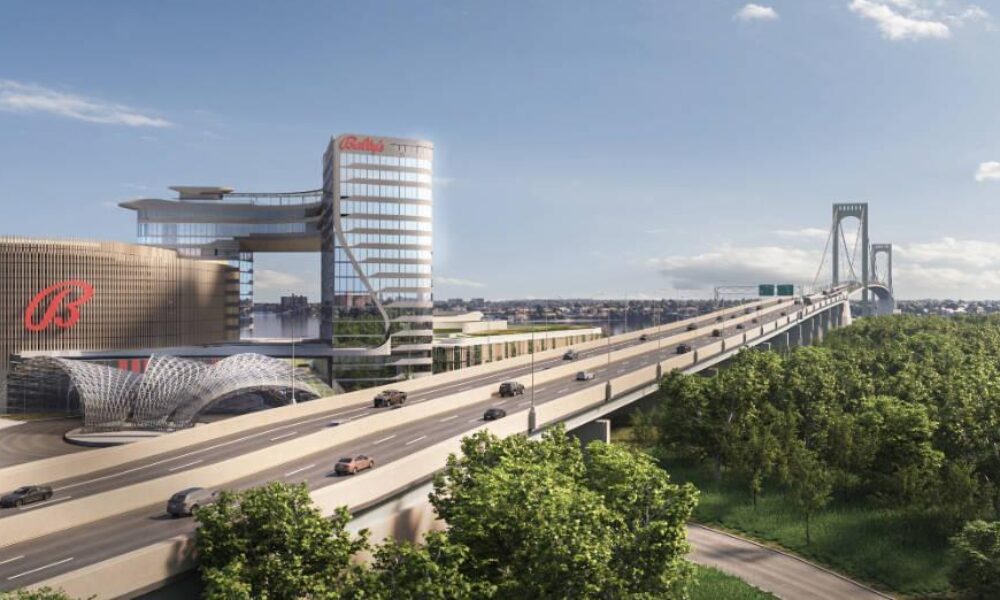
The analyst was of the opinion that Bally’s might be able to soothe the going-concern fears if it could achieve financing for $4 billion Bally’s Bronx. But he added, “It’s not a good look and is rarely seen across our coverage.

“Depending on terms, a resolution could drive some recovery following the sell-off, but we remain Hold-rated given ongoing liquidity, project delays, and international risk,” Jonas continued. He added that it did not change his opinion of Buy-rated Gaming & Leisure Properties Inc., which owns many Bally’s-branded assets and was still protected by its rent coverage. Jonas noted that GLPI had alternatives if Bally’s could not come through in Chicago.
Regarding the Windy City, Jonas wrote that if the “Chicago project ultimately fails, we continue to believe there are other reputable operators willing to step in to manage the property.” He also observed that Bally’s was slashing amenities “beyond the minimums it agreed to,” in protest of upcoming slot routes in the city.
Bally’s had revealed a non-binding term sheet for a pre-construction loan in the Bronx, Jonas said, along with a letter of intent from a potential equity investor, deals struck over the summer. “We have in the past noted sizable investor interest in the Bronx project and think once completed, financing for New York could help remove the ‘going-concern’ language in the financials,” the analyst opined.
Even though Bally’s was responsible for 19 percent of GLPI’s rent collections, Jonas thought the latter was minimally exposed at present. He noted that rent coverage in the Bally’s master leases implied that the casinos involved could make their payments, even in the event of a Bally’s bankruptcy.
Bally’s casinos in general experienced 4.3 percent visitation growth across the second quarter. They increased revenue two percent, to $401 million and grew cash flow three percent to $110 million. New land-based casinos in Baton Rouge and in Marquette, Iowa, were partly credited for the increase.
In Las Vegas, Bally’s said it was continuing to develop the non-gaming amenities of its projected Tropicana replacement. Jonas thought it notable that the casino aspect went unmentioned, adding that management “still plans to use long-term leases and securitized cash flows for its Las Vegas project, targeting some offerings to be ready for the A’s new stadium opening” in 2028.

Other options being considered by Bally’s to keep going were selling additional equity in the company, taking on yet more debt, or selling some or all of its remaining assets.
Jonas noted some overseas bright spots, including a 15 percent revenue spike in Spain, propelled by the acquisition of new players. In the United Kingdom, despite a near-doubling of the tax rate on gambling operators, management said it had managed to blunt the impact of the higher levy by dint of cost controls and expected additional relief in the second half of 2026.
Other international highlights noted by Jonas included new lottery contracts for Bally’s Intralot in Australia, Greece, and Chile. Also, Bally’s was chosen as a technology provider for Ontario Lottery & Gaming Corp.

Bally’s ended the second quarter with $4.5 billion in debt and $488 million cash on hand.
