


About two months after the Nevada Council on Problem Gambling severed ties with the National Council on Problem Gambling (NCPG) over its partnership with Kalshi, the state has proposed removing any reference to the group in one of its gaming regulations.
The Nevada Gaming Control Board (NGCB) granted initial approval a revision of Regulation 5.170(2) that changes the problem-gambling phone number and information for help to the Nevada nonprofit organization.
“We believe the updated reference will initially direct those who need help to receive Nevada-specific information for referral sources,” said Cahn Lengsavath, chief of the NGCB’s Tax & License Division. “That way the resources are more relevant to what is going on here in Nevada and our rules,” Lengsavath told board members.
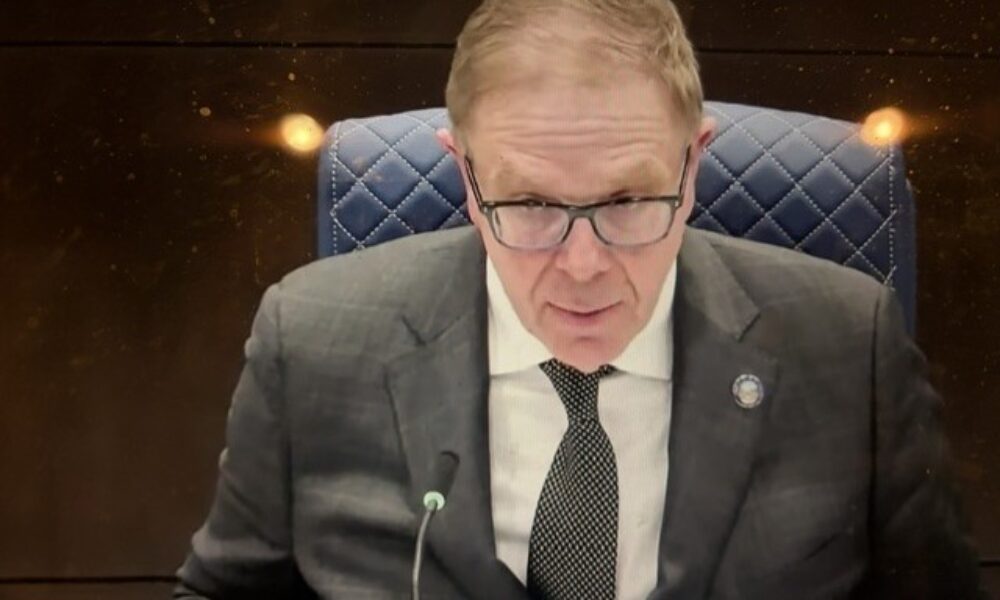
NGCB Chair Mike Dreitzer agreed with the proposed revision, saying it was “perfectly appropriate to remove the reference to the NCPG.”
“In fact, that should very well be stricken from our regulations, given recent activities there,” Dreitzer said. “And more to the point, it does make sense to have Nevada-specific responsible gaming resources as to what exists in our regulations.”
Board member George Assad agreed with the decision, asking if the NCPG had “hooked up with Kalshi and prediction markets.” Lengsavath said that seems to be the case.

“The facts are that the NCPG accepted a $2 million donation from Kalshi. That’s a factual statement,” Dreitzer said.
In May, Kalshi partnered with the NCPG through a $2 million two-year investment to fund a Financial Trader Health and Safety Initiative.
The NCPG created a new “Financial Services & Trading Subcategory” and made Kalshi its first Platinum-level member. The NCPG has made it clear that it maintains a neutral position on the legal status of gambling and prediction markets, arguing that its mission is to mitigate harm wherever it occurs.
As a result of its partnership with Kalshi, several state regulators and advocacy groups withdrew their memberships from the NCPG in protest. Those groups include Nevada’s problem-gambling organization, the Michigan Gaming Control Board, Ohio Casino Control Commission, and the Evergreen Council on Problem Gambling in Washington.
NCPG Executive Director Heather Maurer resigned in late September amid the ongoing controversy surrounding the Kalshi agreement.
During a workshop on Wednesday, the NGCB approved the revision, which was included among 12 pages of proposed regulatory changes and removals of some outdated regulations. The proposals will now be considered by the Nevada Gaming Commission on October 22.
Among the other revisions were the elimination of the limit on the private sale of two slot machines per year, which is contained in Regulation 14.330(1), and changes to how licenses are surrendered contained in Regulations 9.010(2)(a)(2) and 9.010(2)(b)(2).
Lengsavath said the agency has never encountered problems with slot machine sales in the past and the control board would still approve all requested sales.
“We still have the ability to monitor any private purchases or sales … because I’m sure there would be any number of concerns,” said Dreitzer, adding he would be more comfortable with a number that could be sold annually.

For example, Lengsavath said, someone inherits 20 slot machines and they want to sell them, but right now, they can sell only two a year, so it would take 10 years.
“If that were to be the case, 20 wouldn’t be a big deal,” Lengsavath said. “We already know about them before. No big deal as long as they’re not for use or play in Nevada.”
Dreitzer asked if there was ever a circumstance where the state or private parties have been hamstrung by this.
“Twenty may be a bit much, but we’ve had it where they’ve tried to sell four and now, they have to wait another year,” Lengsavath said. “It really didn’t make sense.”
Dreitzer told him to put a number of it, which Lengsavath agreed to do before the NGC meeting later this month.
“I think 40 and 50 are more than we’ve ever seen, but I didn’t want to arbitrarily throw out a number there,” Lengsavath said. “We could certainly discuss a number that could be fair.”
