

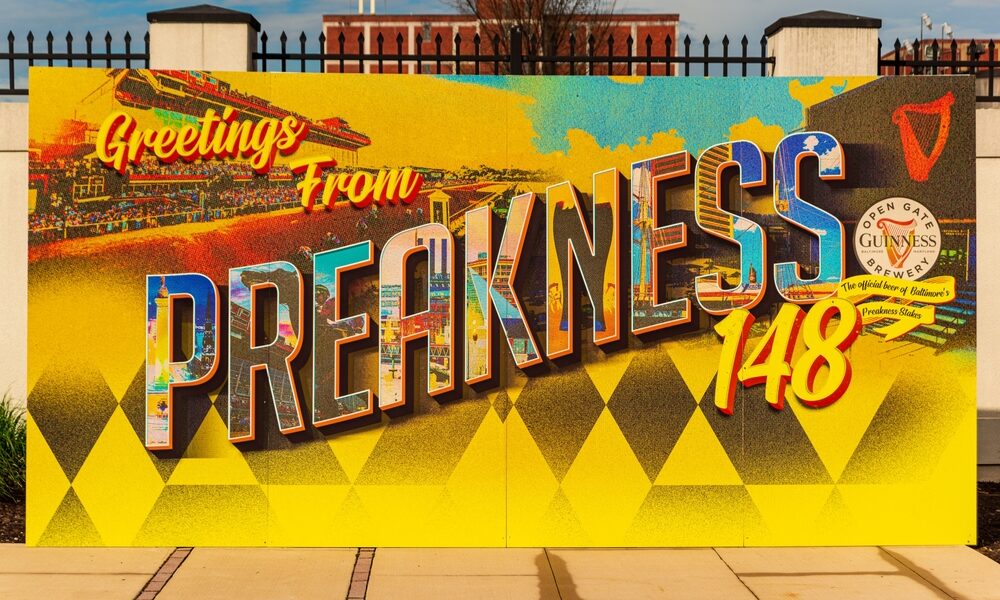

On June 19, the state of Maryland exercised an $85 million right of first refusal for the intellectual-property rights to the Preakness and Black-Eyed Susan Stakes.
That initiative headed off a purchase by Churchill Downs, which was in second position for the deal. The Free State already owned the Pimlico race track and the Preakness brand itself.
Maryland Gov. Wes Moore said that the purchase was made without using taxpayer dollars. It will be funded through the issuance of tax-exempt bonds recouped through betting revenue, ticket receipts, and sponsorships.
“The Preakness Stakes is more than just a race: It is a cornerstone of Maryland history, culture, and economy,” said Moore at the time of the decision. His move was applauded by state Comptroller Brooke E. Lierman, who said, “Given the financial terms of the current license agreement with 1/ST Racing, acquiring the intellectual property is the more fiscally responsible option, ensuring that the state owns this historic asset rather than leasing it indefinitely.”
Wall Street analysts were quick to note that Moore’s move ran a cart and horses through Churchill Downs’s plan to control all three facets of the Triple Crown. Truist Securities analyst Barry Jonas observed that the Preakness would not have been a meaningful cash driver for Churchill Downs, contributing perhaps $6 million annually.
Jonas continued that he was unsure if Maryland, beset with a considerable budget deficit, was the best party to be operating the race and ensuring its profitability. “The answer to this question will ultimately define next steps regardless of who owns the IP rights and we think Churchill Downs could be a natural alternative, given the overwhelming success of the Kentucky Derby,” he wrote.
The analyst did not expect Churchill Downs to burn any Preakness bridges. Indeed, he thought the company would “explore other avenues to work with the Preakness (and other races) down the road. The ability to leverage synergies with the highly successful Kentucky Derby, minimal capital requirements, and potential upside from the possible addition of HRM machines make the Preakness an attractive target, in our view.”
Jonas published his analysis on June 21. He was beaten to the post by Jefferies Equity Research analyst David Katz, who weighed in about it on June 18, before Moore’s decision was even publicized.
Katz called the thwarting of Churchill Downs a modest negative for its stock, which was trading at $88.27 a share at the time. Still, he believed that “the opportunity to engage on the redevelopment is intact and therefore a first look at owning Pimlico and the event in the future also remains.” Like Jonas, he felt that the company had “more meaningful catalysts” for its share price beyond the Preakness.
The Jefferies analyst pointed out that the Preakness is a far less valuable asset than Churchill Downs’s own Kentucky Derby, averaging less than one-third the TV viewership. Its most recent physical attendance (4,800 people) was also greatly dwarfed by the Derby’s turnout of 150,000.
Katz expressed some relief that Churchill Downs, minus the Preakness, would not be spending $85 million to acquire a $6 million fee stream. He felt that the company would have ongoing relations with Maryland to either purchase Pimlico or even the Preakness itself, but “is less assured than prior. Putting the news is proper context, we believe there should be more meaningful drivers of the stock in the future that include capturing greater economic value from its existing asset base.”
Reporting on June 22, J.P. Morgan analyst Daniel Politzer was also of view that the news was modestly negative for Churchill Downs. In particular, he found it a setback to a “pivot to a company more associated with unique experiential-based offerings than drive-to gaming.” He, too, was of the view that more will be heard from Churchill Downs regarding the Preakness.

Unlike his colleagues, Politzer discerned a concrete point of re-entry for Churchill Downs vis-a-vis the race. He pointed to language in Moore’s announcement which stated that Maryland was “open to identifying areas of mutual interest with Churchill Downs and other industry partners to benefit the broader Triple Crown and the sport of horseracing.”
