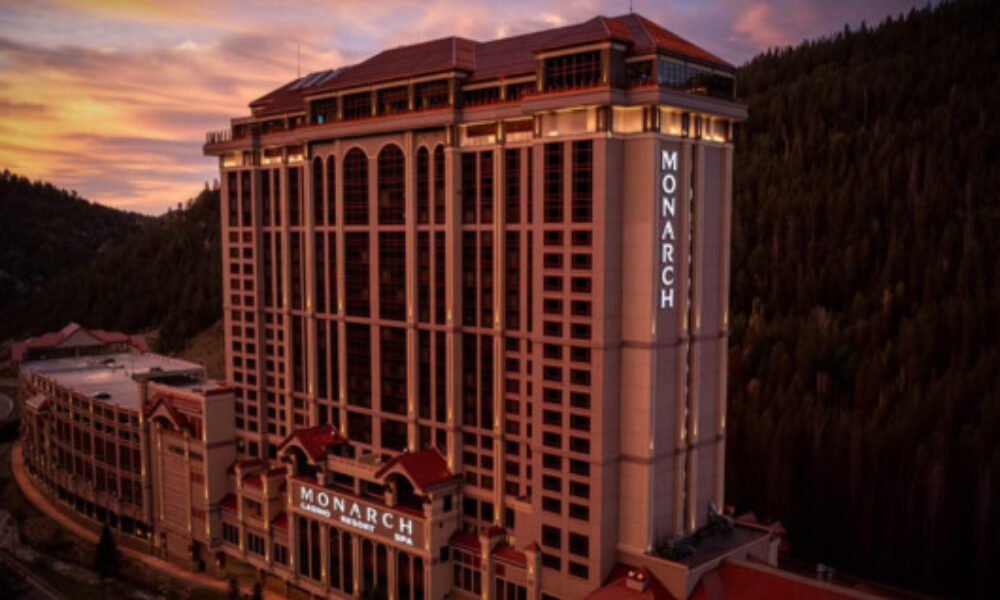

Wall Street expectations for Monarch Casinos & Resorts were slightly missed, according to the July 20 earnings disclosure. This led Jefferies Equity Research analyst David Katz to opine that it reflected the high bar Monarch had to clear, with its stock up 29.9 percent in 2026.
Katz’s views were found in a July 21 investor note. He wrote that Monarch leadership “remains disciplined in its operating approach, and while we see marginal runway for growth within the existing portfolio, meaningful upside requires an external growth catalyst, either through development of the 20-acre Reno parcel” or through merger-and-acquisition activity.
Katz kept a Hold rating on Monarch shares and reset his price target to $123, down a dollar per share. The stock was trading at $124.38 per share at the time of his report.

After speaking with Monarch management, Katz observed that the company was facing cost problems in food and beverage, required to pony up $1.1 million more than usual in workers’ compensation costs and other employee benefits.
However, hotel trade was said to be potent, so strong that some group business was turned down for lack of available space. Monarch continued to position its hotel product for high-value customers, Katz reported. “Catalysts in the downtown Reno market, including sizable group events and completed capital projects at competing properties, have had a limited impact on the Atlantis,” which is suburban.
Although M&A actions were contemplated, management reiterated to Katz the primacy of taking a disciplined approach. They also felt that the current two-casino portfolio had potential for incremental revenue growth, as well as further cost controls.
“Despite successful properties in growing markets, we believe the absence of external growth limits share upside at present,” Katz cautioned. He projected full-year revenue of $572 million, down from $593 million. As for cash flow, Katz ratcheted his $213 million target down to $209 million.
“In short, our updated estimates reflect a modest reduction in revenue assumptions, driven by additional conservatism in the base business,” Katz elaborated. “We are also increasing operating expense assumptions to account for inflationary pressures, partially offset by continued operating discipline.”
Truist Securities analyst Barry Jonas was somewhat more clement, noting that Monarch had repeatedly beat earnings estimates. He also stressed that the headwinds took the form of one-time events. In his July 20 note, Jonas had a Buy rating on Monarch and a price target of $144 per share.
Jonas termed the casino results “solid” and observed that Atlantis rooms were being brought back on the market at higher price points, helping drive those revenues. He said the recent Atlantis renovation was a continuing boost and that the Reno market was stable. Bowling events, he noted, had mostly redounded to the benefit of Caesars Entertainment casinos in the area.
Monarch leadership “also noted that the Reno market remains fiercely competitive,” Jonas said. He reported that occupancy and room makeovers had driven average daily rates 20 percent higher. Jonas added that executives were evaluating the best use of 20 vacant Reno acres, inspired by the strong group business they were seeing.
Despite property upgrades from the competition in Black Hawk, Colorado, Monarch was said to be successfully defending its 33 percent market share in that city. The limited number of competitors and the quality of Monarch Black Hawk meant that executives were unconcerned about possible promotional wars. “Still, there remains opportunity to attract more high value/upper-end customers who are either new or more infrequent visitors,” Jonas remarked.
Neither Black Hawk nor Reno was said to be feeling the effects of recent spikes in gasoline prices. Consistency in area employment levels and population growth were cited as bolstering factors, and healthy economies in both cities were credited.
Jonas noted that Monarch abstained from share repurchases in the second quarter. Management, he said, was sanguine that its current financial health was “favorably positioning the company for investing in its properties, future repurchases and paying cash dividends.”
The Truist analyst reported Monarch’s M&A remarks but said he expected leadership to remain very choosy in its approach. He also pointed out, in closing, that a highway closing in the Black Hawk area was expected to impact business, potentially for up to two years.