

Peter Carlino, CEO of Gaming & Leisure Properties Inc., was down for the count with back pain. But his absence from GLPI’s fourth-quarter-earnings call did not dampen the conversation.
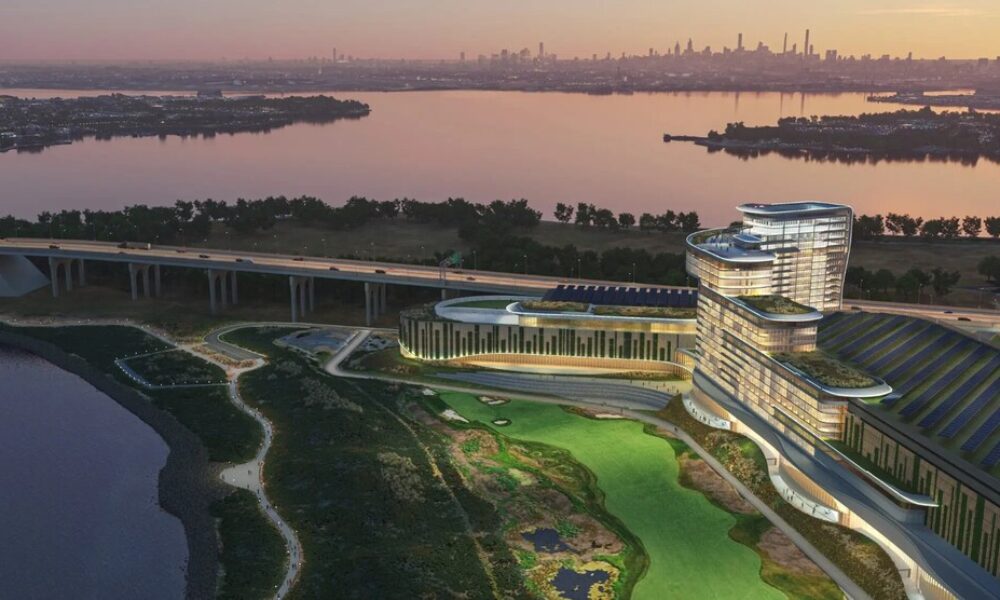
Questioning by assembled Wall Street analysts was dominated by curiosity about New York City, where GLPI is keeping an eye on Bally’s Bronx. Chief Development Officer Steven Ladany called it “an attractive opportunity” but said there was no shortage of capital providers for that resort. “Ultimately, we are not going to provide the majority of the capital for a $4 billion project.”
Nor was GLPI’s interest exclusive to Bally’s Bronx, one of three casinos slated for Gotham. “We’re open for business and hoping to look at other projects,” said Chief Operating Officer Brandon Moore. But, he added, GLPI loans would be contingent upon partial ownership or options to purchase.
“We’re happy to have conversations,” Moore concluded. “Please give us a call.”
GLPI’s exposure to Bally’s was the subject of repeated analyst queries. CFO Desirée Burke responded that GLPI was deeply into Penn Entertainment as well. “We really look at the opportunity that we’re funding,” she explained. “We’re not going to put a limit on a tenant’s percentage of our balance sheet.”
“We’re also not diving headfirst into every opportunity just because of the name on the building,” Moore added.
Ladany said GLPI “haven’t seen, don’t fully understand” Bally’s Bronx. “We took a look at the Chicago project and capped our exposure at $1.1 billion,” and GLPI’s attitude would be similar in New York.
Interjected company spokesman Carlo Santarelli, “There’s going to be no shortage of funding [for Bally’s]. That project in particular has quite a few suitors.” Asked why Bally’s was trading at a discount, Santarelli replied, “The stock does trade where it trades” and that GLPI execs were not oblivious to their tenants’ stock performance.
One analyst noted that Bally’s casinos continue to post negative cash flow. “Bally’s is in a development period right now,” Ladany shot back, saying that many other companies went through the same thing. “It’s temporary.”
Bally’s Chicago, Moore noted, is 20 percent completed. He cited the recent jumping of construction cranes at the site and said, “The project’s going well.” He placed its opening in the first six months of 2027.
Queried on the subject of projected Bally’s Las Vegas, Moore praised the adjacent Oakland Athletics baseball stadium, which he deemed “spectacular … We’re looking to Bally’s to finalize their plans. We’ll consider investing more,” as details become available.
One analyst noted that the anticipated purchase price for Bally’s Lincoln, in Rhode Island, had come down from $735 million to $700 million. “There was a little bit of competitive pressure from the tribes,” Moore said of nearby casinos, adding that the rent was lowered as well.
Turning to Cordish Gaming, another GLPI tenant, executives were asked if the potential legalization of gray-market slot machines and igaming in the Cavalier State would diminish the potential of Live Virginia, in Petersburg. Ladany replied that Virginia was passing legislation “in order to continue discussions” and that igaming, if passed, was two years distant.
Another market that came up for discussion was Niagara Falls, where the Ontario government wants to ramp up casino development. “We’ve spent a lot of time looking at casino projects in Canada,” said Ladany, adding that the process was complicated by “tax leakage” when repatriating dollars to the United States.
As to whether GLPI would execute more deals as interest rates come down in the U.S., Moore responded that “a lot of these conversations don’t pivot on the treasury rate. It’s not like these 10 basis points change their lives. The reality is it’s not spur-of-the-moment.”

Burke elaborated that, after Bally’s Lincoln, GLPI would be leveraged at 4.9 times cash flow. “We also have quite a bit of free cash flow in 2026” and won’t have to go to the debt or equity markets for capital.
GLPI was not, Moore added, turning down transactions due to the cost of capital. “I don’t see any reason here to turn away business just because we have business already signed up.”
Probably half of GLPI’s project pipeline, Moore continued, is development-oriented “but it’s not because they’re Greenfield.” Many are reinvestments in existing assets, such as Boyd Gaming’s redo of Treasure Chest, in Louisiana.
“There are plenty of discussions we’re having around traditional sale/leaseback,” Moore said. But no non-gaming purchases were “actionable” at this point.
“We’re interested in the Las Vegas locals market,” the COO resumed. “We get inbound calls around [M Resort] with interest. He said GLPI was looking at smaller Vegas assets: “We continue to be active there, where it fits.”
“We are very bullish for ’26 and ’27,” Moore finished. “So we’re very excited by the days ahead.”

