


I’ve spent hours in the Vegas airport watching slot machines. One goes dark, and a few seconds later it’s running again like nothing happened. Somebody was already on it, and the player never had a reason to walk away. The equipment is better than ever, and the response behind it is faster too, but nobody asks where that hardware goes when it comes off the floor.
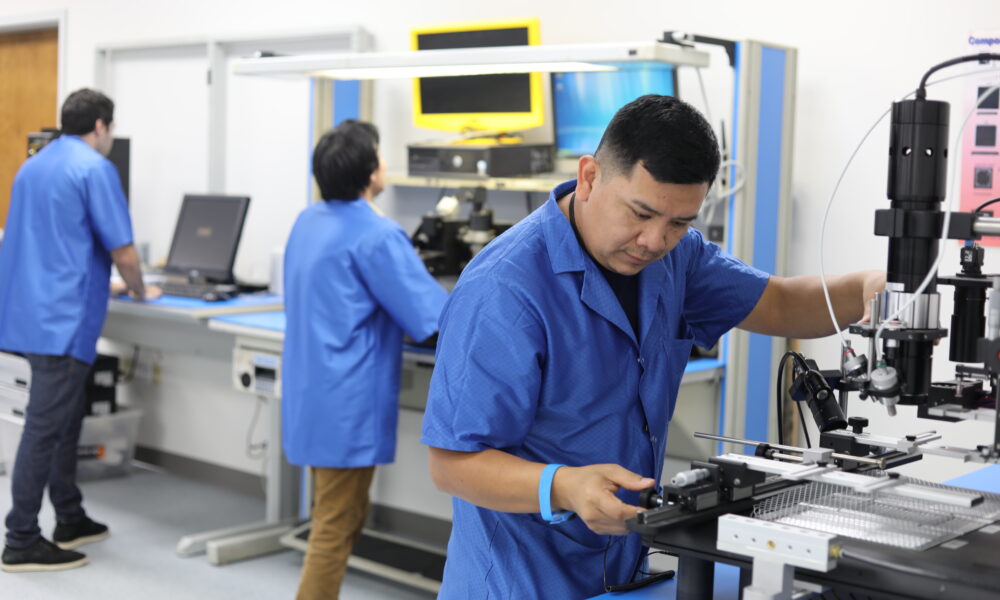
Renova Technology has spent 30 years answering that. We handle returns and repairs for manufacturers in point of sale, lottery, kiosk, fintech, telecommunications and public safety, and over the last several years leaders in gaming hardware. We don’t design the next cabinet or next best product. We see everything that comes back, which parts fail and how often.
 More than a million pounds
Over the past decade we’ve kept more than 10 million pounds of electronics out of landfills, over 1.2 million a year. When a unit comes back, we provide the reverse logistic to get that product back out to the field as quickly as possible.
Not every repair is the same. Some units need a cleaning, a new connector, or a worn part. Others need a failed board traced to the component that caused the problem, which is how we repair 96 percent of the boards we take on instead of replacing them. I asked Simran Somani, our marketing coordinator, how she thinks about sustainability here.
“A lot of companies treat it as a front office thing,” she said. “You take the single serve coffee pods or plastic straws out of the break room, and it goes in the annual report. For us, it’s just what the business does. It is exciting to see hardware alive longer, then hand the data back so the next product is even better, which is an immediate impact of our sustainability efforts”.
Proof in the data
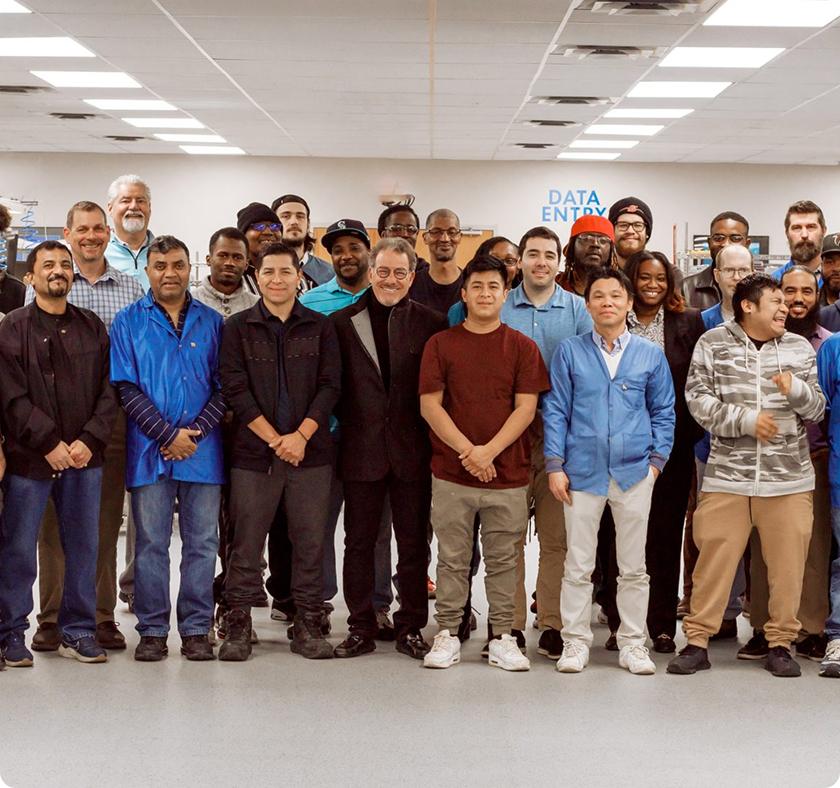
About 20,000 units move through our facilities every month on a single shift, handled by a team that has grown past 60. We track everything: serial number, what we fixed and which parts we used, who did the work, how it tested, and where it went.
A large manufacturer came to us with about 8,000 displays showing the same small defect that needed to be corrected. They asked us to troubleshoot so their new product introduction team could have the findings. What made that easy is that we were already doing the work. We diagnose every board that comes in whether anyone asks or not, so the pattern was in our records before the question was asked. We could point to the exact component and perform the changes in-house at our facilities. That is the real argument for lower cost of ownership, and it matters more every year as supply chain costs climb.
Focus on partners
This year we’re launching Renova 360 Enterprise, which merges all our service modules: building and shipping it, taking it back from the field, refurbishing it, and sending it out again. It runs four modules: Renova Repair, Renova Reverse, Renova Forward, and Renova Inventory.
A cabinet, bill acceptor, touch display, or computer doesn’t travel a straight line with an end. It travels a circle. The unit we ship today is the unit we diagnose two years from now, and what we find shapes what gets built next. Split that across three vendors and the loop breaks. The difference in having all these modules at Renova provides a true solution approach.
We’re members of AGEM, and through GAMOA we support Georgia’s COAM market close to our headquarters outside of Atlanta. Renova supports world class manufacturers across different industries, including leaders like Intralot Bally’s, Flock Safety, NCR, Tellermate, and Wahoo Fitness. We’ve grown a great deal over the past 24 months, recognized as Inc Southeast Fastest Growing Companies 3 Years running, as more of them look for practical ways to lower costs and make their sustainability goals real.
Back to the slot at the airport, I don’t know whether anything we touched was inside it, but I like to believe we had a hand in it. This industry is growing, and we are scaling with it, so those odds keep getting better.
