

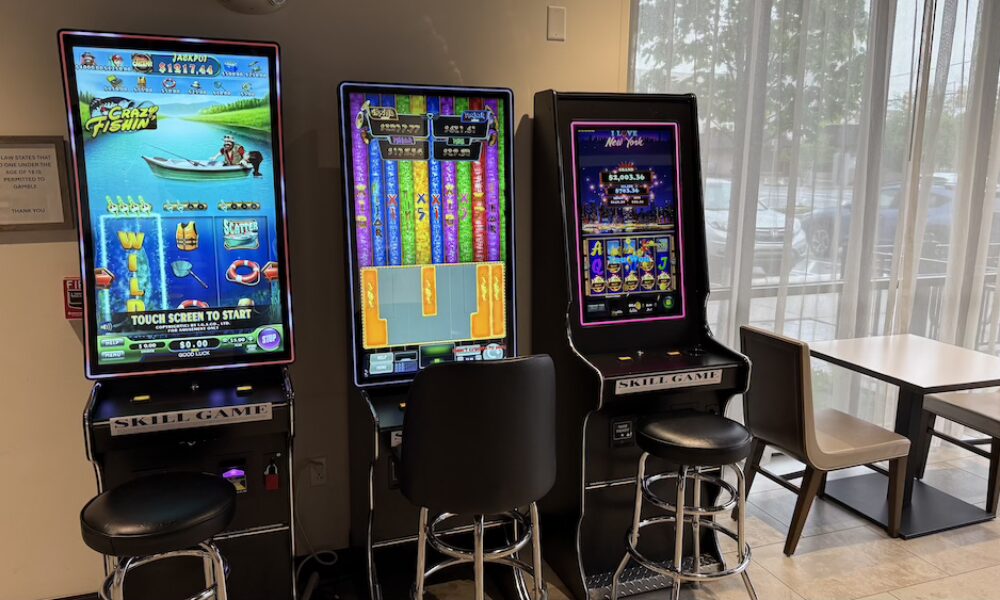

The Supreme Court of Pennsylvania on June 15 ruled that “skill games” are illegal. The court said a skill game is a slot machine with a different name. The court reversed early lower-court rulings that allowed skill games to operate. Writing for the majority, Justice David Wecht wanted to make it clear that the court was not creating law, but recognizing existing statues. He wrote, “It is not this court that declares ‘skill games’ to be unlawful. Rather, it is the General Assembly that did so nearly a decade ago.” Justice Wecht said the court found that the devices qualify as slot machines and are therefore subject to state laws and regulations.
The court voted 4-2 and the divided vote is indicative of the divided sentiment in the state. Skill games have strong support among those who profit from them. There is also a very story anti-skill-game constituency, primarily law-enforcement officials and casino operators. Regardless of the opposition, skill games have become firmly entrenched in Pennsylvania’s economy and culture. It is estimated that there are 70,000 games in the state. To quote Justice Wecht again, “Thriving therein, the devices now may be found not only in taverns, restaurants, and social clubs, but also in minimarts, gas stations, grocery stores, laundromats, pizza parlors, and various other establishments throughout Pennsylvania — even some dedicated solely to the purpose.”
The impact of those 70,000 skill games on the Keystone State has not yet been officially measured, but it is significant. Illinois can serve as a model. In Illinois, 49,500 video gaming terminals (VGT) are located in 8,900 establishments. In the last 12 months, those VGTs generated $3.5 billion in revenue and paid $1.2 billion in tax. The Illinois model implies that skill games in Pennsylvania could generate $5.0 billion. If taxed at the same rate as other legal gambling in the state, the games would generate $2.5 billion in tax.

Those numbers whet the appetite of lawmakers, government officials, and tax collectors. The potential tax revenue could be used to build castles in the sky. Pennsylvania has a long tradition of using gaming to fulfill the dreams of governors and lawmakers. Large license fees and one of the highest tax rates in the country have worked magic in the past. But the golden goose is about out of eggs. The last round of license bidding demonstrated there is little interest left on the part of operators to pay to play in Pennsylvania. The opportunity to use skill games seems perfect and timely, as there is a monster hole in the budget.
On the other side of the issue are the skill-game makers and distributors, the operators of the establishments hosting the games, and a core of loyal players. Over 10 years ago, maverick game providers saw an opportunity to place games in a wide array of establishments in the Keystone State. The games were designed to wiggle through loopholes in the law. Because the strategy worked and the games were allowed to operate, the game makers improved the games. Skill games in Pennsylvania have become strong competition for the slot machines in casinos.
And like VGTs, VLTs, and slot machines on routes in Illinois, Montana, and Nevada, the games provide an important revenue stream for small businesses and social organizations. In many cases, the slot revenue is enough to keep a small bar or restaurant in business and allow social and fraternal organizations to continue to function.
There is another class with a vested interest in the issue: casinos. The skill games cut into casino revenue as surely as the VLTs in Illinois have into the revenue of casinos in that state. In Pennsylvania, the casinos supported the state’s effort to declare the games illegal. On the surface, this appears to be a victory for the casinos. However, there is a catch. The court gave the state legislature 120 days to fix the situation. The legislature could ban the games outright, but that is not likely. Instead, lawmakers will probably create a framework to permit, license, and tax skill games. Any form of legalization of skill games will be a loss for the casinos.
The impact on the supporters of the skill games can only be guessed. Most establishments could continue to function after paying the required fees and agreeing to pay tax on the revenue. The new laws and regulations will probably create opportunities for slot manufacturers to compete. That would not be good news for the mavericks of gray-area gaming. Skill-game makers thrive in a very special place without taxes or competition. It is too early to declare any winners.
One thing is certain. Pennsylvania’s gaming landscape will continue to be very competitive and expensive for operators. However, for the state, the smell of a skill-game tax will be every bit as sweet as the smell of the slot machine tax.
