

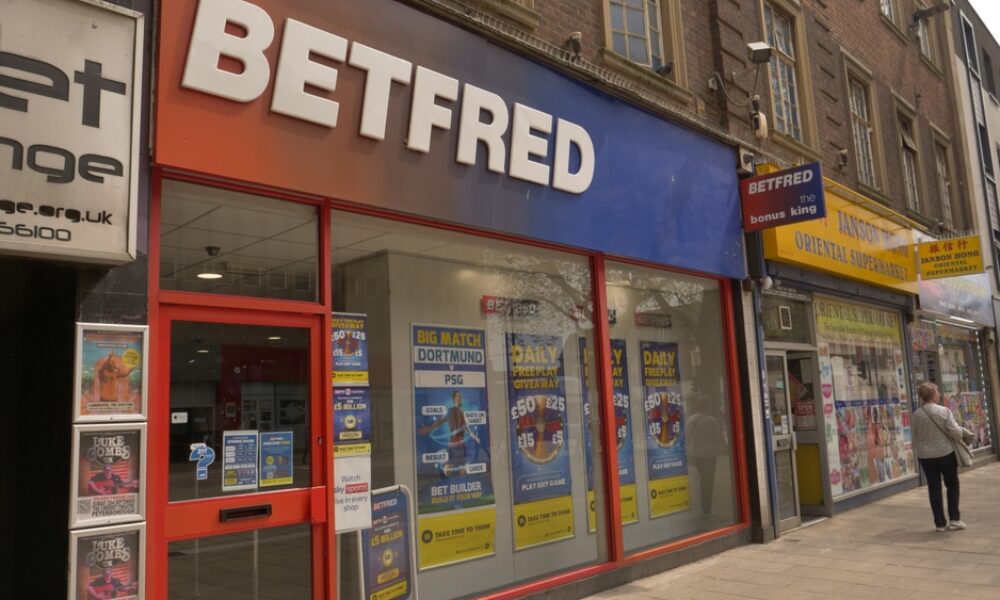

Less than a month into the role, new UK Prime Minister Andy Burnham appeared to make an enemy of the gambling industry.
Burnham listed betting shops, alongside vape shops and “dodgy businesses,” as stores that had “hollowed out” British high streets. “If you look at your high street these days and think ‘who asked for this?’, you’re not alone,” he said.
Accompanying the rhetoric is a change in guidance to local planning rules around betting shops. Councils will no longer be told to “aim to permit” betting shops, meaning that if a council opposes the gambling industry, it would now be able to prevent new shops from opening. In the long term, that is likely to be a serious blow to retail betting and comes on top of a wave of tax-driven shop closures earlier this year.
If it can be achieved, a revitalization of British high streets would be more than welcome. But demonizing betting shops will not bring the UK any closer to that outcome.
Addressing the proliferation of betting shops would have a major negative impact on the gambling industry, of course. But it also won’t do much to improve town centers.
Notably, the number of betting shops in the United Kingdom has fallen significantly since 2012, from 9,128 to 5,825. Any proliferation of bookies’ shops has simply been the remaining shops becoming more noticeable, as other sectors experienced even more rapid declines.
That highlights the key point: The betting industry is accused of causing damage to the UK’s high streets, but in reality, its increased prominence is simply a symptom of wider decline. A crackdown on betting shops would not bring back popular retailers that have cut back on stores amid the rise in online shopping.
Betting shops can be pro-social locations and indeed, major UK retail betting operators have made an effort to bring their shops in this direction since the 2019 introduction of stake limits on fixed-odds betting terminals. Ideally, if some in government were concerned about betting shops looking like a sad sight in town centers, they could work with the industry to encourage more.
However, opponents of the betting industry often have made their minds up.
Burnham’s comments are just one example of a trend that exists beyond the UK. The specific case of betting shops on the high street may be a primarily British one, but there is a wider trend, where going after the gambling industry is seen as a tradeoff-free solution to problems.
It has become all too popular to believe that the tax burden should not be shared by the public at large, but instead borne only by the least popular groups. The gambling industry is the ideal unpopular “someone else” that can always be taxed more.
From the industry’s perspective, it might not be easy to convince politicians and the public not to treat gambling as a convenient villain or the cause of whatever ills are the current hot topic. Indeed, most of the industry’s public-relations efforts appear to have had little success. But calmly pointing out the facts is still the most effective way to change minds.
Industry opponents need to understand that as popular as it may be among certain segments of the public to hammer the gambling industry, doing so will not solve many problems. Increasing gambling taxes isn’t a magic money tree that can be used to pay for any underfunded programs and getting rid of betting shops does not mean that their premises will be turned into a beloved long-lost retailer.
Eventually, when the betting shops are gone, that will become clear.
