


The National Football League is set to kick off its season. FanDuel and DraftKings will also kick off theirs. The football teams will battle each other for 18 weeks. Each team hopes to proceed into the playoffs and then on to glory in the Super Bowl. FanDuel and DraftKings will be battling for something other than glory and trophies: your money. Each year ,especially during football season, the two top sports betting companies fight each other for customers. This year, the battle royal will become even more intense. The prediction markets are joining. The new competitors will raise the cost of the game. FanDuel and DraftKings were already setting a very high spending bar, but Polymarket and Kalshi are sure to raise it even higher.
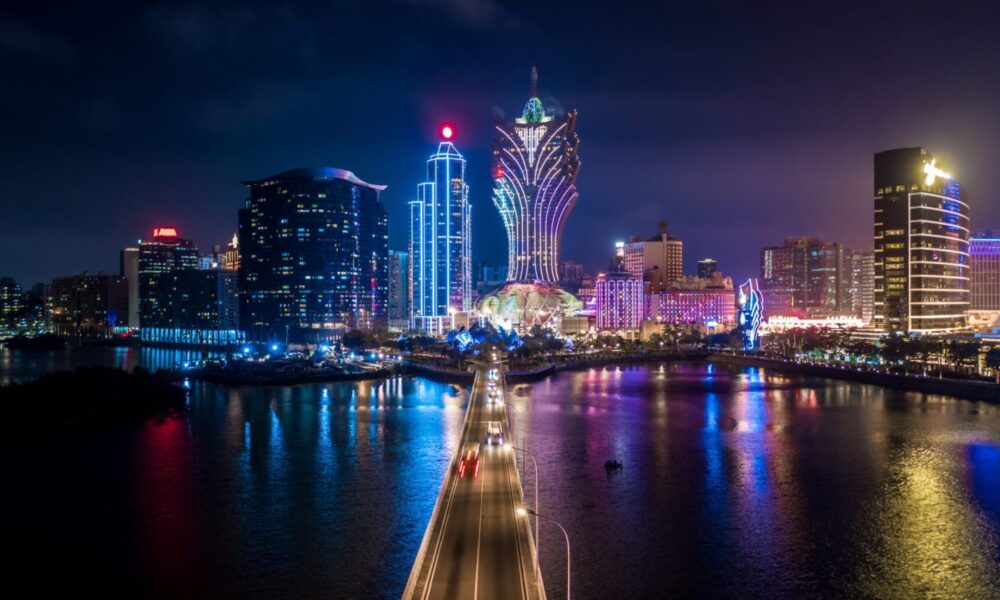
Across the Pacific Ocean, a battle not unlike that of FanDuel, DraftKings, Polymarket, and Kalshi is taking place. The casinos in Macau are fighting one another for customers and like FanDuel and DraftKings spending heavily; in Macau it is called reinvestment, what we call comps and other promotional benefits. The competition is becoming very intense.
The fortunes of the casino industry in Macau vary with the economy and policies of Mainland China. China has put pressure on the casinos to diversify and its citizens to gamble less. This summer, the gaming industry in Macau is experiencing a slowdown. The analysts blame the Mainland economy, the World Cup, and an increasingly competitive casino industry in Asia. Whatever the cause, the sometimes-bustling industry is stalling. And that has led to the casinos fighting for customers.
Macau Business published an article on the subject recently. The article said, “The world’s largest gaming companies are grappling with a slowdown in Macau, according to analysts. Seaport Research Partners said the Macau market remains highly competitive, with operators battling for premium customers amid signs of fatigue at the ultra-high end. There is insufficient ultra-high-end demand in the market for all six Macau operators to show outsized growth simultaneously, so share gains are increasingly driven by aggressive reinvestment strategies.”
Fighting over customers is as old as the gaming industry itself; with a finite number of customers, each one is valuable. For example, in Reno, the Comstock Hotel Casino opened in the summer of 1978; that year, five casinos opened, adding nearly 2,000 hotel rooms to a market already approaching a saturation point. The new hotels fought tooth and nail to fill the rooms, using room rates as a weapon. The rates dropped to under $10 over the fall and winter of 1978. Ten dollars is not a rate that attracts the highest quality of customers. For the Comstock, it was a painful lesson.
In the winter of 1978 with $8 room rates, the casino discovered, by accident, that cheap rooms brought cheap customers. An observant employee noticed that some of its customers rode skateboards to the hotel. Skateboarders checked into $8 rooms and later, other skateboarders arrived and went straight up to the room. Dozens and dozens of them partied late into the night before skateboarding home. Over its short history, the Comstock struggled to find the right balance between pricing, promotions, and profit. The weapons were low room rates, free drinks, and unlimited room, food, and comps. A free drink is not free for the casino. The tactics did not always result in profit; in fact, profits shrank with the ever-increasing cost of those benefits.
The Comstock could not compete and closed. The causes were straightforward: The property had aged out; the owners didn’t have the will to put more money into improving and updating; and the costs of energy, insurance, and payroll kept going up. But the most important cause of the Comstock’s demise was Indian gaming. When Indian casinos opened in Washington, Oregon, and California, the number of gamblers coming to Reno dropped. The tired out-of-date Comstock was competing for a smaller number of customers with less financial reserves than its competitors. In today’s world, the Comstock would be considered underfunded and probably would never be built. In its time, that was not the case.
Underfunded, overleveraged, and excessive expenses brought the Comstock down. Those issues plague others as well. In the sports betting industry, only five players are left from a field of dozens. The cost of player acquisition was simply too high for most, as FanDuel and DraftKings were willing to outspend everyone, forgoing profit for years. This year with the prediction market players joining the fray, the cost of competing will be more than some can bear.
The casinos in Macau are now facing the issue full on; according to Seaport, there are not enough premium players to go around. Even the Las Vegas Sands (LVS), with nearly $14 billion in revenue in 12 months, is vulnerable. LVS is committed to an expensive expansion in Singapore and is engaged in the premium-customer war in Macau. Moody’s said it had concerns that LVS was becoming overleveraged and when revenue dropped, LVS would feel the stress of debt. Revenue in Macau dropped 1.2 percent in August. LVS will survive, but the bottom-tier properties will struggle to tread water.
Competition and leverage — a difficult duo in Macau and elsewhere.
