

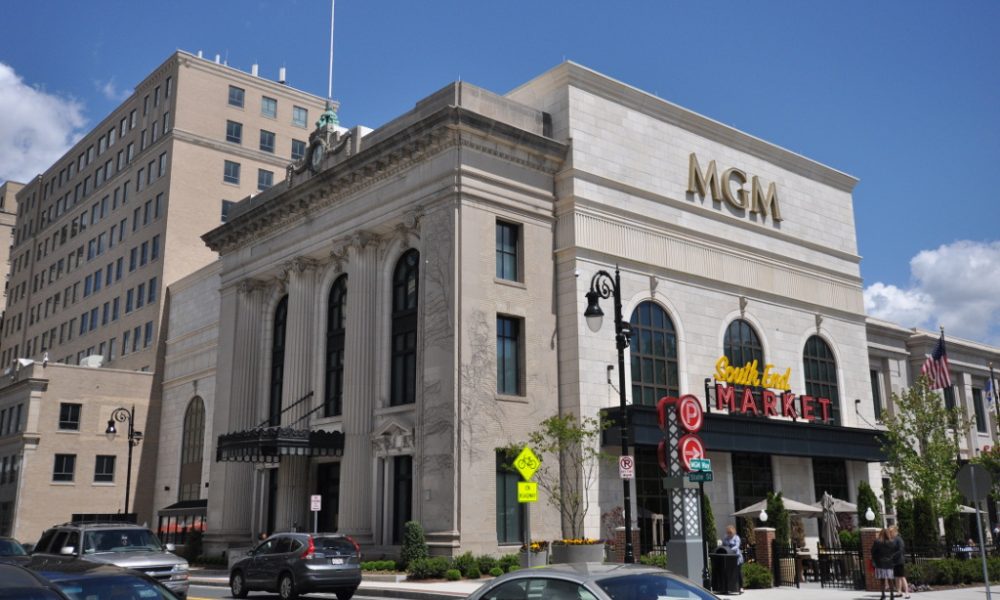

The city of Springfield, Massachusetts, has been listening to rumors of a sale of MGM Springfield. Two rumors of potential sales are in the air and on the street. One concerns media mogul Barry Diller. Diller would like to buy the entire MGM Resorts International company for an estimated $18 billion, which today would include MGM Springfield. As an aside, Diller thinks a bag of casinos would protect him from a financial meltdown caused by artificial intelligence.
The other rumor of a buyer is specific to the Springfield property. Clairvest Group is thought to have offered $500 million for it. Clairvest has already purchased another property from MGM, one in Ohio for $546 million. So the rumor is probably well founded. In either case, city officials in Springfield did not like the idea of a sale and sued MGM.
The city accused MGM of failing to live up to its commitments. In its agreement with Springfield, MGM promised to employ 3,000 people, put 3,000 slots on the casino floor, and refurbish a specific building. The city claims that MGM failed on all three. The MGM has approximately 1,500 slot machines and equal number of employees. The city further stated there was no visible progress on the building.
MGM is not pleased. The corporation is accusing the city of not only undermining a potential sale, but doing unspecified damage to it; one can see a potential countersuit in that language. In MGM’s eyes, Springfield is trying to milk MGM for every last dime it can. A mess for sure, but messy is probably an accurate way to describe the casino process in Massachusetts — from its inception 20 years ago to today with the conflict in Springfield and a strike in Boston. There, the employees of Encore Boston Harbor are dissatisfied with their share of the wealth that Encore is raking in. It is hard to find a happy camper in the Bay State.
In 2007 before the Great Recession, Massachusetts was already plagued with a struggling economy, high unemployment, and a lack of new investment. Governor Deval Patrick proposed legislation that would permit three casinos in the state. The fees, taxes, employment, and investment would pull the state up by its bootstraps. The legislature considered Patrick’s idea, but not until November 2011 did the enabling legislation finally pass.
On November 22, 2011, Patrick signed the Expanded Gaming Act. When he signed the bill, he said, “Expanded gaming in Massachusetts, for me, is about creating jobs, good jobs at good wages for people all across the Commonwealth. It’s really, to me, as simple as that. It’s not the solution to every economic challenge we face and it won’t solve every social ill in the Commonwealth.” Without curing everything, gaming was meant to help.
The act required an $85 million license fee and each licensee had to invest at least $500 million. In addition, each licensee had to find a host community and get the approval of that city’s voters. With voter approval in hand, the would-be licensee needed to reach an agreement with the host city on additional fees and mitigation payments the casino would be required to pay. The negotiations could be touchy, as the mayors were greedy and drove hard bargains. The cities wanted as much as they could get for hosting a casino. That included an arbitrary number of employees and slot machines. Last-minute disputes nearly caused the deal for a Wynn Encore property in Everett to unwind; Encore was the last to be built and did not open until June 2019.
In Springfield, MGM was enthusiastic about the project, probably too enthusiastic. The revenue projects were unrealistic, as were the added slot/employee requirements. The number of employees and slot machines must be in direct relationship to the business. The numbers in Springfield were conjured up by a wizard and picked out of a wishing bowl. There were not enough customers in the region in 2018 to support the numbers required in the agreement. There are not enough in 2026. There will never be.
Over the last 30 years, the common denominator in bidding for casino licenses has been overestimating the market. MGM Springfield has never met expectations. The billion-dollar price tag was too high for the market. The tax rate, while not as high as in Pennsylvania and Illinois, is high compared to New Jersey and Nevada and burdensome. The extra layer of requirements added to the debt and taxation makes profitability a challenge. The city cannot see that; it is blinded by the number 3,000; it wants more jobs and slot machines. Unrealistic expectations and requirements are the same issues that faced Harrah’s in New Orleans. It took Harrah’s a long time to renegotiate its agreement with New Orleans.

Three decades into the 21st century, gaming is a mature industry. The industry and its regulators and lawmakers should have learned that agreements need to be based on actual revenue, not pipe dreams. But it would seem from recent events in Chicago, New York City, and Springfield that the lesson has yet to be learned. Certainly, the righteous mayor of Springfield is not going to let reality cloud his green-tinted spectacles manufactured by the Wizard of Oz. Pull down the screen and take off the glasses and let a little reality in. Please.
