


Fertitta Entertainment executives Steven Scheinthal and Richard Liem appeared before the Nevada Gaming Control Board on Wednesday July 8. They were there to begin the process of gaining approval for Tilman Fertitta to buy Caesars Entertainment. In May, Fertitta and Caesars agreed on a sale. Fertitta would pay approximately $31 dollars a share for the stock of Caesars, an estimated $5 billion, and assume $12 billion in debt. The total deal is valued at $17.6 billion.
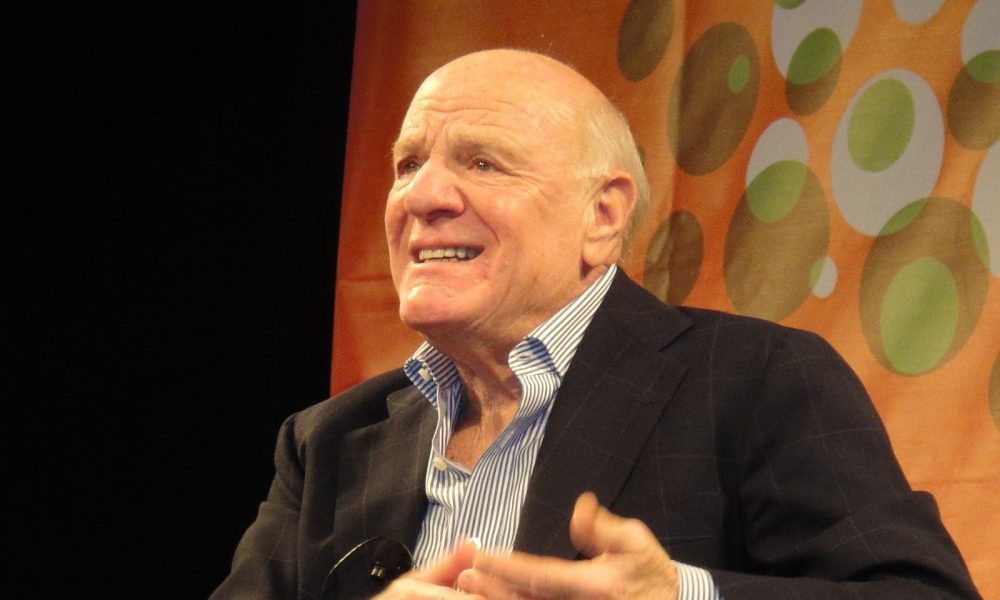
Just after the Fertitta-Caesars agreement became public a second deal, for a second company, surfaced. The owner of People Inc., entertainment mogul Barry Diller, offered $48 a share for MGM Resorts International, a transaction valued at $18 billion. The board of MGM is reviewing the offer. Diller is on the board, so the discussion should be interesting. But it is not yet time for Diller to appear before the Nevada Gaming Control Board to explain his intentions. That is a shame, because he has an interesting angle, an AI take.
In his press release on the offer, Diller said, “We began investing in MGM nearly six years ago because we believed it represented a rare kind of business: one with real world assets that AI cannot easily replicate or disintermediate and exceptional digital growth opportunities. We continue to believe the market materially undervalues the power and durability of MGM’s assets. We believe MGM’s management team is superb, and that there is a compelling opportunity to support MGM’s next phase of growth and help unlock its full value.” As a publisher, Diller is certainly familiar with the threat of AI to some industries. To Diller, Las Vegas and casino resorts are immune to that threat.

His point could be argued using the monthly igaming revenue figures from Michigan, New Jersey, and Pennsylvania. Internet casinos are slowly taking over the market in those jurisdictions. Granted, igaming is not strictly AI, but it has an AI potential. Game development on remote digital platforms certainly offers an opportunity to use artificial intelligence to deliver the most popular games. It is an ideal environment to use AI. Las Vegas may be the only jurisdiction that is safe from the digital invasion over the next decade or two. But Diller is trying to buy much more than a Vegas presence and those other jurisdictions where MGM operates face an AI risk.
Tilman Fertitta is not looking for an artificial-intelligence hedge. He is competing, trying to achieve a goal. In 2019, Fertitta tried to buy Caesars. He was thwarted by Carl Icahn, who orchestrated a purchase of Caesars by Eldorado Resorts. It is ironic that Icahn may have a second chance to ruin Tilman’s plan. The Fertitta-Caesars agreement left open a “go-shop” period, during which Caesars can solicit other offers. A counteroffer from Carl Icahn of $32 a share may or may not be on the table.
The go-shop period ends on Saturday July 11. After that date, Fertitta intends to begin filing the necessary applications. In every jurisdiction where there is a Caesars casino, Fertitta has to apply for permission for the transaction and to be licensed to operate the properties. It is a long process. First, it requires federal approval. There have been very few gaming mergers of this size. In 2005, MGM bought Mandalay Resort Group for $7.9 billion and Harrah’s Entertainment acquired Caesars Entertainment for $9 billion. In 2020, Eldorado Resorts closed on its purchase of Caesars for $17.3 billion.
What a coincidence that in 2005 and again in 2026, MGM and Caesars are in play. A second coincidence in the 2026 action is that both transactions would take a public company private. That has produced some interesting discussions about the advantages and disadvantages of public companies. Wall Street is concerned: What, analysts ask, is an investor who wants a piece of the Las Vegas Strip to do? An amusing question, given that Wall Street analysts have been warning investors of the risks of investing in Las Vegas for the last year.
If the offers move forward, it will take a year before either MGM or Caesars change hands. It will be a year of testifying before gaming commissions, selling some assets, and making other compromises to receive regulatory approval. There will be reports as each jurisdiction conducts its own due diligence. Inevitably, there will be speculation on the implications of ownership change for the local community. But for the most part, it would be a boring story of regulatory procedure — if not for the personalities in the narrative.
Corporations are big and devoid of faces or personality; individuals are human. In this case, they definitely have faces and larger-than-life personalities. Barry and Tilman, Diller and Fertitta, just the names make great headlines. And when you add billionaire, it gets better. Unlike past mergers, these two promise a year of entertainment.
