


You probably don’t need a reminder from Bob Dylan to know that “the times they are a-changin’.” That’s certainly true on the casino floor, where you can no longer find a roll of nickels, a good concert seat priced less than your monthly car payment, or a hotel room without a “resort fee” attached.
That seems to be the norm everywhere these days. Your DVD collection is starting to look like a stack of 78 rpm records; having cable TV was once hip, but now the streamers think you’re prehistoric. And does anyone still believe anything from an internet video?
But now it’s hitting closer to home for me: books. I’m talking about the kind you hold in your hand and physically turn the pages. They are facing a real test. First, the locally owned small bookstores, with their dusty shelves and wonderful nooks and crannies, started disappearing. Super chains like Barnes & Noble seem to be surviving, but others, like Waldenbooks, were gone by 2011. Amazon has filled the void. They can dredge up almost any title with the click of a mouse.

But there’s a dark side to Jeff Bezos’s creation, which probably was the nail in the coffin for many of those independent bookstores. Their Kindle was, and still is, one of the most popular e-readers (along with Nook, Apple, Kobo, Obook (Kobo’s cousin), PocketBook, and a few others). I’ll admit it: I have the Kindle app on my PC, my iPad, and two different Kindle devices.
Maybe I’m part of the problem myself. I’ve been writing for CDC Gaming for almost a decade now, but I don’t think anyone at corporate headquarters has a clue as to why any writer would use paper and ink.
There’s nothing wrong with any of that. I’ll occasionally read a full-length book on one of my electronic devices. But if the piece is any good, I’ll generally fork over a few dollars for a hard copy for my shelf, and for the reread.
In support of my position, Psychology Today recently reported that:
- Comprehension is six to eight times better with physical books than e-readers.
- Physical books help readers absorb and recall content more effectively.
- Turning pages as we read creates an “index” in the brain, mapping what we’ve read to a particular page.
But maybe that’s all about to change. Consider my latest read: “Randomize,” by Andy Weir (yes, the guy who wrote “The Martian”). It’s a great short story with an entertaining plot about a Keno heist. You can order it on Amazon, but it will never arrive on your doorstep. It’s only available on Kindle or as an audiobook on Audible. It’s part of Forward, a six-story collection from Amazon exploring new technology.
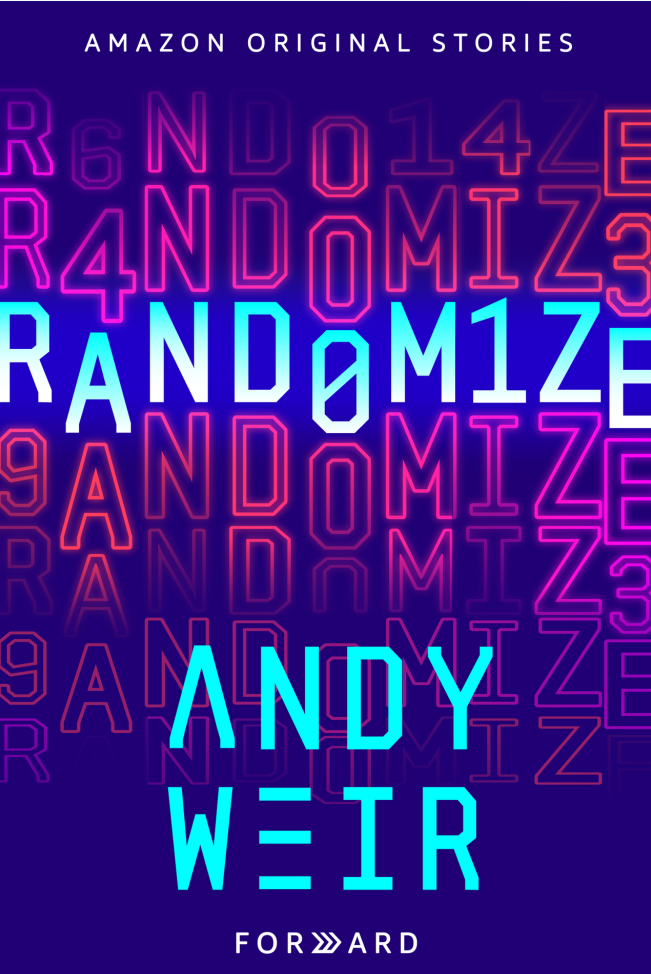
“Randomize” is a very short story (only seven swipes on my PC screen) built around a Keno cheating scheme. A young tech couple uses a quantum computer to crack the Random Number Generator (RNG) behind one casino’s Keno game and hit a massive jackpot. In an entertaining twist, once they’re caught, they talk the casino owner out of jailing them, and he joins the scheme to hack all of his competitors.
I immediately called Eric Thomassian, president of leading Keno supplier Xpertx, to get his take. To my surprise, he loved the short story, calling it interesting, fun, and “great to see someone writing about Keno.”
But when I asked whether any of the scenarios in the story could happen in real life, he started laughing. He pointed to the scene where the IT manager, without asking anyone, shuts down a Keno game that was making $200,000 net per day, then demands the GM immediately buy a $300,000 quantum computer. Thomassian figures the real-world responses would be: 1) “On your own, you shut down one of the most profitable Keno operations in history?” and 2) “You’re fired!”
Thomassian was emphatic that a properly designed, up-to-date RNG, like the ones in his Keno game, has never been hacked. But he did point to two real examples of this kind of fraud.
One was the infamous Ron Harris, who in 1995 used his position at the Nevada Gaming Control Board to access Keno source code and hack the weak software and RNG behind Keno jackpots in Atlantic City (more on Harris in my “Hard Knocks” story).
The other came from the lottery, a numbers-based game similar to Keno. It was hit for millions by one of the very programmers responsible for protecting the number draws (see the book “The $80 Billion Gamble”).

But the crime that really sent manufacturers and regulators back to re-examine their gaming RNGs was the one pulled off by Russian teams who cheated slot machines by exploiting timing flaws in the RNG routines of older Aristocrat games. They were active between 2014 and 2017 (also covered in this month’s “Hard Knocks” story).
Almost all RNGs rely on a Secure Hash Algorithm (SHA) standard to ensure safety. Nevada’s Gaming Technical Standards require SHA-1 as a minimum for gaming RNGs. It was developed in the U.S. by the National Security Agency (NSA) and the National Institute of Standards and Technology (NIST), mainly for their own spy and security work. But it’s now badly out of date, and easily “cracked” with a decent PC.
In fact, Google and Facebook dropped the standard as inadequate and obsolete back in 2017. Microsoft followed in 2020. All have upgraded to SHA-2, or a variant called SHA-256. Many slot manufacturers followed suit after the Aristocrat RNG hack, and Gaming Labs International (GLI) has encouraged most operators to move to the strongest RNGs available in their newest products.

Shutterstock
Most experts think these newer SHA-2 RNGs are unlikely to be cracked anytime soon. But technology moves at light speed compared to everything else in the real world, and who really knows what’s ahead?

Many firms seeking the best protection available have now adopted a newer standard, SHA-3, released in 2012. Rather than the traditional seed-based circuit described in “Randomize,” SHA-3 uses a “sponge-based” starter that’s far more random.
Writing for Medium, Bill Buchanan, a professor of cryptography based in Edinburgh, noted that researchers in Canada calculated that cracking SHA-3 would take longer than the universe has existed. That’s something on the order of 10²⁹ years, or roughly a nonillion (or 1,000,000,000,000,000,000,000,000,000,000) years.
That would probably slow down even a quantum computer, when one ever arrives. There’s also an encouraging note coming out of the world of cryptocurrency: while banks and casinos were generally the first targets for scammers in the past, there’s even more money sitting in Bitcoin and other blockchain-based currencies today. They’re the more likely first target now, which buys the rest of us time to build better defenses.
Side note: all of today’s casino RNGs are actually pseudo-RNGs rather than true RNGs. Most gaming RNGs rely on computer code rather than “true” random physical events. A genuinely random number generator has to be based on physical randomness from esoteric things like the decay rate of radioactive elements, which the NSA and high-security firms use, to something as simple as a coin flip or the roll of a pair of dice.
Ironically, given the subject of this story, all original Keno games (and even some today) still use true RNGs. They’re called ball blowers.

These early models, like the “rabbit ear” design, have largely disappeared. They were genuinely random, but a human had to enter the numbers into the system once the balls were blown into the tubes. As we all know, humans are almost always the weakest link in any system. Dirty or damaged balls could also throw off the randomness.
Today’s fix is a blower with an attached camera that records the balls automatically, eliminating the human error (shown below).
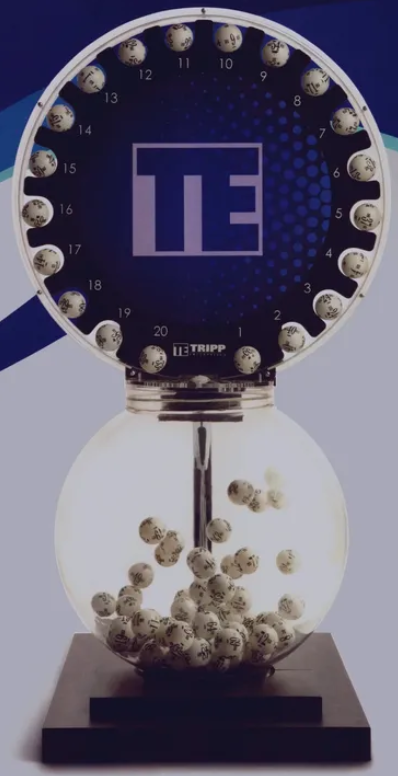
Even these newer models aren’t foolproof unless operators regularly clean and replace their Keno balls. According to Thomassian, Xpertx has “special methods to check frequency twice a day remotely, to see if anything is going off kilter. We call them immediately to change their balls. If we don’t, there are advantage players who will notice bad patterns and quickly hit the game.”
Keno was a huge draw up until the early 1990s, since it was the only casino game offering truly large jackpots. But once slot machines caught up technologically and started hitting even bigger numbers, that edge disappeared. Before then, the only way to win $50,000 on a single bet was in the Keno lounge or playing the game in a casino restaurant.
Keno still matters as part of a balanced casino game mix. It’s largely disappeared from the Las Vegas Strip, but it does extremely well at local Las Vegas casinos like the Station’s properties, and at Native American and commercial operations across the country where it’s allowed.
Due to fears of competing with its own lottery, California doesn’t permit the standard Keno game. Interestingly, Video Keno, played on Video Poker machines in the Golden State, almost always outperforms poker.
Thomassian points out that games built around numbers have always been popular: Keno, bingo, the lottery. Games like Powerball and Mega Millions, he says, “have the worst odds you’ll ever find, yet they draw millions of players every few days who like to see and play ‘their numbers.'”
The giant jackpots are also back on Keno, too. Just last week, a lucky player at a PT Tavern in Las Vegas hit a 10-spot for $305,889.44. Even larger, Xpertx currently has runs a nationwide linked progressive jackpot (“Mega 10”) that was just under $4.9 million and climbing as of this writing.
Getting back to books in general: I do encourage you to check out Andy Weir’s “Randomize” on Amazon. Depending on your account, it may even be free. But hopefully this format doesn’t lead us to a future devoid of hardcovers and paperbacks.
I’m not alone in that hope. Here are a few lines, borrowed from around the internet, on the joys of physical books:
- “A tangible treasure” — celebrating the joy of holding a story in your hands.
- “A timeless companion” — honoring the enduring comfort books bring.
- “A feast for the senses” — the texture of pages, the scent of paper, the beauty of print.
- “A doorway you can touch” — the magic of stepping into another world through something real and solid.
- “An heirloom of ideas” — books as objects worth passing down.
- “A quiet anchor” — the grounding presence of a book in a fast-paced digital world.
Amen. Amen. Amen.
# # #
