

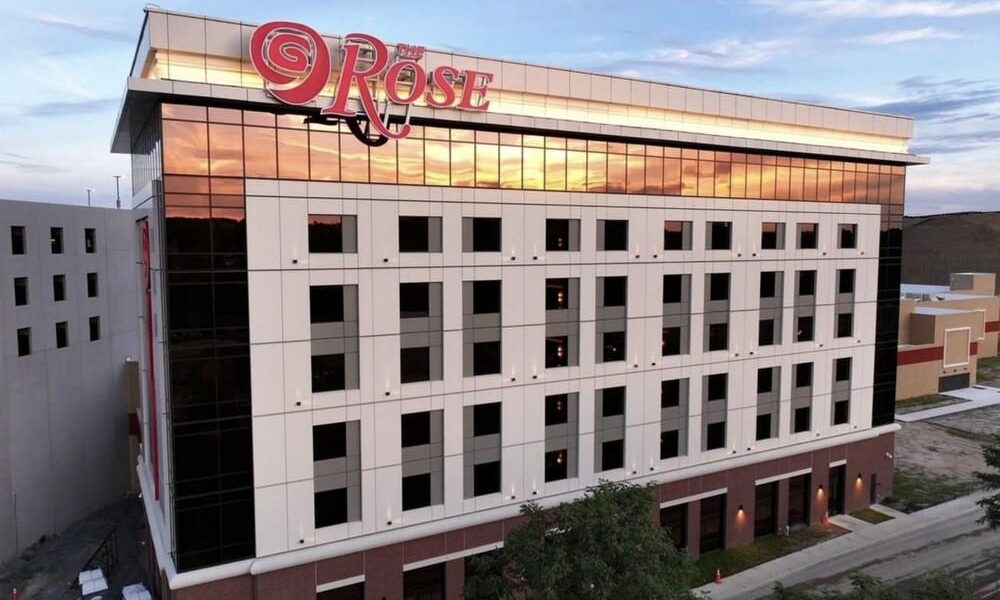

In July, Churchill Downs reported its second-quarter earnings. The corporation reported $980 million in gross revenue and $477 million in EBIDTA. The quarter was a record and the sixth consecutive three-month period with record results. During the earnings call, Churchill Downs also announced the completion of a strategic review of assets and that it would be offering nine properties for sale. The two announcements, a record quarter and selling 20 percent of the company’s properties, confused analysts. Which is the real company — a bustling record breaker or struggling and must sell pieces to survive?
Two and a half months later, Churchill Downs tried to clarify the situation. In an interview with Horse Racing Nation, CEO Bill Carstanjen said, “We need to slim down.” He elaborated, adding that the corporation had expanded aggressively into casino gaming over the past decade and now Churchill management intended to concentrate on its core competencies, the Kentucky Deby, live racing, and Rosie’s with the highly profitable historical racing machines.
According to Carstanjen, investors are less interested in gaming now than previously. The predominance of real estate investment trusts (REITs) has undermined the market’s confidence in casino operators, while sports betting is capturing its attention. Churchill Down is looking to avoid those risks and find a safe haven, one that leaves the company attractive to investors. Finding a safe haven is a common goal these days. When Barry Diller expressed an interest in buying MGM Resorts, he said he was looking for a safe haven from encroachment by artificial intelligence.
Churchill Downs is the oldest company in the gaming industry. It began in Louisville, Kentucky, as a racetrack; the track has hosted the Kentucky Derby since 1875 and was named Churchill Downs in 1883. A little over 100 years later, the company began to look for ways to expand. The first branching out was into simulcasting; later, Churchill bought additional racetracks in California, Florida, Kentucky, Illinois, Indiana, Louisiana, Maryland, New York, Pennsylvania, and Virgina. It operates racinos in those locations and it has casinos without racing in several states, including Maine, Mississippi, New Hampshire, and Iowa.
Churchill Downs has built one of the largest portfolios in the gaming industry with 30 properties in 14 different states. It was a buying binge nearly equal to those of Harrah’s, MGM, and Penn. However, buy, buy, and buy more was the old agenda; the new agenda seeks to create a leaner, sleeker, paired-down version of Churchill Downs. The new company might not generate as much revenue, but it will get more to the bottom line with less effort, at least that is the plan.
Businesses frequently go through comparable cycles of expansion and contraction. Both cycles are usually driven by the economy and the maturity of the industry and the business involved. When the major gaming companies were on buying sprees, the gaming industry was relatively new and expanding. Not so today. Equally, those expansions took place in a healthy economy. Today’s economy, while not in recession or out-of-control inflation, is unstable for most industries, in part because of technology and foreign wars and in part due to the lingering aftereffects of the pandemic.
In reevaluating its properties, Churchill is doing what all good gaming companies do with slot machines. At least once a year, a detailed look at performance is necessary. There are always some games on the floor that outperform others and a prudent company adds more of those. The optimal way to make the replacement is by taking games at the bottom of the performance list and replacing them with top performers. Some years, the casino chooses to add more games to meet demand. And there is usually another category, games that do so poorly that they should simply be removed. It often happens that in the assessment, it is clear the casino has more slot machines than the market justifies. In 2026, there are very few casinos with an underserved market. Most are now realizing they have too many machines for the business.
The gaming industry in 2026 is a fully mature industry. No jurisdictions are left without competition. The ones with more competition than others are feeling the pinch the most. After COVID, the gaming economy took off and for several years, it was a good market; casinos could and did add slot machines or new properties. That time has passed. The gaming industry, besides being mature, is entering a phase that will probably include contraction. The first step is to reduce expenses by cutting payroll, removing games, and closing outlets. In a second step, some companies, like Churchill Downs, will attempt to sell some of its assets – but properties that no one wants will close, as happened in Atlantic City after the Great Recession.
Churchill Downs will not be the last company to reevaluate its assets and operations. Nor will it be the last to trim off the underperforming properties. Churchill is just the first, the canary in the coal mine, an indication that there is not enough oxygen in the air and something needs to change.

