

Betting is in fashion these days. There are frequent wagering opportunities that rarely existed before. You can bet on death, war, sporting events, and elections. War? Yep, it has been reported that Kalshi and Polymarket offered a chance to profit from attacks on Iran, the death of Ayatollah, and Hezbollah attacks on Cyprus. According to CBS News: “Bubblemaps, a blockchain analytics firm, posted on X that ‘six suspected insiders made $1.2 million betting on a U.S. strike on Iran.’” Bubblemaps said traders bet “yes” hours before the strike. One user bet $26,000 and won more than $200,000, according to The Wall Street Journal.
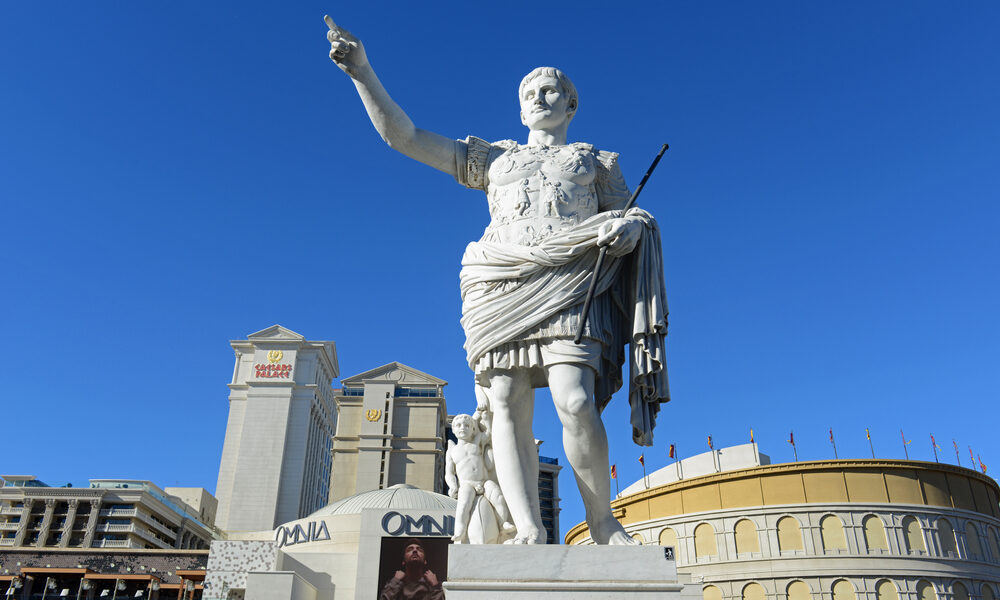
Another wager surfacing recently concerns Caesars, but without Brutus. Among the brokers of prediction, Kalshi offers the following proposition: “If any company announces an agreement to acquire Caesars Entertainment Inc before Jan 1, 2027, then the market resolves to Yes. The announcement must involve a definitive, binding agreement accompanied by public announcement. Letters of intent, memoranda of understanding, or agreements in principle do not qualify.” Even if such an event were certain to occur, the timing is complicated and difficult to predict.
The potential sale of Caesars Entertainment first appeared in the waning days of February, the last part of the fourth-quarter and full-year 2025 earnings season. On February 17, Caesars reported revenue of $11.9 billion and a net loss of $502 million. Not the kind of news that warms an investor’s heart. With the stock-price trend in the last five years, some investors may need a defibrillator. Stock prices dropped from $31 in March 2025 to as low as $18 in mid-February 2026 in the wake of earnings. For context and insight into heart disease in the Forum, the stock peaked at $119 in 2021.
Caesars Entertainment as it stands today is the result of the merger with/acquisition by Eldorado Resorts and is the latest iteration of Harrah’s Club in Reno. William Fisk Harrah moved to Reno with his bingo game in 1937. Slowly, over a 30-year period, Bill Harrah built a very successful casino business. When he died in 1978, Harrah’s was considered by many the best of breed, a model for others to follow.
After Harrah died, Holiday Inn bought Harrah’s Reno and Harrah’s Tahoe. The corporation rolled the properties into the Holiday plan of national expansion. Holiday Inn wanted a presence in every town — not a grand hotel, but an inn, a place for families traveling on holiday to stay. The Harrah’s brand did not fit that model. Harrah’s was more elite, more elegant and expensive. Harrah’s had to adapt and the brand spread was not the brand Bill Harrah created. The goal of the Holiday Inn Harrah’s was to have a casino in every city where casino gaming was legal. The corporation did not necessarily build a casino in every city; whenever possible, Holiday Inn/Harrah’s bought any existing operations. Along the way, Harrah’s Entertainment emerged; the new Harrah’s realized that all of those casinos it had purchased had a hidden value, customers. The corporation developed the gaming industry’s first universal players club, with the same card, benefits, and offers across all of the jurisdictions and brands of Harrah’s.
Gary Loveman, a Harvard professor and economist, became a consultant to Harrah’s in 1998. He helped the company develop a national database-marketing strategy; the database comprised more than 50 million loyal players. The concept was common in air travel, banking, and credit cards, but revolutionary in gaming. Database marketing was the mantra and seemingly nothing else mattered, although the company continued to purchase other companies, including Caesars for $10.4 billion in 2005. Each acquisition added to the database.

Loveman also explored a real estate investment trust (REIT). the discussion led to taking the company private through a leverageD buyout by TPG and Apollo Global Management. The timing was unfortunate; the financing was the last major gaming deal before the Great Recession hit. The recession was not kind to casino companies. The newly minted, privately owned Harrah’s suffered along with the rest. Except it had $25 billion in debt. The new owners had big payments to make, but they also expected to pay themselves. The squeeze was felt across the company. The annual capital expense dropped to less than 25 percent of what it had been. Not good news for casinos trying to compete in the first decades of the 21st century.
In 2015, the company, now called Caesars, filed for bankruptcy and Vici Properties (a REIT) was formed. Eventually, Carl Ichan purchased enough stock to force the company into a sale. Eldorado Resorts became the purchaser/merger partner in 2020. Then along came the pandemic. Ooops. But Eldorado, now Caesars, was better suited to managing the financial crisis than TPG and Apollo.
Eldorado had its beginning just down the street from Harrah’s. Its expansion into a national brand was slower than Harrah’s. Eldorado also had another strategy: It focused on operations, rethinking operating ratios. Harrah’s/Caesars had been built on marketing, Eldorado on prudent operations, in particular controlling marketing expenses.
Still, these last two years have been tough for gaming and Caesars, née Eldorado. Revenues have stagnated and competition has increased. It may be time for a new captain and business model. Standing in the wings, apparently waiting to make a bid, are Bally’s and Golden Nugget. Both are entrepreneur-driven companies with an expansion mindset. A management buyout has also been suggested.
Buying Caesars, selling Caesars; both roll off the tongue easily. Funding the transaction would be challenging and expensive at today’s rates. Even more challenging would be operating the new company, with added debt in a gaming landscape that is changing so fast that many of the participants are getting dizzy. But not to worry. The financing and operational successes are not prerequisites to collecting on the wager. All the contract requires is a signed agreement.

