

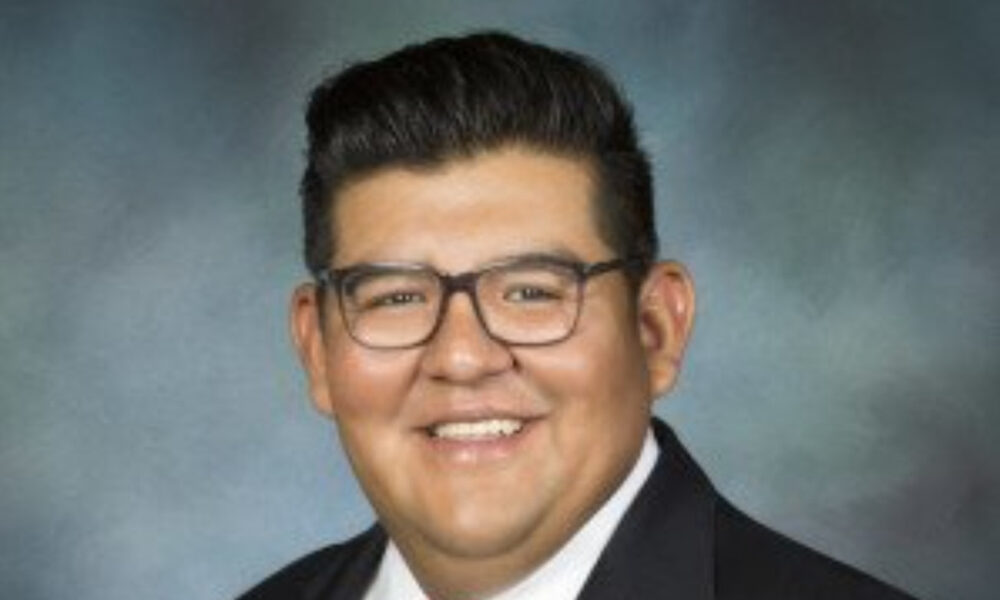

The chair of the California Nations Indian Gaming Association Wednesday outlined the tribes’ goal for putting a measure on the state’s 2028 ballot to legalize online sports betting.
James Siva appeared on the New Normal podcast hosted by the Indian Gaming Association Conference Chair Victor Rocha and Executive Director Jason Giles. Siva publicly outlined the plans for the ballot measure in March at the IGA’s annual conference in San Diego.
If it goes forward, the move would come six years after tribes battled with sportsbooks led by DraftKings and FanDuel to stop sports betting in the state. At the time, the tribes sought to legalize retail sports betting at tribal casinos and horse tracks. The out-of-state companies sought online legalization. Both measures were soundly defeated after hundreds of millions of dollars in advertising were spent.
California tribes are moving forward with a tribal-led vision for sports betting, making it clear that its future of in the state will be shaped by tribal governments, not outside interests. After years of competing initiatives and commercial pressure, tribal leaders are united around a strategy that protects tribal exclusivity, strengthens sovereignty, and ensures that any expansion of gaming reflects tribal priorities, Siva said.
Siva highlighted what’s changed since the last ballot measure, why tribes remain committed to a tribal-led model, how prediction markets have altered the conversation, and why California continues to set the standard for tribal gaming policy nationwide.
Giles asked Siva what tribes in California have done to overcome the public opposition in 2022. The tribes supported Proposition 26, while the sports books had Prop 27.
“We’re trying to do something that’s data driven,” Siva said. “Prop 27 had 83% no. But in a lot of ways tribes take pride in that number. We’re the ones who opposed that corporate bill. We had to sacrifice our tribal bill to make sure the corporate bill went down. While people say we have a big hurdle to overcome, we actually put that number together. If tribes reach out to Californians and say we don’t believe in this, they believe us.”
Siva said the divide-and-conquer strategy of the sports betting operators continues today, as the companies try to feed dysfunction amongst tribes. “To their credit, they’ve been successful in some ways and that’s why CNIGA is such a valuable platform. When we have those meetings, we just talk. The more we talk, the more their position comes out and the less they can hide behind.”
Siva said the tribes never stopped polling and did so as recently as June. While they know what they want sports betting to look like in the state, he said they need Californians to support what tribes want.
“We’ve built up a huge amount of positive feelings for tribal gaming. We keep our promises, do the right thing, and offer safe and regulated gaming,” Siva said. “We give back to the community. We’re amazing employers. We do all of these things that benefit so many outside the tribal community. A whole generation of Californians have grown up knowing only tribal gaming in the state and we’re proud of that. They feel safe in our facilities, know our story and want to see us continue. I think we are in position to talk about the work we’ve done and where we find ourselves moving forward. I will say it verbatim – 2028 is the goal.”
Rocha said tribes have been open about a 2028 ballot measure, even though the world has changed around them. He referenced the encroachment of prediction markets that enable Californians to make wagers outside of any state regulation, despite opposition from tribes and the state.
“Prediction markets have become the proverbial bad guy and the more they lose court cases (across the country), the closer it gets to the Supreme Court,” Rocha said.
Giles said if Democrats take control in Congress, President Trump would veto any bill curtailing prediction markets. It’s not known when the Supreme Court will take up any cases.
“How do you craft an initiative for 2028, recognizing prediction markets will still be there?” Giles asked.
Tribes will impose age verification for those 21 and older, while prediction markets take bets from 18- to 20-year-olds. Unlike prediction markets, tribes will also be regulated and taxed in California, Siva said in making their arguments.

“With prediction markets, you have nothing,” Siva said. “You don’t know who’s operating or where the money is going. It’s either foreign interests or private equity. No jobs or taxes are created.. The more you compare and contrast the two, Californians will ask, why would I put my money into Kalshi when the tribes are going to offer jobs, pay taxes to the state, and give money back to my local community? I know every bet is protected and there will be none of these weird offerings (that aren’t paid out). It’s night and day and black and white. The more we highlight that, the more it drives that point home.”
Siva acknowledged that the arrival of prediction markets has changed the landscape for tribes. One of the surprising numbers he saw in polling last month was 60% of Californians believe online sports betting is legal today. That number was in the 20s only a couple of years ago, he noted.
“That’s how much of an effect they’ve had on the mindset of Californians. They see the advertising everywhere. That was their marketing – sports betting in all 50 states. That’s how much people believe it is already here.”

In California, not just prediction operators Kalshi, Polymarket, and Robinhood are offering the product, but also the mainstream sportsbooks, DraftKings and FanDuel.
“Recognizing that both groups are part of this opposition we’re actively fighting is a big obstacle to overcome,” Siva said.
Siva noted that some 60% of the people betting on Kalshi are coming from California and Texas. It’s not surprising it’s the two largest states that don’t have online sports betting.
“If we go to online sports betting in California, we can start cutting their legs out from under them, because everyone would rather play in a regulated OSB market than on a prediction market,” Siva said. “That’s the truth. If we get to that point, we undercut them financially, which is the only thing these companies respect. They don’t care about the law. They feel like the politics are on their side. They’ve have been given the blessing by (the Trump) administration. This is 100% tied back to the White House. There’s no way around that. The only thing they care about is money. If that’s the thing that moves the needle, then we have to hurt them where it really matters — their wallet.
“That’s why 2028 is so important. The sooner we get there, the sooner we start hitting them. We’re hitting them politically. We’re hitting them in the public-relations market. We’re hitting them in court. We’re going to hit them on the financial side. That might be the one they really respond to.”
Rocha said prediction markets are surprised at how quickly the opposition has organized to fight back in Congress and the courts and that the “tide is turning.” He said a lot will happen between now and a 2028 ballot measure, but because the runway is long, tribes will be able to tell their tale. “The more I think about it, the more I like our odds,” Rocha said.
