


Investor day at Aristocrat Leisure largely met Jefferies Equity Research analyst Kai Erman’s expectations. But Erman was “incrementally more confident in igaming opportunity,” according to a June 30 investor note.
Erman reported that Aristocrat was continuing to garner market share, particularly in premium gaming operations. United States-derived Jefferies feedback “indicates material share gains and outperformance from new leased titles.”
The company projected 4,000 to 5,000 net installations for 2026 and Erman felt the momentum would continue into early 2027. The company also spoke of strong opportunities brought about by gaming expansion and moving into adjacent markets. Management also pointed to the 2026 launches of NFL-themed Super Grand Champions and its Safe Buster game as 2026 business drivers. Multiple premium-niche games were promised for early 2027.

Erman added, “Social gaming remains structurally challenged, although Aristocrat has done well to outperform; we expect this is driven by scale … and market-leading content.” In spite of a declining market for social gaming, he expected Aristocrat’s Product Madness to outperform.
While Aristocrat admitted to some disappointment with igaming, it still held that it could achieve $1 billion in revenue by 2029. It projected new content from 2025 through 2029 to add an incremental $250 million to $350 million in results.
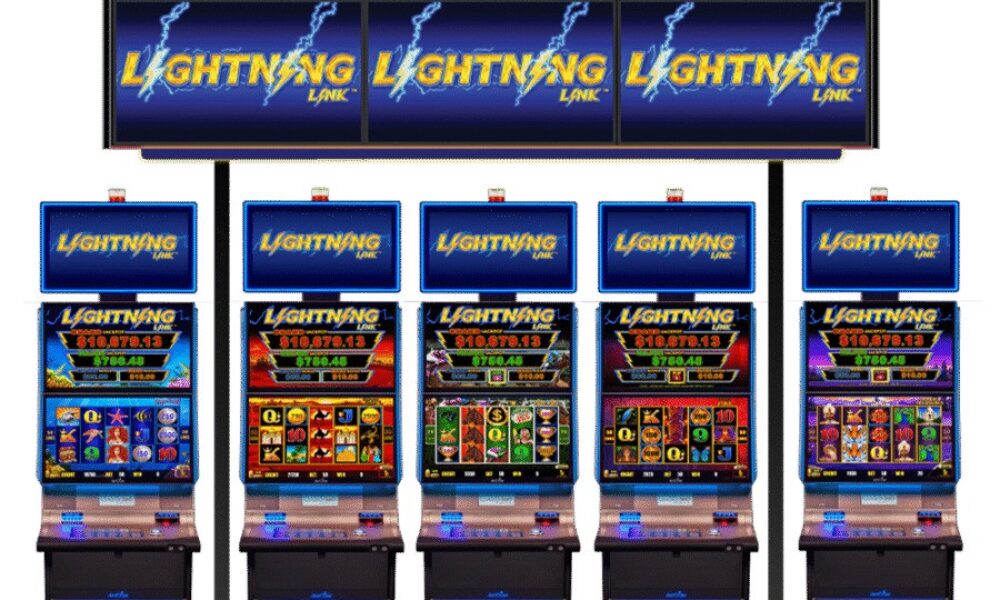
Igaming operators were said to be keen on Lightning Link and a series of follow-on game launches were planned. Erman found this sensible, in light of the shorter lifespan that internet-based games enjoy.
“We continue to be positive on the ilottery opportunity, as Aristocrat is well-positioned to capitalize on renewals and new licenses in the U.S.,” Erman wrote. He added that a Virgin Islands request for proposals was the next big catalyst for potential business, with RPFs due on September 26.
With regard to artificial intelligence, Erman noted that it “provided more uses cases of AI, in particular driving porting and multiplying games.” He observed that no case-specific cost targets were cited, which he deemed sensible. Erman added that Aristocrat “is likely to leverage market position to enhance returns (i.e., faster game development/more game releases) on market-leading D&D budget.”
Aristocrat outlined a quarter of performance targets. The first was to continue growing market share. Another was to achieve $1 billion in online revenue in the U.S. by 2029. Cash-flow-margin expansion was another aspiration.
Lastly, Aristocrat aspired to grow revenue faster than design-and-development costs. Erman noted that company leadership “has shown a clear focus on operating leverage/scale efficiency, which is sensible, given consistent revenue growth in recent years.”
Mergers and acquisitions were not greatly discussed. Erman expected that any such opportunities would either be land-based outside the U.S. or adjacent to existing online activity. He added, “Igaming studio acquisitions could strategically make sense, although in our view are unlikely in the near-term given Aristocrat’s focus on organic game launches.”
Summarizing his findings, Erman held that Aristocrat’s installed base would continue to grow over the next 12 months. Aristocrat “seemed incrementally more upbeat around the igaming opportunity, which was pleasing, with recent operator feedback suggesting optimism around Lightning Link launch giving more confidence in market share gains.”

Erman ended by saying that, given strong terrestrial momentum, the critical catalyst for re-rating the stock would be increased igaming market share. To achieve this, Lightning Link’s online launch would be critical.
