


Carl Herold’s job used to be a lot easier.
As Florida Gaming Control Commission Director of Law Enforcement, Herold directed his charges to discovering physical illegal casinos, mainly locations with slot machines. But online gambling has no physical casinos to surveil, the operators are harder to track, and the payment mechanisms are almost impossible to determine.
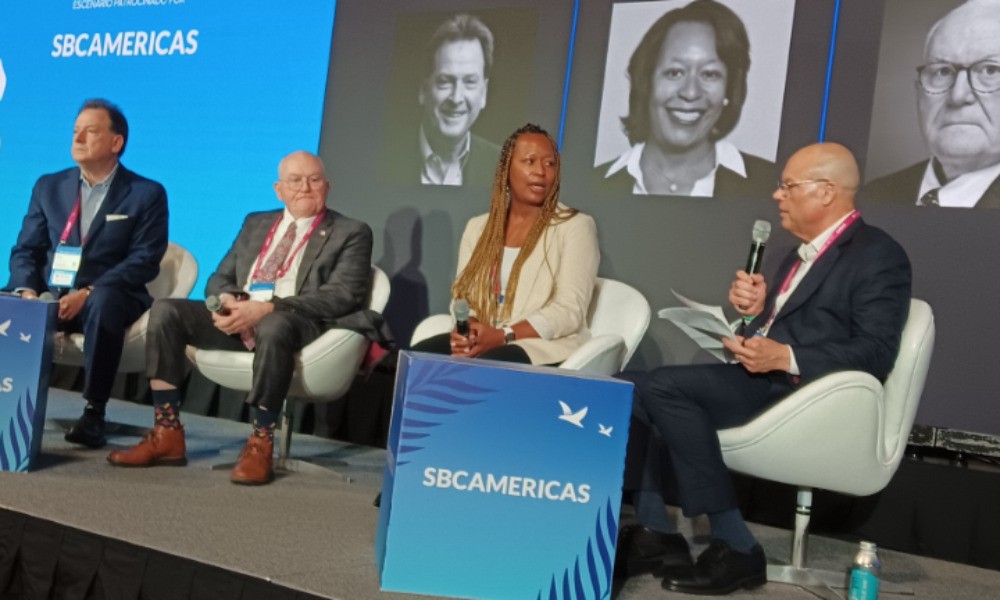
“We’ve had to change our enforcement model,” Herold said during the panel “IAGR (International Association of Gaming Regulators) Leaders Discuss Top Regulatory Priorities” at the recent SBC Summit Americas in Fort Lauderdale. “It requires that we be much more diverse and technology oriented.”

Making Herold’s job more difficult is that the average consumer doesn’t see the “distinction between the lawful and the illegal gambling.”
Regulators are facing a constant onslaught of illegal operators, whose shady practices cause headaches and require ongoing vigilance.
Massachusetts Gaming Commission speaker Nakisha Skinner said that in the Bay State, educating consumers is of paramount importance.

“What we’ve done at the Massachusetts Gaming Commission is established a seal of approval that lets the patron know someone has their back. … And should anything go wrong in their engagement with a regulated platform, there is some level of assurance that their matter will be reviewed and ultimately resolved,” Skinner said. “It may not be resolved to their satisfaction, but we will put eyes on it if a concern gets brought to our attention.”
Moderator Kevin Mullally, CEO/Managing Director of IAGR and The Mullally Group, noted that illegal operators often pay out small sums. But the huge progressive jackpots advertised are often not awarded.
“There was one jurisdiction where they kept advertising the winner and under further investigation, we could never find the woman,” Mullally said. “We believe that she was in Portugal and deceased five years before the jackpot was won. I have a raft of examples where they (illegal operators) simply don’t pay.”

Nevada Gaming Commission Vice President and Vice-Chairman Brian Krolicki said the complexities of online gaming have made policing sites much more difficult.
“The world’s different. The geographic aspect of regulation is no longer purely applicable,” Krolicki said. “We certainly take care of things in Nevada and Massachusetts and Florida, but the inner border, the interoperability, the internet, the payment systems, the banking, the website host, all of that is not only beyond the state borders, it’s a global issue. So to have regulation that’s meaningful, effective, and pushing the bad guys away or making it harder for them to operate, no one jurisdiction can do that.”
Krolicki added that there’s no single standard and differences in language and culture come into play.
“There are common standards that we can all agree on and the more we can bring in global best practices and start making it harder for the bad guys to operate, the better,” Krolicki said. “IAGR is the perfect entity to do this. It’s the only international association dedicated explicitly to regulators.”
Mullally said the IAGR will sponsor an international illegal-gambling-awareness week later this year, during which global regulators will advise consumers of the dangers of illegal operators. Technology is being developed, so a URL is plugged in and users will be informed if a site is legal in their jurisdiction.
“These are people who know they need a license, they know they don’t have one, they have no compliance framework, and frankly, just don’t care,” Mullally said.
