
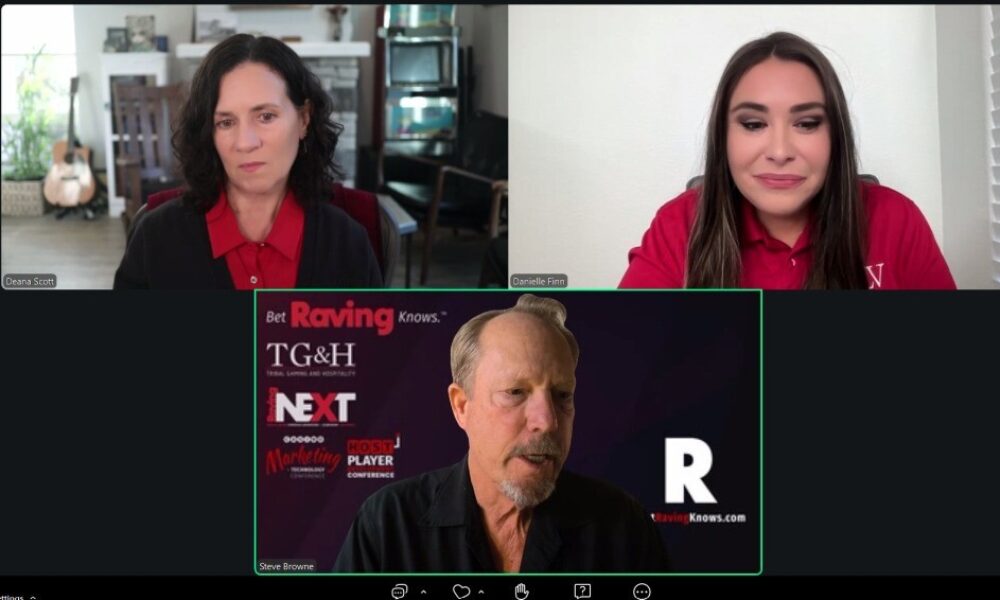

To kick off Raving Next’s Casino Strategy and Operations Summit, Raving CEO Deanna Scott briefly encapsulated the state of tribal gaming.
“If had to summarize 2025 in one sentence, it would be this: Gaming is still healthy, but it is way more complicated,” Scott said during her opening remarks Tuesday for the virtual conference. “It looks like revenue is holding, but margins are tighter. The labor issue is better but not solved. Regulation isn’t easy, it’s expanding.
“This isn’t just tribal gaming. Commercial and international operators are dealing with the same normalization after the post pandemic surge.”
There are many issues tribal operators must address during 2026. But the Number One issue that all constituencies, including commercial operators, must face is prediction markets.
“This isn’t just a sports betting debate; it’s a jurisdictional debate about who gets to regulate wagering-like activity and what happens when new products try to bypass existing gaming frameworks,” Scott noted.
Danielle Finn, University of Nevada Las Vegas Director of Indian Nations Gaming and Governance Program at the William S Boyd School of Law, said that prediction markets are an existential threat to tribal gaming in particular.
“Tribal gaming is not merely just about profit,” Finn said. “It’s also an expression of sovereignty and nation building and self-determination. Right now, we are facing a tangible threat from prediction market companies. They are changing the rules on gaming in both the United States and around the world very quickly. Right now, this is me sounding the alarm for all of us across the country that we really need to be paying attention to what’s going on, because it’s moving fast, and it is going to cause a blow to not just tribal community and the Indian gaming industry, but to the commercial gaming industry and to operators and regulators and to all of us that just hold jobs in gaming.”
If there is a silver lining to prediction markets, they have created an issue to which tribal and commercial gaming interests are opposed.
“This is actually the first time in a long time that we see the states and the tribes kind of pairing up against something, a common enemy,” Finn said.

Steve Browne, a Raving Senior Partner – Player Development and Guest Service, started in the gaming industry as a table games dealer at Reno, Nevada, casinos in 1978. He said prediction markets threaten the fabric of the gaming industry.
“We have always relied on strong local regulatory control to manage gambling as an acceptable activity in society, from the very first 1931 act legalizing in Nevada to the tribes,” Browne said. “… if this is allowed to happen, our industry is gone, absolutely.”
“Our position is that they are operating illegally, and they’re violating many federal laws,” Finn added. “States are on our side because they’re also violating state gaming commissions and other authorities that the state uses to operate. We have all sorts of things going on in this world, but tribes have a compelling interest to fight this. This is something that we really need to keep our eyes and ears on the ground for, because it’s moving really quickly.”
Also discussed was the rise of taxable payouts on jackpots. The reporting rate rose from $1,200 to $2,000 on January 1.
Browne thinks it’s going to be easier for operators, but there are drawbacks.
“It’s just another barrier to your employees and your customers getting together,” Browne said. “And that’s not insurmountable. You’re just going to have to find other ways to have your employees interact with your guests because they don’t have that automatic interaction again of the hand pay. Guests, same thing. They’re going to like it as long as they keep that high personal connection with their favorite floor staff. They’re going to like not being interrupted as often. They’re going to like much better not having to report as many incidents.”

