

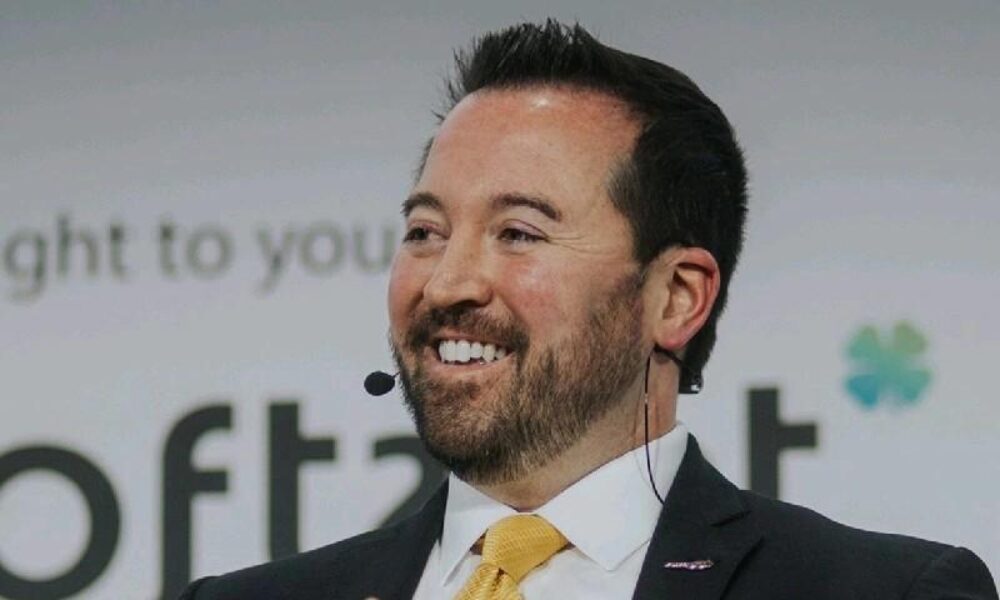

The president of the National Council of Legislators from Gaming States (NCLGS) told tribal leaders Wednesday it’s time to go on offense to defend their territories from prediction market companies.
Shawn Fluharty was the guest on the Indian Gaming Association’s New Normal podcast to address last week’s NCLGS meeting in San Diego. The conference brought together lawmakers, regulators, tribal leaders, and gaming-industry stakeholders to discuss the issues shaping the future of gaming policy.
Fluharty, a member of the West Virginia Legislature, recapped the conference and discussed the issues that generated the most attention, with prediction markets taking the lead.

Fluharty said the gaming industry expects that the future of prediction markets will come down to the Supreme Court deciding if the federal government can regulate them and if those companies lose that argument, they will turn to state lawmakers for approval.
“I can imagine that in the Supreme Court, part of the argument will be, ‘Look at our value and the number of consumers on this product. How are you going to put the toothpaste back in the tube?” Fluharty said. “But the law is pretty clear on our side and will prevail at the end of the day.”
If the Supreme Court rules that prediction markets can’t offer sports contracts and sports betting, Fluharty said it’s clear what will happen next.
“Then prediction markets are on the ground lobbying to clear out their own lane,” Fluharty said. “It doesn’t appear they want to get licensed and be in the lane these states worked on at a very high level. That means going through the legislative process and getting licensed and regulated and put in the hands of a regulatory body.”
Fluharty said the lobbying team for prediction markets will be intense in state capitals after they’ve relied on the federal Commodity Futures Trading Commission for their justification to operate.
“On a relationship basis when it comes to regulators and lawmakers, I feel a lot of friction that will be there two, three, or four years down the road,” Fluharty said. “You’re seeing some of the prediction markets starting to lobby now at the state level, to hedge their bets on this. They’ll say if the Supreme Court does come back, we’ll have to play the game like everybody else.”

Victor Rocha, conference chairman for the Indian Gaming Association, said North Carolina approved prediction markets at a lower tax rate than traditional sports bettors and that should outrage everyone. The tax rate to go into effect in January is for 6% on net trading-fee revenue and bypasses the need for state licensing. The state online sports betting tax rate has increased to 23%, up from 18%.
Fluharty cited former White House official Mick Mulvaney saying North Carolina has left $100 million-plus in tax revenue on the table. “I’ve said it’s revenue theft from states.”
Fluharty said it’s frustrating that prediction markets aren’t following rules enacted by states, especially requiring people be 21 and older to gamble, enabling them to be predatory against those 18 through 20.

“My colleagues and lawmakers throughout the country agree that we put in the work and these companies that agreed to play by the rules and are now licensees deserve to be protected,” Fluharty said. “They spent a lot of money to come in, they employ people, they pay all the fees, and use new technology. There was a promise made to them and it’s not the state reneging on it, but the disruptors, prediction markets changing the rules of the game and taking that contract and ripping it up for these licensees.”
Fluharty said the public is confused about what is and isn’t legal and it’s up to the regulated industry to help educate them. Lawmakers will react to the public and now that prediction markets have been thrust into the limelight, it’s becoming part of the political discourse and prompting states to take some action.
“If something bad happens in a prediction market, it still spills over into the regulated industry, because of the public perception that gambling must be bad,” Fluharty said. “That’s another fight we have to take to them. There’s betting markets on war and markets with insider-trading allegations. We need to be on the attack, instead of playing defense all the time.”
Fluharty joked that Mike Dretizer, chair of the Nevada Gaming Control Board who gave a keynote address last week, is “a flamethrower who brings the heat” when it comes to criticizing sports betting prediction markets in which Nevada has been locked in legal battles to keep them out.
“He pulled no punches, saying there’s a fight on our hand with prediction markets and the decision needs to be by the states,” Fluharty said. “States need to defend their regulatory territory and he did a great job of resonating with the crowd. I think he’s a leader to communicate exactly what’s at hand for regulators throughout the country.”
Rocha said Dreitzer has “brought a lot of clarity” to those in the industry to watch what Nevada has done in fighting prediction markets.
