

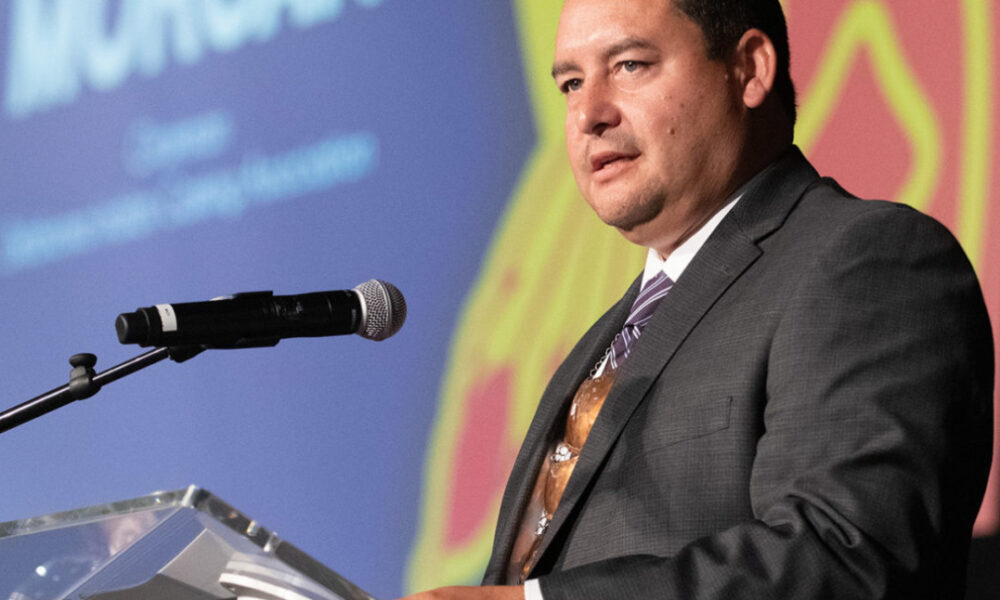

The Oklahoma Indian Gaming Association will host its 2026 Conference and Trade Show at the Oklahoma City Convention Center today through Wednesday. Nearly 3,000 people are expected to attend, including tribal leadership, gaming executives and professionals, hospitality professionals and vendors.
“Tribal gaming in Oklahoma creates good-paying jobs in cities and towns across our state, expands public and private opportunities by adding infrastructure like roads, water, power and internet access.” OIGA Chairman Matthew L. Morgan said in a statement. “We drive investment in education, government programs and services and economic development that provides for the well-being of our communities. We prioritize giving back, through our philanthropic giving that supports programs across the state. I am profoundly grateful for the tribal gaming industry and proud of all the good it brings.”
Known as “the biggest little show in tribal gaming,” the conference and trade show begins Monday with the annual John Marley Golf Tournament at Lincoln Park Golf Course, an event that raises educational scholarship money for people who work in the tribal gaming industry and their dependents.
The Oklahoma Indian Gaming Association established the John Marley Scholarship in 2008 to provide educational opportunities for OIGA member employees and their families. Scholarships are provided for eligible people to attend accredited colleges, universities, and trade schools. Since 2014, OIGA has awarded more than 70 scholarships.
Tuesday’s keynote address acts as a fireside chat focused on the tribal gaming in the United States. Morgan will facilitate a conversation with California Nations Indian Gaming Association Chairman James Siva and Indian Gaming Association Chairman David Bean.
At 1 p.m. Tuesday, scholarships and awards including the Chairman’s Award and Modern Day Warrior awards, will be presented during a presentation on the trade show floor.
Conference sessions have been planned with topics and tracks for professionals in every facet of gaming and ancillary industries. Foundational subject matter for younger professionals starting their careers, or people new to gaming, will include topics such as “History of Oklahoma Tribal Gaming,” “Responsible Gaming,” and a roundtable forum discussion from tribal leaders.
Other Tuesday sessions include:
- Legal Frontiers: Navigating Laws and Legislation in Prediction Markets. Panelists will analyze landmark regulatory cases, recent legislative efforts, and ongoing debates at state and national levels.
- Legacy of Sovereignty: Oklahoma Tribal Gaming Through the Years. Participants will journey through pivotal moments, from the early days of bingo halls to the negotiation of tribal-state compacts, and the emergence of world-class casinos.
- Unmasking Exploitation: Human Trafficking Awareness in the Casino Sector. Recognizing and combating this hidden crime is a moral imperative and a regulatory responsibility for the gaming industry.
Wednesday morning features more conference sessions, followed by lunch on the trade show floor when it opens at noon.
Sessions include:
- Oklahoma in Focus: Legislative Recap for 2026 and Insights for 2027. Information on the most important legislative actions and policy shifts from Oklahoma’s 2026 and 2027 sessions. This panel will highlight key bills, analyze their effects, and offer insights into emerging trends.
Oklahoma features 38 federally recognized tribes, with 33 operating governmental gaming operations in accordance with the 1988 Indian Gaming Regulatory Act. That framework requires revenues from gaming operations to be used for five core purposes: Funding tribal operations; providing for the general welfare of the tribe and its members or citizens; promoting tribal economic development; donating to charitable organizations; and helping to fund operations of local government agencies.
Organizers say tribal nations have put more than 113,000 Oklahomans to work in industries and initiatives made possible by revenues generated by gaming.
Oklahomans benefit from tribal philanthropy, with the state’s nonprofits having received more than $61 million in support from tribal donations and sponsorships.
