

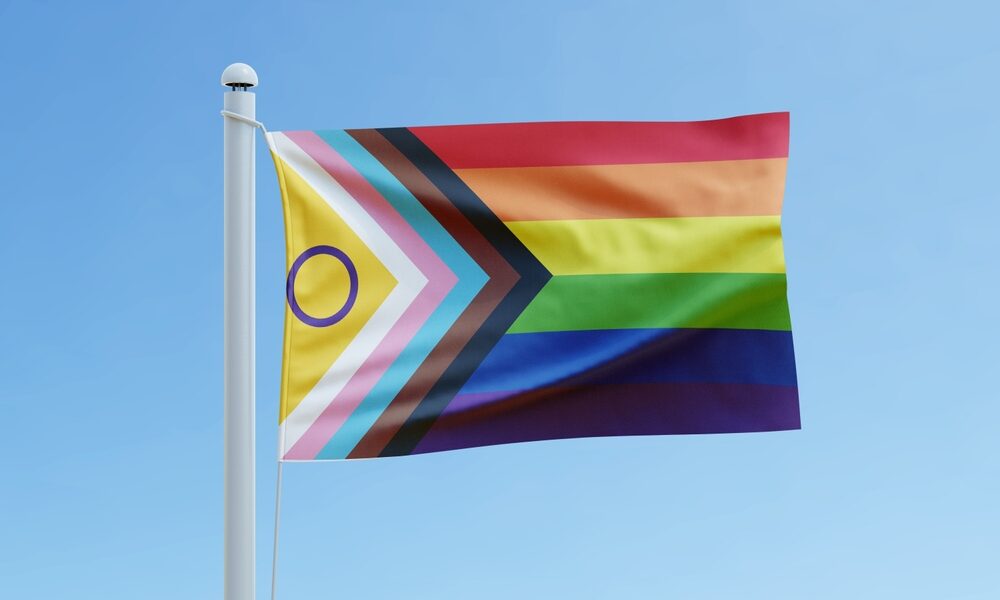

A question was asked during the recent LGBTQ+ in Gaming seminar about the pertinence of the topic to those in the industry.
What did “Transgender and Non-binary Voices” have to do with gambling?
“On the brick-and-mortar casino side, any of us who are leaders, we have in some cases hundreds, if not a few thousand employees that we’re working with at any given property,” Chad Rogers, director of slots at Zia Park Casino in Hobbs, New Mexico, said during the seminar sponsored by the American Gaming Association. “Just because you don’t necessarily see or know of a somebody that identifies as trans or non-binary, I think this is an important message because you probably do have several team members that identify in these areas, and I think better understanding of all parts of our community is important.”
Brooke Thomas, Seminole Hard Rock, people & inclusion executive, admits that some find talk about trans people frightening.
“For folks who say, ‘Oh my gosh, trans people came out of nowhere, it’s like maybe you’re a little scared because you don’t necessarily understand it,’ ” Thomas said. “And I always like to tell people you don’t have to understand it to respect it.
“And I think history demonstrates and shows us that this community, the transgender and non-binary communities, have been here, and they’ve been here longer than me. I wasn’t around in 5000 BC.”
Ashe Henrich, a project manager at IGT, compares trans people to how lefthanders were long treated. Left-handed people were persecuted and denigrated. Thus, there were fewer people who identified left-handed people.
“Once it became safer, there was this dramatic exponential increase in the number of left-handed people, and that didn’t mean that more left-handed people were born,” Henrich said. “It meant that more left-handed people felt safe to identify as left-handed, and it’s the same thing with the transgender community.”
Thomas noted that a lot of the slang and terminology those who identify as LGBTQ or non-binary comes from video games and other online sources, “because that’s where a lot of queer folks gather and for many places it’s where they feel the most safe.”
Thomas also pointed out that non-binary people may experience a combination of genders.
“They may be fluid and float between genders, as one of my non-binary colleagues says, or they may not identify as anyone,” she said. “And again, identity is your personal experience and your personal view. We can’t tell anyone who they are. Only you can know that.”
The New York Times recently reported that four states recently passed bans on trans athletes playing on female sports teams. Thomas, decrying the bans, cited former Utah Governor Spencer Cox when an anti-trans bill came across his desk.
“He said this isn’t about blue or red for me,” Thomas said. “I had my aides do the research, and there are seven Utahans that would be affected by this, and I promise you, as your governor, I will never sign a bill that only affects seven people in my state.
“Why are we pushing what we’re pushing?” Thomas added. “Ask the why, if any state is passing any law that affects less than 1% of the population, and that’s being generous. You wonder to yourself, what’s behind this? Because there’s so many (laws) out there, and it does feel like a bit of a distraction.”
