

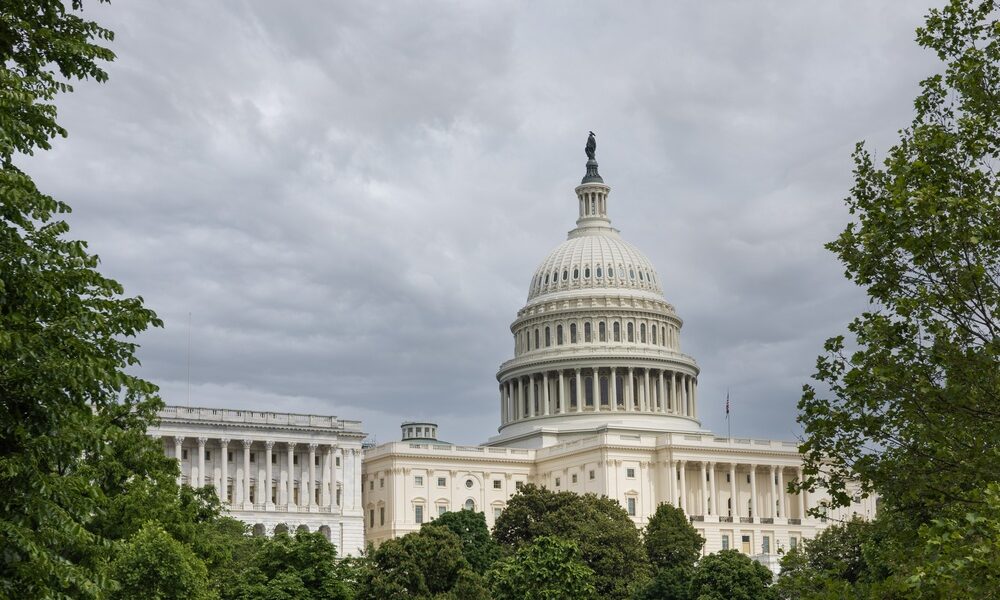

The Indian Gaming Association is monitoring what it calls a critical stretch of Congress before the August recess, with major decisions on tribal programs, prediction markets, federal spending and tax policy.
As lawmakers work through a crowded legislative calendar, tribes are closely watching which priorities advance, what funding survives the appropriations process, and how shifting political dynamics in Washington could impact Indian Country over the next year, according to Jason Giles, IGA’s chief executive officer.
Giles, IGA Conference Chair Victor Rocha, and lobbyist John Harte of Mapetsi Policy Group discussed legislation moving through Congress and key tribal priorities during an IGA webinar. The conversation also examined the political dynamics shaping negotiations on Capitol Hill and what tribes should expect in the months ahead.
“In an election year, July is a major cutoff for any bills getting done before the mid-term elections,” Harte said. “There’s about 30 days in session between now and the end of July, so not a lot of time.”
Harte said the must-pass bills include appropriations to prevent a government shutdown, the defense-spending authorization, and infrastructure funding for roads and bridges.
Priorities among Republicans and the Trump Administration are funding for ICE and Border Patrol through 2029 and dealing with issues on taxes, housing affordability, and funding the Iran war. There’s also a push to make the U.S. the cryptocurrency capital of the world, Harte said.

“Indian Country has a lot of priorities too, but unfortunately, we don’t fall into a number of those packages,” Harte said. “For taxes, tribes have wanted to see tax parity, such as tribes issuing tax-exempt bonds, and other tax-parity provisions, and the Tribal Labor Sovereignty Act to clarify that the National Labor Relations Board doesn’t impact Indian Country.”
“Of course, the (Commodity Futures Trading Commission) sports betting issue we’ve all been consumed with over the past is a top priority for Indian Country,” Harte said.
Giles said there’s no longer any difference between those who advocate for prediction markets and cryptocurrency, with some companies doing both.
The proposed Clarity Act hands cryptocurrency oversight to the CFTC.
Harte said the bill needs 60 votes to pass the Senate and is unlikely to get there.
Indian Country has tried unsuccessfully to get the Senate Agriculture Committee to vote to reign in prediction markets and Harte said the Senate Banking Committee is eying amendments, including one that fosters prediction markets and ignores current regulations.
Rocha fretted about the campaign spending by those who support prediction markets, creating obstacles in dealing with Congress.
“The needs of tribal sovereignty are being purposely undermined,” Rocha said. “We have an alliance with the American Gaming Association and a lot of government groups that are just waking up to this threat.”
Harte said they’re gaining momentum, with more Republicans concerned about prediction markets, especially the impact on younger people. Prediction markets take bets from those under 21 and age-verification issues may allow those even younger than 18. “We know this is impacting kids’ lives.”
Rocha pointed out prediction markets are facing an uphill battle in courts on offering sports bets on tribal lands under the federal Indian Gaming Regulatory Act. Minnesota is even considering a law to criminalize prediction markets at the risk of a lawsuit from the CFTC, Giles said.
Harte said the Trump administration budget proposal released last month wouldn’t be good for Indian Country, with 33% cuts to the Bureau of Indian Affairs and $467 million cut from the Indian housing block-grant program. There was a $1 billion increase to Indian health service, but the cuts far outweigh that, Harte said.
The good news is that Congress is likely to reject that budget, Harte said. “It’s a tight budget year with everything going on and we’re facing a huge deficit. Republicans who control the House and Senate want to cut back on discretionary spending.”
