
Tribal casinos are leveraging partnerships with sports teams and event venues to create fan experiences that build on their brands.
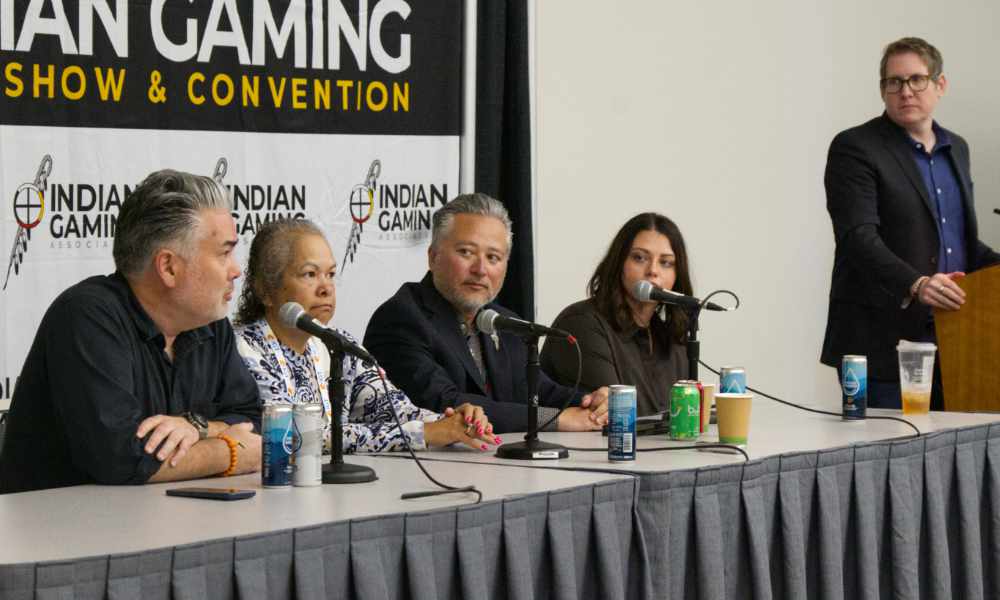
IGA hosted a conference and tradeshow session on “Optimizing the Fan Experience in Sports & Casino Partnerships,” moderated by Francis Keyser, a senior vice president with IGT.
The panel included Tracy Sam, general manager of the Grand Casino Mille Lacs in Minnesota; Christian Lau, chief technology office for the Los Angeles Football Club; Peter Arceo, chief gaming officer with the Yahaaviatam of San Manuel Nation; and Erica Kosemund, senior director of gaming brand and partnerships with the Choctaw Nation of Oklahoma.
The Choctaw Nation runs about 35 partnerships in Oklahoma and North Texas. The San Manuel Nation has several partnerships in California, Nevada, and nationally, including with the Los Angeles Football Club. The Mille Lacs are in the first year of its second partnership with the Grand Casino Arena and Minnesota Wild, following their first partnership with the Minnesota United FC soccer team.
Sam said they’re trying to build in the excitement of sports, while telling their tribe’s story in the arena and sharing who they are.
“Sports in general is a very important category,” Arceo said. “Sports is one of those things that can be multi-generational. Most loyal fans are pretty rabid about it. It’s an emotional thing to people and our approach is how do we ingratiate ourselves with those brands and carry through that same energy, excitement, and generational loyalty to our businesses?”
Lau said in the case of the San Manuel Nation, their customers are well aligned and interchangeable. A lot of people who join soccer like to go to casinos and gamble and go to shows. “It is a natural fit.”
Arceo said while the L.A. Football Club launched in 2018, they joined after the brand formed. He saw how they connected with the community, then let the fandom come later.
“Having the ability to be a part of something before it launches, I thought was a really interesting approach for us to analyze whether this is going to be a good partner or not.”
Kosemund said most of their partnerships are not multi-years and multi-decades long.
The foundation doesn’t change when they negotiate deals, Arceo said. It’s important to be mindful of how the world is changing. They negotiate deals that allow them to pivot and try something new.
“For operators looking to sign a big deal, don’t be afraid to disagree with some of the base terms,” Arceo said. “Don’t be afraid to say you don’t like a specific term and ask for the world.”
A lot of threats to the industry are sometimes snuck into partnerships, and Arceo said they should let teams and arenas know where they stand on specific issues, like sweepstakes and sports prediction markets.
Sam said their tribe is focused on metrics to judge the benefits. They use their app for one to help ensure the tribe is going the most out of its partnership it can.
“We see the benefit from a brand, marketing and property standpoint to show the partnership is good,” Sam said.
Kosemund added that they live in a data-driven world and everything they do inside the property must be incorporated by working with the player-development, data, and direct-mail teams.
When you invest in a variety of assets, they may serve a different purpose, Arceo said. In some cases, it’s straightforward to sign a deal with a team or big brand to get the most reach and brand recognition with a particular audience. In others, it might be community driven. It might be a community the team serves.
“We recently became a partner of the PCRA, which handles the professional rodeos around the country. In that case, it wasn’t that we wanted fans of rodeos, but in some cases, these rodeos are the signature event of the community,” Arceo said. “It drives benefits to non-profits and is a very important cause that supports that community. Being part of something like that is hard to measure.”
Other ventures are opportunistic, such as the Long Beach Grand Prix, which Arceo said they had no interest in sponsoring. When a major sponsor dropped out, the tribe was able to get some key placement on the track that would otherwise not have been available. The tribe made a low offer and was able to get it.
Before the San Manuel bought the Palms in Las Vegas, Arceo said the tribe was in the city sponsoring the Raiders of the NFL and Vegas Golden Knights of the NHL. Most of Nevada is commercial gaming, so the understanding of tribal gaming by Las Vegas residents was foreign to them.
“It was very important for us to have a big footprint at Allegiant Stadium,” Arceo said. “There are four major lounges and we sponsored one. This was preceding he Palms (acquisition). Las Vegas folks didn’t have any clue who we were and why we were there. Our play was simple — realizing southern Californians go to Vegas, and we know a significant number of Raider fans come from L.A. It was a no-brainer for us. It was a way to educate the public on what tribal gaming is and who we are and that we can come into a city like Las Vegas and be successful.”

Arceo said their acquisition of the Palms wasn’t related to the Raiders branding, but it gave them the platform that tribes can be successful in commercial gaming.

