

The Seven Generations principle originated with the Haudenosaunee Confederacy, also known as the Iroquois Confederacy or the League of Five Nations. The principle states that decisions made today should create a sustainable world for seven generations that follow.
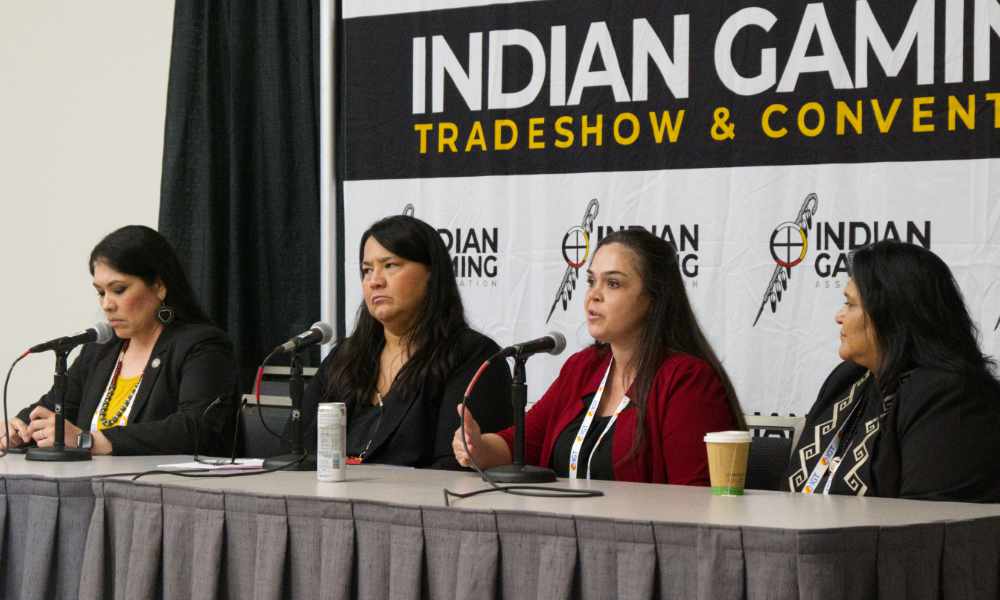
A panel session Tuesday at the Indian Gaming Association Tradeshow & Conference in San Diego illustrated how Seven Generations is influencing women, particularly in tribal gaming.
“We like to look at the internal controls to ensure that they fit any future games we have on our property,” said Melissa Smith, Cherokee Tribal Gaming Commission Director of Enforcement, during the session “Seven Generations Forward: Native Women Leading Regulation, Compliance, and the Future of Tribal Gaming.” “Not any specific games, so that it’s more broad and readily available for any new technology that may be forthcoming.”
The Seven Generations session was promoted by Global Gaming Women.
Moderator Dyani Marvel, Wondr Nation Vice President of Marketing Strategy & Operations, said it’s important to keep track of developments to foster continuity and “absorb the games platforms or changes without constant rewrites.” Updating and maintaining documents is important.
“You want to make sure that these living breathing documents are revisited on an annual, sometimes quarterly, basis,” said Robin Villareal, Gila River Hotels Chief Information Officer. “Also, double check (documents) when you have departments that align. Make sure that you align with your gaming departments, your revenue audit departments, your surveillance department. Sometimes you don’t realize that your policies and procedures actually coexist with another department.”
Villareal added that to ensure continuity, it’s important to keep everyone abreast of new developments. That includes those who deal with and are members of regulatory bodies.
“We tell them what’s going on within the next quarter,” Villareal said. “We tell them about projects that are happening. We bring them into demos. I extend an invitation anytime that new technology is available, so that they can see it firsthand and give questions to the operators, have a technical call with them. That’s been very helpful.”
Emra Arkansas, Cherokee Tribal Gaming Commission Executive Director, stated that it’s crucial to involve multiple people and departments when introducing a company to new systems.
“When we design systems, it’s important to make sure that we understand that if it has one person that knows how to drive it, one person at the helm, what happens when that person leaves?” Arkansas said. “It’s important that we make sure we have other people that can come in, with like minds, and be able to step right in.
“I know for sure that if I needed to leave, Melissa (Smith) would take my crazy notes, be able to look at them and go here, here, here, and still present the same thing as a leader. Isn’t that what we’re supposed to do? We’re supposed to have that continuity, but not always with just one person. It should be for your entire organization, for us as stewards of our tribe. It’s important that other people can step in and do that.”
But carrying forward a process does not mean one abandons tried-and-true actions. Amber McDonald, National Indian Gaming Commission CJIS Auditor, admits her way of keeping track of developments and remembering things is to write everything down.
“I love paper,” McDonald said, adding, “A lot of tribes that I visit, they do a lot in practice, but they don’t write it down. So it’s a lot of stuff teaching that, and how do you pass that on. … We were building a new unit and I got to thinking, how is that going to sustain future NIGC? When we started writing things down, we created policy. And the good part about being a new unit is we got to do whatever we wanted, which is really what I wanted. It was writing everything down.”

