

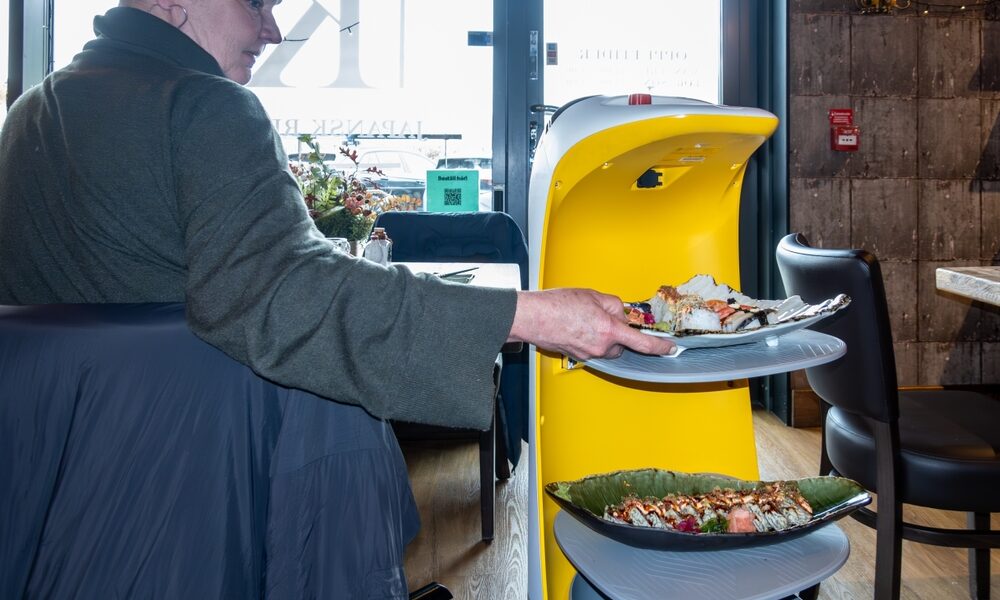

As labor constraints continue, robotics is shifting from experimentation to execution in casino food and beverage operations.
A panel discussion, “Automation in Practice: Where Robotics and AI Are Delivering Real Results,” at the recent Indian Gaming Tradeshow & Convention examined the real-world uses of robotics and AI, from back-of-the-house workflows and order management to selective guest-facing service.
Jesse Robles, editor and founder of FoodandGaming.com, moderated the panel discussion with Takuro Iwamoto, director of Sales and Marketing with AUTEC Sushi Robots; Peter Arceo, chief gaming officer with the Yuhaaviatam of San Manuel Nation; and Rich Hull, chief executive officer with Miso Robotics.
Arceo said the problem he’s trying to solve with the technology is the difficulty of finding food and beverage workers in the kitchen and front of house.
“Our philosophy is hiring and helping, not replacing, people. Those who want to come to work, we’re trying to make their jobs easier and less stressful, instead of saying they’re doing the job of two or three people and don’t have a passion for it.”
Arceo said if people follow that philosophy, the profits will come with it. There’s no magic formula other than serving their guests the right way.

Following the pandemic, getting people back to work was challenging, Arceo said. They attended the National Restaurant Association show in Chicago the year after COVID and the need to focus on how to help the workforce was clear.
“A slew of robotic options were being launched and everyone was getting into automation,” Arceo said. “A lot of robots at the time were doing front-of-the-house activities replacing servers. I discovered it wasn’t the servers we were struggling with, but the bussers.”
Arceo said they adapted the concept to bussing, with robots bussing about 4,000 pounds a day and traveling more than three miles.

“They focus on getting the table prepared and engaging with the guest, which helps their server,” Arceo said. “Now, a busser can cover more tables and can make more tips in the same eight-hour shift, saving their back and feet, feeling better when they go home, and coming back recharged.”
The biggest challenge in the implementation was getting out the message about what they were doing, Arceo said. There was immense fear among employees that they were going to be replaced by the robots they were helping to train.
“We had to spend a lot of time saying we’re committed to keeping you and making your job better,” Arceo said. “This took time and the proof is in the action. The word got around that we were using automation to help the employees. We deployed robots in other areas too. We gained their trust early and demonstrated that we were helping them.”
Hull said operators approach his company for three labor-related reasons. One is shortages, typically in smaller markets. Those are solved through automation without getting rid of anyone. It helps staff focus on working at the counters and upselling.
The second reason is labor-cost savings, an issue in California with its $20-an-hour minimum wage. Many restaurants earn a high-single-digit or low double-digit margin, Hull said.
The third reason is labor happiness. A lot of people don’t like doing some of the tasks in a restaurant. No one misses bussing tables and would rather do something else that could bring the restaurant more value. Others like the idea of working with a robot.
Iwamoto said restaurants lost a lot of sushi chefs who returned to Japan during the pandemic and robots helped with that reduction. As the labor force grew back, there was a shift in restaurant owners’ mindset; they were investing in the robots that cost $18,000.
“The owners were willing to spend to have the chefs have a happier work environment,” Iwamoto said. “We like chefs to work on creative stuff.”
Hull said the inertia and fear in the industry are breaking down for the use of robots. When one casino does it, competitors want to do it as well.

“People are coming around, and that’s the biggest hurdle we have,” Hull said. “It’s almost psychological. The payoffs are huge. You put one of our Flippy robots in and the payoff is $3 for every $1 you pay us. You pay us a few thousand bucks a month with nothing down up front. How hard is that?”
Other than bussers and fryers, what else can the industry expect from robots over the next five to 10 years?
Hull said it’s consolidation of technology into a single vendor. It’s a broad landscape today and that complicates the efforts.
“What we’re finding is that once we install a product, they say that’s pretty easy and ask what else do you have,” Hull said. “Now, we’re starting to add more and more products, so we become that trusted vendor.”
Arceo said they have a robot dog that reads temperature gauges and has thermal imaging, so it can see a potential leak in a gas line.
There’s been a gravitation toward grab-and-go and quick serve, which put a lot of strain on their sit-down restaurant. As soon as the food hits the table, the customers ask for a to-go box, which frustrates servers who lose out on tips. Servers asked for the property to get rid of the comp offers that led to that problem.

The property solved the issue by installing kiosks and launched mobile ordering, Arceo said. They noticed the average check was up 25% and were able to get the same amount of work from employees, who got increased tips.
“We were able to pivot,” Arceo said. “Guests are demanding the ability to pivot. They want fresh menus and customized menus. What they want is a unique experience, and traditional kitchens were not designed for that. They were designed for a set menu.”
