
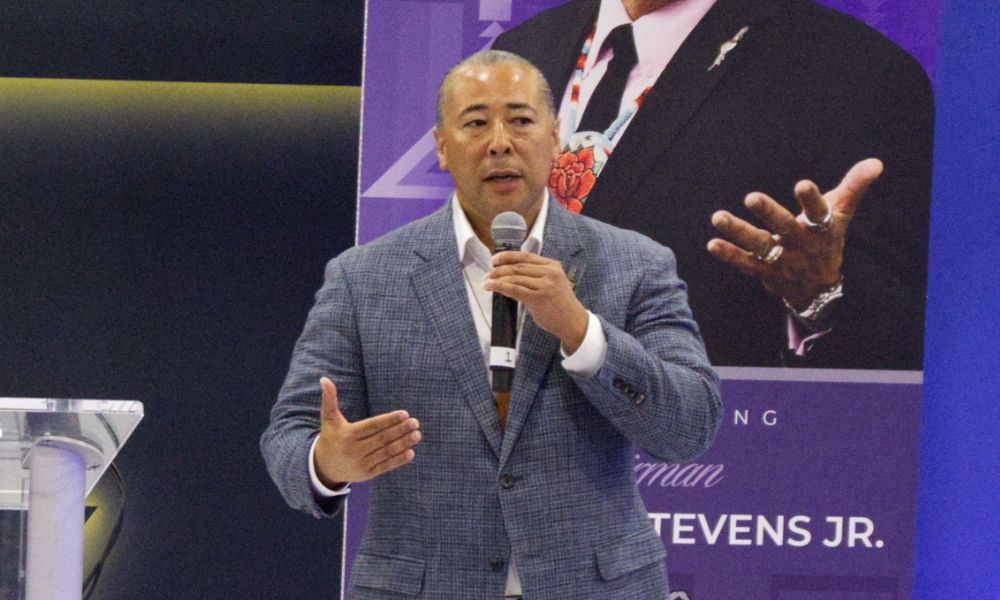

The new chairman of the Indian Gaming Association (IGA) said the organization will focus on lobbying Congress and litigation as it seeks to halt the sports betting prediction market that he says is a threat to tribal sovereignty.
David Bean spoke to tribes Wednesday when he appeared on IGA’s New Normal webinar, hosted by its Executive Director Jason Giles and Victor Rocha, conference chair.
Bean sounded off about a prediction market trader on Polymarket who won more than $400,000 after wagering $32,500 that the Trump Administration would oust Venezuelan leader Nicolás Maduro by the end of January. Maduro was captured by U.S. forces over the weekend. He referred to it as insider trading with no oversight by the Commodity Futures Trading Commission. The companies claim they derive their authority to operate, despite states and tribes arguing they’re illegal under state laws.
“The challenge facing Indian gaming hasn’t changed with prediction markets,” Bean said. “It’s only a year old and people are just figuring out what it is. It’s a complex issue. We need to educate members of Congress and let them know the CFTC isn’t doing their job and the activity is a violation of their own rules and regulations that prevent gambling on sporting events. We need to let them know it’s harmful to the gaming industry as a whole, but with respect to Indian gaming, it impacts our ability to provide essential services.”
Bean said among tribes, some see prediction markets as a threat and others are still learning about the issue. He said they will continue to focus on educating tribes so they can reach out to members of Congress.
“We’ve been sending out alerts to tribes across the nation and sample letters to send to congressional reps,” Bean said. “It’s an opportunity for tribes and Congress to address this issue and reaffirm what has been the case for so many years – gaming has not been allowed in this prediction market space, which is for commodities.”

Bean sounded off on wagering that allowed someone to make more than $400,000 off Maduro’s capture, suggesting it may have been someone in the White House or with ties to the administration.
“Someone took out that contract having inside information and it shows how easily these prediction markets can be manipulated. That undermines regulation and the integrity of the game and is unfair to folks who don’t have the information,” Bean said. “This is a scandal. To have someone at the White House with insider information taking out a contract is as illegal as hell. That’s just an example of how out of control these prediction markets are.
“While this is outside of our gaming space, it’s an example of how unhinged these activities are,” Bean said. “We have to make sure this is our main focus for the immediate future and beyond. We have to keep up with the same message that this is illegal and unregulated. This is probably the biggest threat in the last decade and we have to take it seriously.”
Rocha said no one is in charge of the CFTC and that the insider trading in the case won’t be investigated, like it is for legalized sports wagering by the FBI.
Giles even pointed out that bettors who wagered that Venezuela would be invaded are upset that they can’t get paid by Polymarket, because the operator said it wasn’t an invasion, but an abduction. “They’re making it up as they go along.”
Progress is being made, according to Bean, who said he’s heard from a tribal chairman from the Pacific Northwest who wants to rejoin IGA as the tribe fights prediction market operators in court. That tribal chairman said it would help them and IGA to fight the same battle and Bean concurred, adding pooling with tribes on litigation will help create a stronger front against prediction markets. “This is an election year and members of Congress come to tribes looking for contributions,” Bean said, adding it’s an opportunity to help educate those members to take action.
Bean also talked about the need for Congress to reverse legislation enacted in 2025 that doesn’t allow gamblers to deduct 100% of their gambling losses. He said lawmakers will face consequences if it’s not changed.
“They won’t feel the effects until (corporate gaming) doesn’t make their campaign contributions and tribal casino operators share the same concerns that they’re going to lose a percentage of their customers,” Bean said. “With most casinos, under 10% of customers make up a majority of income, so when you start to lose those whales, that’s going to have a rippling effect throughout American gaming and the entire gaming industry, including Indian gaming.”

