
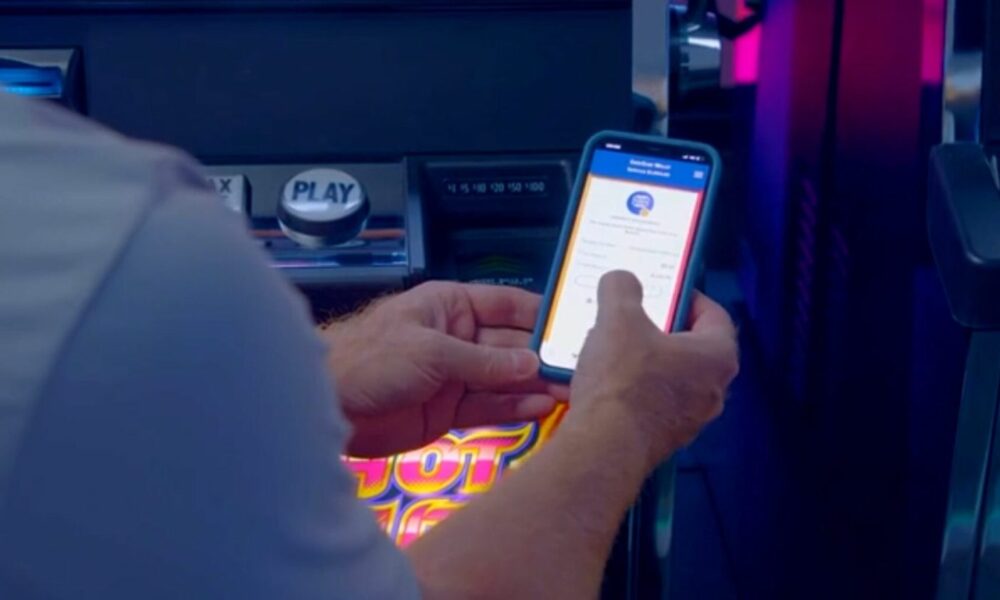

Adoption of cashless gaming remains low and the recent headline that Resorts World Las Vegas dropped its pioneer Strip program for now doesn’t help its perception of acceptance by casinos and the public.
But analysts at the Indian Gaming Association tradeshow said despite a slow rollout, cashless gaming is growing and will continue to do so as the industry adapts and provides options for what the public wants.
“Adoption remains low both on the tribal side and commercial side, but we know people want these different solutions, because of what’s going on everywhere else in the universe today,” said Jonathan Michael, a principal with Michaels Strategies who moderated the panel discussion “Beyond the Wallet: The Future of Cashless Payments in Tribal Gaming.” “Players want choice in a variety of form factors.”
Panelists explored how tribal properties can leverage cashless technologies to enhance guest convenience, unlock operational efficiencies, and drive digital transformation. Industry experts examined mobile wallets, digital loyalty integration, and alternative funding sources, while looking ahead to emerging trends.
The panelists included Victor Newsom, a senior vice president of product management, payment solutions with Everi; Thomas Pierro, a senior account executive, casino sales, for Giesecke+Devrient; Ted Keenan, vice president of product management, gaming systems for Aristocrat Interactive; and Darren White, head of casino sales for Trustly. They spoke about where cashless gaming will be in a year at the IGA conference in Las Vegas.
Newsom said wallet growth is up 44% in the past year, while TITO purchased by debit card is up 14%. There was $2.5 billion in TITO in 2025, $550 million in wallet, and $3.2 billion overall. There was $40 million in chip purchases from debit devices on tables.
“Cashless is definitely growing faster, but cashless as 7% of the market still has a long way to go,” Newsom said. “I think we’ll be talking about what a great introduction year direct funding has had. We’ll be talking about how we’ve seen new transaction types come into the wallet space and continued growth in that space. We’ll have more success stories of what’s coming out. As far as whether it will be a really big year, I’m going to look at operators, vendors, and regulators. COVID was the biggest push to digital that I’ve seen in any industry in 30 years. After COVID, there was less of a focus at the executive level and that momentum backed off. We have great double-digit momentum. We will talk about that momentum in a year, but it’s up to the industry to continue to want it.”
A year from now, Pierro said there will be continued growth of the use of cashless options, whether its direct funding or system wallet or external wallets.
“I know it’s been slow, but as more people become aware, it will grow in the gaming space,” Pierro said. “We just need to provide solutions that enhance experience.”
White said there’s always been pushback on adoption with new technologies added to the casino floor. It took 10 years after early TITO failures for it to come back. The industry is “getting a second bite at the apple” with cashless because of direct funding.
Keenan referred to the industry still being in the introduction phase of cashless gaming. As for whether it will be in the growth phase a year from now, they have some good consumer feedback. “There is demand. We know elsewhere it is very successful. Our patrons want to use it. We are going to get to a growth phase. Will that happen next year? We’ll see.”
Opportunities in digital gaming can help the industry grow, Michael said. “If you look at what the American Gaming Association puts out, land-based gaming is pretty flat in terms of its growth rate,” Michael said. “Are there opportunities using digital payments, AI, wallets and loyalty by tying it all together to help the business grow?”
The industry is attempting to make cashless payments more successful than it’s been so far, White said. Problems with friction for players to even enroll renders adoption “painful.” They have to join a loyalty club and download an app. That compares to what properties do for the player experience to try to give them the fastest way to play.
Newsom said the industry keeps having the conversation about adoption rates because of friction, but there’s also disappointment when expectations aren’t meant — a point of interaction at a game, standing in line in the cage, or disclosing your life story to do what’s convenient, he said.
There’s adoption with the use of a debit card for a TITO ticket and the rate is 7% to 25% for customers, Newsom said.

“As an industry we haven’t seen the right formula,” Newsom said. “We keep expecting there to be a single answer, but we need to meet our customers’ expectations for a good answer to the question about the right solution.”
Michael said companies have different views on the issue and he talked about Resorts World’s decision to “sundown their initial cashless wallet. It doesn’t mean they will abandon it, but it didn’t work for their player base,” he said.
Michael said 90% of transactions done in the U.S. today are digital payments at point of sale, with 10% in cash. That’s a healthy margin, given the size of the economy, he said.
“When you look at gaming, it’s completely reversed and probably 90% cash,” Michael said. “How do we design systems that provide digital payment options for customers who want it, while still allowing cash to be used for those who want to use that?”
“I’ve seen that these solutions exist,” Newsom said, “but they’re too expensive and now have a capex problem or leadership buy-in or a multi-year project. Regardless of what solution you pick, it’s far more important to get started, learn what you don’t know, and solve for what you don’t know. You learn so much through that first couple of steps that even if you have to pivot and keep your options open, you can go in a different way. Get started, because whether it’s working with regulators or vendors or training your team, it does take time and you have to invest that time.”
Pierro said options are needed for players, but the industry needs to enhance the experience for the customer that brings value to them — fast access to play and tying that into loyalty. There need to be options, because players want different access points depending on what they’re doing.
Direct funding has been baked into the technology for many years, but there hasn’t been a payment system come in from the outside to facilitate it, White said. Account-to-account does facilitate well into that realm of being able to do direct funding with baked-in regulations.
Keenan said what’s positive is that when there’s some adoption, it’s been accepted. The players who use the cashless systems use them frequently, and it drives loyalty. The problem is that it’s only a small fraction of players.
“There’s this promise that if we can just get everybody to use it, how great the industry would be doing,” Keenan said. “For those building solutions, it’s great to have that vision. But what we need to focus on is how do we build that adoption and how do we build simple and easy to use solutions that players understand and engage with more easily? Then, we can upsell them to better solutions as they try before they buy.”
Newsom said his company has 43 properties with wallets and they range from 6% to 20% cashless. What’s interesting is if both options are used, it goes to an 11% average, because they ‘e different customer segments with people who want different things.
“When we started doing wallets, 15% of patrons were still going to a kiosk and getting a TITO,” Newsom said. “That’s how they budget their play. Over time, that’s reduced to 5%. The point is you need multiple tools in your tool kit if you want to maximize the adoption of your customer base. You have to recognize the existing behavior of your customers. If you can meet them where they are at versus forcing them to change, you see adoption.”

