


The casino industry should set the standard for responsible use of artificial intelligence in the entertainment sector, the UNLV International Gaming Institute’s research director said Monday.
“The industry’s worked hard for decades to build up a reputation (and) gain trust,” said Kasra Ghaharian, citing its support for AML and consumer-protection guidelines. “The same is true for now with AI. It’s a really good opportunity for the gaming industry to demonstrate, ‘This is how you do it.’”
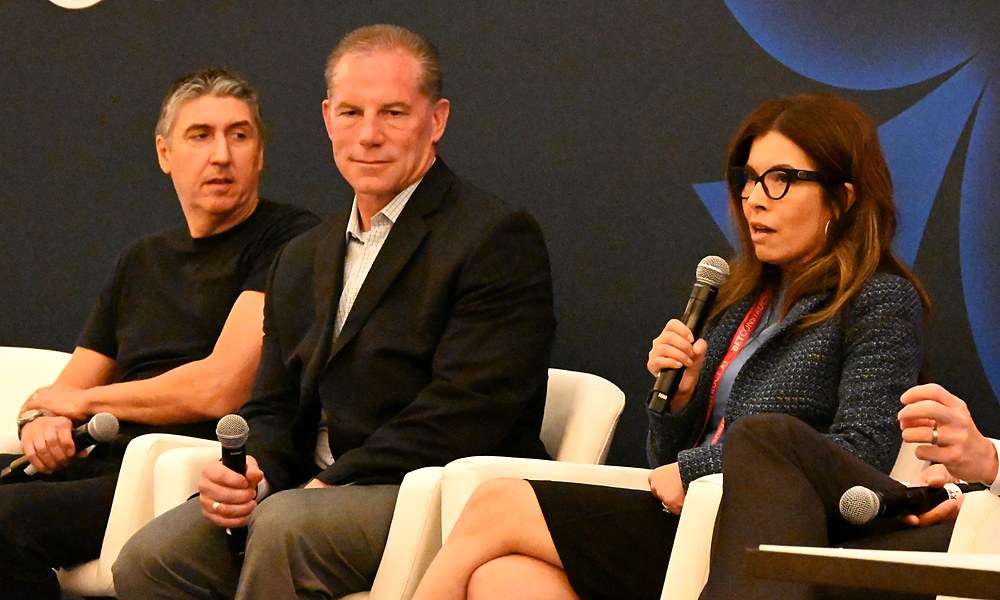
Ghaharian, a leader of the first “State of AI in Gaming” study released earlier this year and of the follow-up study to be completed next year, spoke on the opening day of the Global Gaming Expo during a panel discussion titled “State of AI in Gaming 2026: Research Results on Industry Maturity, Regulatory Readiness, and the Road Ahead.”
The 2026 study by the IGI in collaboration with KPMG LLP found that most gaming-industry deployments of AI addressed back-of-the-house and security uses rather than customer-facing uses, putting it in a “developing” stage of adoption.
It also pointed out a gap between operators and regulators about AI, with regulators wanting to set rules about its uses, but not knowing how operators are using it.
In response to a question from moderator Rick Arpin, KPMG’s U.S. gaming leader and Las Vegas managing partner, panel members offered other potential ways AI could most benefit operators.
Eric Bowers, vice president of innovation and architecture for Boyd Gaming, said a “dream scenario” would be AI providing an individual “host” for each player in an operator’s database. “A holistic personalized journey” covering in-person and online interactions would appeal to customers of all levels, he said.
Simo Dragicevic, co-founder of IGI’s AI Research Hub (AiR Hub), cited “the art of the possible” by using data to envision future scenarios “We envision a future where that data could be used to potentially turn your sort of static database into a living database of players, simulating human behavior. Potentially in the next five to 10 years, (it) will open up new opportunities to accelerate innovation in the industry.”
Lori Kobashigawa, senior vice president of marketing and innovation at Fontainebleau Las Vegas, looked forward to removing more friction points in customers’ experiences. “If you’re looking at a development roadmap of a year to solve for, maybe that’s a solution where brands are taking control of knowing their customer base, then releasing things out to the public and aiding their business a little faster.”
Arpin said AI can give suppliers a better chance of building games that will attract customers. “It’s not just hoping that my customers will like the next animal I pick as a theme, but knowing which animal to pick or whatever game mechanics are next to be popular, not having that be so hit-or-miss.” Several suppliers have that effort “in progress,” he added.
Calling on his financial background, he said AI could cut procurement costs with automated daily price checks replacing manual checks done months or years apart.
Kobashigawa encouraged executives to involve workers in how AI is used. “We view technology in service of the business,” she said. “This is so we can help make sure that we’re servicing our guests, then coming back to our North Star and empowering our employees to make sure they’re more efficient in their jobs versus being a replacement of their job.”

Ghaharian advised users to identify which staff members embrace and benefit from new technologies.
“What are the traits of those individuals that make them power users?” he asked, citing his own staff who help each other understand potential uses of AI. “What exactly are they doing that makes them really efficient? That’s something organizations should be doing in terms of people and AI.
