

Sitting around the campfire late into the night and telling stories is a distinctly human characteristic. We may have had speech before we had fire, but like most primates, humans probably went to bed at dark. With fire, however, humans could stay up late into the night, recap their day, plan for the next, and tell tales of days gone by. Recapping the day and planning for the morrow are important, but not necessarily fun. Talking about the past is fun and comforting, a way in which we bond. Given a chance, we all like to reminisce.
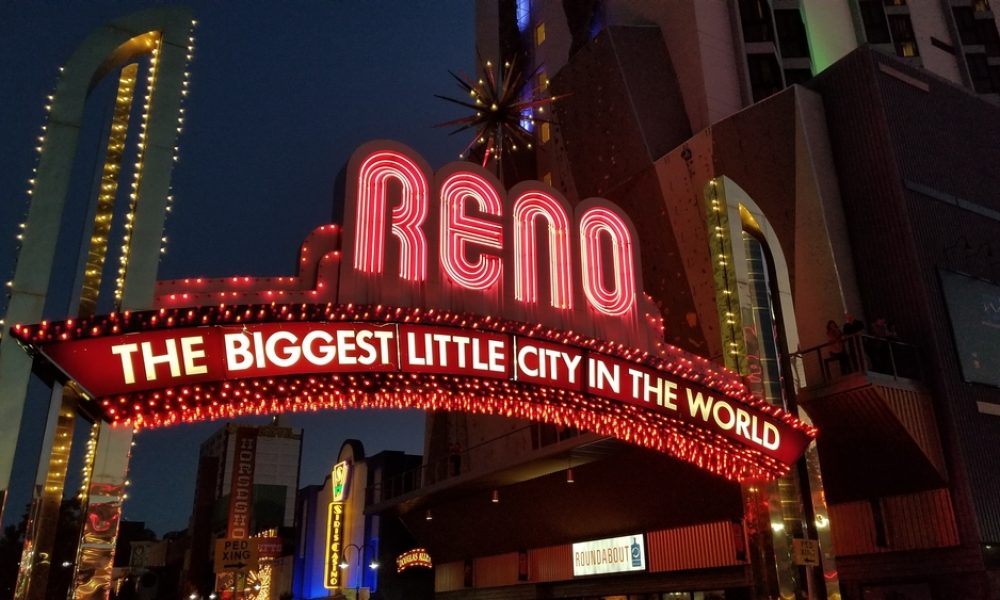
Recently, sitting around an imaginary fire, a friend and I were talking about the high points in our careers. It was about the gaming industry of the 1970s, ‘80s, and ‘90s and about Reno’s place in that tale.
Working in a casino in Reno in the 1980s was exciting. The industry was bustling. The future was bright. It was possible for operators to build thriving businesses and employees could build promising careers. Slot clubs, tournaments, special events, big-name entertainment, and buffets of plenty were everywhere. Reno was awash with creativity and opportunity. But by the 1990s, things started to change; gaming was expanding into other jurisdictions, leaving Reno behind. Our sad campfire story was about that change. Afterwards, there were fewer casinos and jobs. Worse, the jobs were just employment; the career opportunities had fled to other jurisdictions. Reno had not committed any crime or failed to do anything, it was guilty only of being located in northern Nevada, a long drive or flight from population centers in California, Oregon, Washington, and Canada. Reno was the first illustration of the basic principle of casino gaming: The closest casino to the people gets the business. It is an iron clad rule that shopping malls learned in the 1950s and ‘60s. Gaming only internalized the principle in the 21st century.
The final results are not in yet, but 2025 was a banner year for the gaming industry. Gross gaming revenue from conventional casinos, VLTs, sports betting, and igaming is going to be close to $80 billion. Indian casinos will probably generate $50-$60 billion, total lottery sales in the country were $91 billion, and gamblers bet $11 billion on horse races during the year.
Those are not apples-to-apples comparisons. The GGR is revenue, the lottery and horse racing are wagering, revenue can be estimated at 10 percent of the wagers. The conventional GGR would indicate $800 billion in wagers. Included in that number is the $150 billion wagered on sports and something close to $90 billion wagered remotely on casino games and igaming. The gaming industry is a monster and still growing. Gaming was growing before the pandemic, but since 2020, it has been on a rampage driven by sports and internet casinos.
It is shocking to think that in 1990, Nevada and New Jersey had the only casinos in the country and the combined gaming revenue was about $10 billion. The change began in 1988 with the National Indian Gaming Regulatory Act, followed by riverboat gambling and remote mining-town casinos. The movement continued right up until December 2025, when three casino licenses were issued for New York City.
Today, 27 states have casinos, 29 have Indian casinos, and 40 offer some form of legal sports betting and seven legal igaming. Nearly every major metropolitan has gaming, either conventional or tribal casinos. Remote sports betting is available in 30 states, which means it is available everywhere, all the time.
In 2025, prediction markets have stepped up to offer a product like sports betting in places that do not have mobile betting. The spread of mobile sports betting, igaming, and prediction markets is new, so assessing their impact is not possible. But over time, those three are bound to alter the gaming industry in significant ways. When new players enter the game, older players struggle and some will be forced to bow out. Think of the neighborhood grocery stores, the bookstores, the malls, and the big box stores that have passed away. It will happen in gaming.
Some places like Reno, Atlantic City, and Tunica will remain, but only as shadows of their former selves. Some whose names are not yet known will see the casinos pack up and leave town. Your town or your casino may be on the list.

Come join us around the campfire while we lament the lost world we once shared. As to the good old days, they are gone, swallowed up in a tide of change that never stops.

