
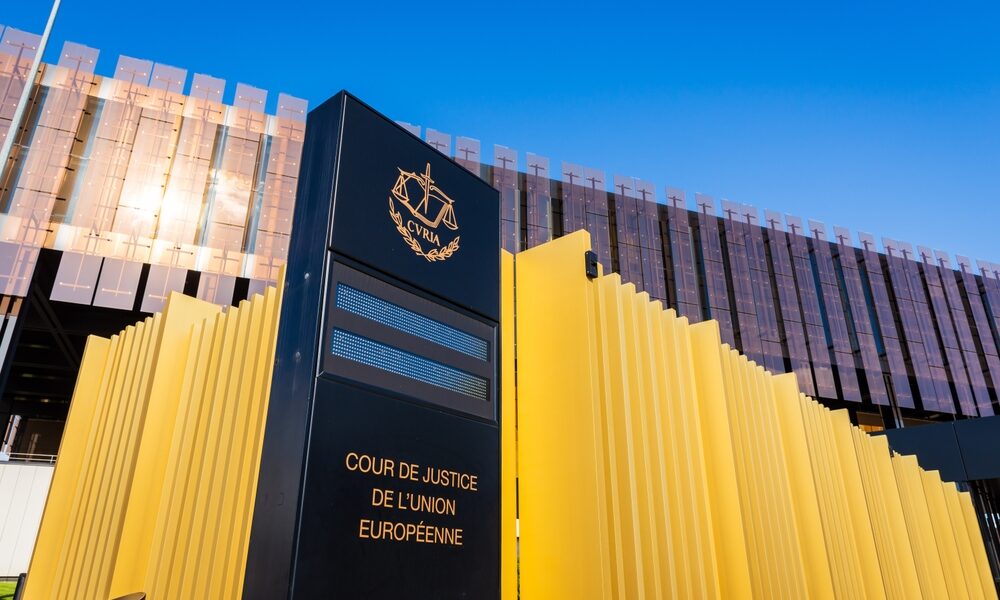

In my November article “The window is closing,” about the cases before the European Court of Justice, I suggested the opportunity for a Malta-licensed operator was shutting down. Malta’s export-license model, sustained by optimism, inertia, and the occasional invocation of Article 56 TFEU as if it were a diplomatic passport, was beginning to look less like a business strategy and more like a litigation strategy.
Back then, the warning signs came in the form of two Advocates Generals’ Opinions. They were persuasive, pointed, ominous, but still only Opinions. A raised eyebrow, not a verdict.
On January 15, the Court delivered the verdict.
In C-77/24, Wunner, the Court of Justice of the European Union did not decide whether Austria’s gambling monopoly is proportionate, players should be allowed to recover their losses, or Malta’s regulatory model is sustainable. It did something more dangerous for operators: it decided where the fight will be fought and which law will govern it.
Wunner is, on paper, a private international law case. It concerns the Rome II Regulation, which determines the law applicable to non-contractual claims across borders. Not particularly thrilling, but this judgment is anything but dull.
The facts were familiar. A Maltese-licensed operator offered online games in Austria without holding an Austrian license. An Austrian player lost around €18,500 ($21,700). The player sued, arguing the service was unlawful under Austrian law, the contract between operator and customer was invalid, and he should recover his losses.
So far, so routine. Gambling restitution claims have become part of the European legal furniture, especially in markets where regulators still insist on national control and claimants insist that “illegal” means “refundable.”
What made Wunner more interesting was the target. The player sued not only the company, but its directors personally. That is not incidental. It reflects a broader tactical shift: If the corporate defendant is remote, insolvent, inconvenient, or shielded, the next best option is the people behind it. It is never personal. It is merely enforceable.
The directors raised a familiar first defense. This was really about directors’ liability, therefore company law applied. And company law, they argued, is excluded from Rome II and if Rome II does not apply, Austrian law cannot reach them.
It was a neat argument and a procedural one. It aimed to end the case before the awkward questions began.
The Court rejected it.
The Rome II exclusion, it said, concerns obligations rooted in the internal organization and operation of a company, the sorts of duties directors owe, because they’re directors, to the company itself,as a matter of corporate governance. That is not what this claim was about.

This was about an external matter: offering games of chance to the public without the required Austrian license. That obligation is owed to the outside world, not to the company. So Rome II does apply.
That point matters. It deprives directors and officers of an early escape route. Once Rome II applies, the applicable law decides who can be held liable. And depending on the national rules in the player’s home state, that can include individuals.
With Rome II in play, the case turned to Article 4(1), the general rule that the applicable law is the law of the country where the damage occurs. This is where Malta-based operators often try to relocate the dispute back home.
The directors tried the second defense: the damage happened in Malta. The player’s funds were transferred to a Maltese bank. A player account was maintained in Malta. The losses were recorded in Malta. Therefore, Maltese law should apply.
Again, the Court denied the claim.
It held that the damage occurs where the player is habitually resident, in this case Austria. That is where the player participated, the alleged protective prohibition applied, and the harm manifested. Malta-based payment infrastructure and wallet mechanics were treated as indirect consequences, not the place where the damage occurred.
This is the core of the judgment and the part most likely to cause concern. For years, the export-license narrative has rested on a kind of legal geography: The licence is Maltese, the operator is Maltese, the terms are Maltese, the money is routed through Malta, and therefore disputes should orbit Malta too.
Wunner changes the map. In online gambling, the key location is not the server, the wallet, or the regulator. It is the player. The grey part of the industry has spent decades describing online gambling as borderless. The Court has politely responded that the player is not.
The immediate effect is that claimants in restricted jurisdictions can more confidently plead that their local law governs claims for gambling losses. That in turn makes the local forum more natural and the litigation more predictable. What becomes predictable becomes scalable. This is how niche restitution claims turn into an industry — not through ideology, but through repeatability.
None of this means the claimant automatically wins on the merits. Wunner does not decide whether Austrian restrictions comply with EU law, players should be treated as victims, or restitution is the right remedy. But it does make these cases harder to derail at the outset and therefore more attractive to pursue.
At this point, Malta’s defenders will instinctively reach for Bill 55. If foreign judgments are the problem, Bill 55 is the shield. Malta can refuse to recognise or enforce certain gambling judgments against Maltese licensees. End of story.
Except it is not the end of the story, because enforcement does not have to happen in Malta.
Even in the earlier Opinions, Bill 55 was already starting to resemble the Maginot Line of gaming regulation: impressive on paper, but heavily dependent on the enemy approaching from the direction you anticipated. If Malta signals that enforcement at home will be difficult, claimants have stronger arguments for freezing assets elsewhere before they disappear, precisely because the risk of non-recovery becomes more credible.
Wunner adds a further complication. It makes it more likely that claimants will obtain judgments at home under home law. Once they do, they can enforce wherever assets can be reached. Malta may be legally relevant, but it may not be practically necessary.
That is the limitation of treating Bill 55 as a solution. It is a Malta-based response to a cross-border exposure problem.
Modern operators are rarely tidy. Their payment relationships, receivables, counterparties, group structures, and key decision-makers often sit outside Malta. If enforcement in Malta is awkward, claimants will look elsewhere. If the company is difficult to pursue, claimants will try individuals. Bill 55 may still have tactical value, but it is not a force field.
Stepping back, Wunner is another sign that EU law is becoming less indulgent of the idea that a Maltese licence is a passport to everywhere. The formal niceties remain. Freedom to provide services is still recited. Member states must still justify restrictions. Proportionality arguments still appear on cue.
But the mood is shifting. Courts are increasingly willing to use procedural tools to ensure national protective laws have real bite. Wunner does not shut the window outright, but it narrows the opening and removes some of the insulation operators have relied upon.
The window is still just ajar. And if you listen carefully, you might not hear the hinges, but you can hear the locks.

