


Hawaii has been in the news in Las Vegas a lot lately. There have been two main storylines.
One is a real estate investor, Jason Otter, whose Hawaii-linked entities have amassed a $1.6 billion real estate portfolio, including restaurants, shopping centers, offices, warehouses, and residential property. The concept of bringing Hawaii to Las Vegas grew out of a vacation Otter took to Hawaii in 2008. Otter liked the Zippy’s restaurant chain and thought it would work in Las Vegas. He knew there were lots of Hawaiians in Vegas and thought Hawaiian-linked enterprises would be successful in his hometown.
The other storyline concerns the closing of Aloha Specialties, a restaurant that has operated for 41 years in the California Hotel in downtown Las Vegas.
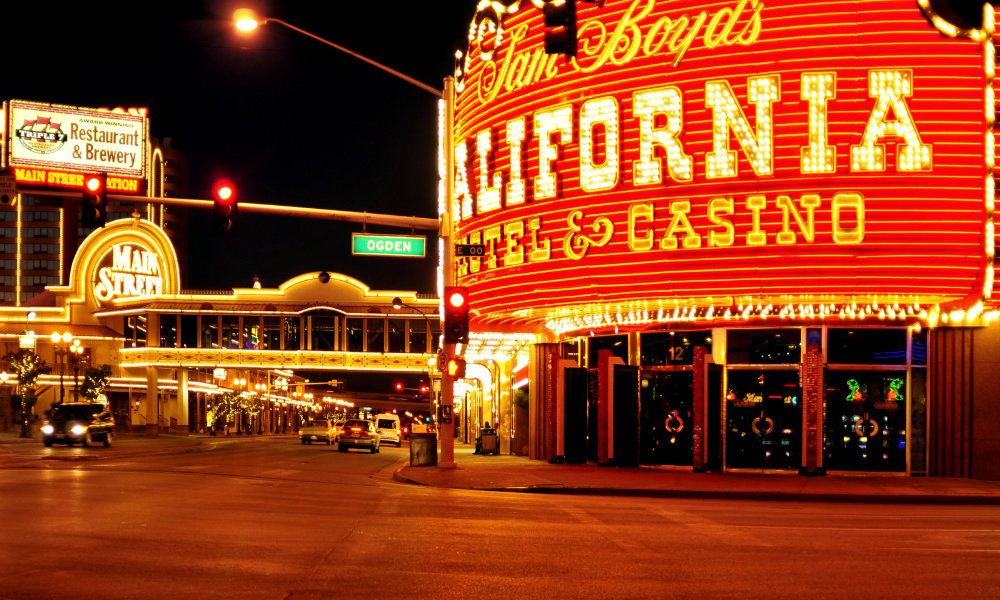
The two stories are seemingly unconnected, but they’re actually joined at the hip, as all things Hawaiian in Sin City are connected. A report written by real estate broker Colliers details the history of that connection. According to the Las Vegas Review-Journal, Colliers, and UNLV professor David Schwartz, the link between Hawaii and Las Vegas began in the California Hotel.
Las Vegas is famously known as the ninth Hawaiian island. The nickname comes from the popularity of Sin City on the Aloha Islands. Equally, Hawaiian culture is popular in Las Vegas. It is estimated the 40,000-50,000 Hawaiians and Pacific islanders live in Vegas and 300,000 islanders visit annually. Google says that one in 10 Hawaiians visit Las Vegas. Whether the information source is Colliers, Google, Wikipedia, the Review-Journal, or UNLV, it’s well-known that Las Vegas has a close connection with Hawaii and it started with the California in the 1970s.
The California Hotel and Casino opened in 1975 with 325 hotel rooms. Sam Boyd was its principal operator. Boyd was a member of the first generation of gamblers in Nevada, the pioneers. Sam learned his trade in gray-area gambling elsewhere, but came to Nevada because it was legal. Like many of his peers, he had worked as a dealer and saved enough money to buy in to a casino. In Sam’s case, he ended up with pieces of the Sahara and the Mint. When he had enough capital, he built his own casino downtown. The California was followed by Sam’s Town and then a string of other casino properties owned and operated by Boyd Gaming.
Sam knew his peers; they were friends as well as competitors. One of Sam’s friends was Warren Nelson. Like Sam, Warren had come to Nevada to ply his trade where it was legal; he settled in Reno. Warren also saved his money and became a partner in an existing casino and eventually, with a partnership of six others, he opened the Club Cal Neva in 1962. By the late 1970s, Warren and another partnership had opened the Comstock Hotel and Casino. As their properties became more successful, Sam and Warren called each other regularly. Both loved to brag about their casinos’ success. Sam was in Las Vegas and Vegas then was becoming much more successful than Reno. Sam had more to brag about.
Boyd’s Hawaiian strategy was one of which he was justifiably proud. Warren did what he always did with Sam: He listened. Then he did his best to copy Sam. Unfortunately for Warren, the details and context of Sam’s strategy got lost in translation. Reno was not Las Vegas and what worked for Sam did not often work for Warren. The Comstock fully embraced Hawaii, with junkets, restaurant specials, and even management trips to Maui to cultivate business. The Hawaiians did come to Reno, but Renoites discovered that Hawaiians understood gambling better than Warren’s boys. The Hawaiians were not novices and understood the games and the odds. They never bet when the odds were against them, but doubled down when the odds favored their wager. Hawaii was a losing bet for the Comstock.
Sam Boyd did not have those problems. He had a wider variety of islander customers. He spent much less money to cultivate the clientele. Instead, he created an environment that Hawaiians loved. It was practically risk proof; even when he lost on the crap table, the California Hotel still made money. As Sam’s concepts expanded, the city of Las Vegas began to respond to the presence of Hawaiians.
Today, the California Hotel is no longer the sole home of Hawaiians in Las Vegas. Markets, restaurants, and residential properties throughout the valley cater to them. But that’s all thanks to Sam Boyd, who built a bridge between Las Vegas and the Hawaiians islands.
