



Artificial Intelligence (AI), we’re told, “could kill us all by the end of the decade.”¹ Grim stuff. But if we’ve only got a few years left, maybe we should at least make good use of the technology while it’s here, starting with our casino floors.
“The Impact of Computer Vision on Table Games” isn’t a book. It’s a tight, 22-page opinion piece on the state of table game integrity. But don’t let the page count fool you. Anyone connected with casino gaming needs to read it, and it raises questions everyone in our industry should be asking.
Author Allison opens with a secret we all know but rarely say out loud: “For a long time now casinos have perpetuated the myth that everything is being watched by Surveillance. It’s not.”
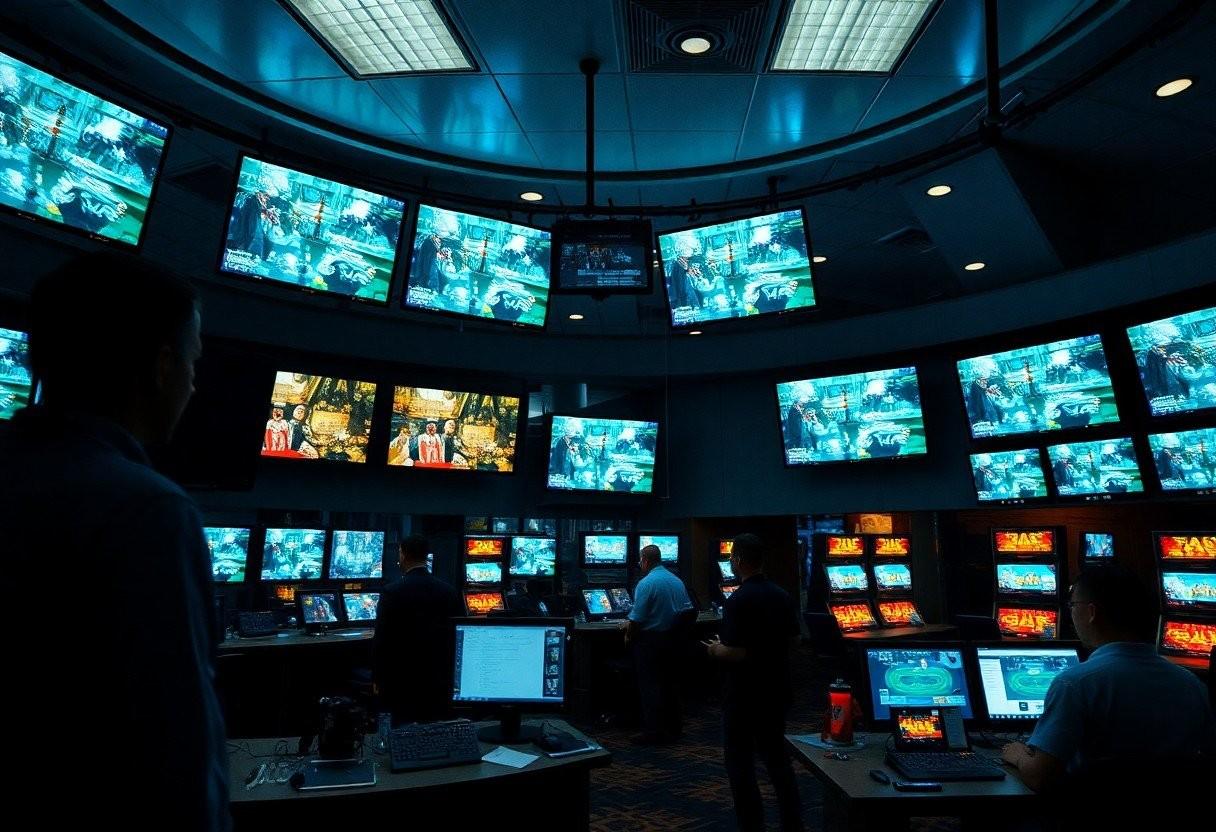
Photo: ACGCS
His point is simple. We’ve got hundreds, sometimes thousands, of cameras covering nearly every inch of the property (the bathroom toilet paper dispensers being the notable holdout). But there are rarely more than two to four surveillance pros actually watching those feeds at any given moment. “That doesn’t take into account staff members going on breaks,” he says, “or on the phone, reviewing video, writing reports, training, or responding to what has been deemed a high-priority event.”
So, despite the sensational stories of crooks getting “caught on camera,” the reality is there’s simply too much happening on a casino floor for any surveillance team to keep up. Allison estimates that “only about 1% of casino transactions are actually being watched at any given time.” And that low number, he says, isn’t limited to table games. It extends to slip-and-falls, medical emergencies, assaults, team member behavior, slot disputes, cash handling, theft, and regulatory matters.

Willy Allison
Where the numbers come from
The surveillance world is something of a black box to most of us, so it’s fair to wonder where Allison gets figures like these. The short answer: few people are better positioned to know. He spent 15 years in casino surveillance operations across Australia, Asia, South America, and the U.S. before he and his wife Jo launched the World Game Protection Conference in 2006.
That conference and trade show has run every year since. It draws casino executives, thought leaders, regulators, and security professionals to Las Vegas; along with a handful of infamous (mostly retired) casino cheats.
Sessions cover everything from old-school card counters and dice sliders to the latest in digital and cyber scams. The trade show also features the latest in hardware and software designed to reduce loss-prevention (his “Computer Vision” white paper debuted last February, just ahead of this year’s 2026 conference.)
AI as a stopgap, not a replacement
While plenty of people in this industry worry about AI taking their jobs, Allison sees it differently: good AI, he argues, is the only realistic way to fill the “impossible-to-fill” shortage of surveillance observers, and the best shot we have at protecting our assets going forward.

But he’s not just pitching automation for its own sake. He makes the urgent case that the industry needs to capture its “human experience” before it disappears. “There’s a shrinking pool of expertise in the casino industry,” he writes. “Gambling is exploding in all shapes and forms, and professionals with gaming expertise and savvy are moving on. It’s time to bottle up the years of knowledge and wisdom in a secure server before the expertise is gone.”
Given Allison’s credentials, here’s hoping this message actually lands with the table game crowd, a group not exactly known for its enthusiasm around new technology. As more than one of my colleagues in IT, Slots, and Data Analytics has joked, “Pit bosses think electricity is a tool of the devil.”
Case in point: RFID2 chips have been available for years, yet few properties have adopted them, often citing vague concerns about costs.

The dollars behind the pitch
On the contrary, Allison lays out several multi-million-dollar saving potentials tied to new technology and his computer vision strategy. A few worth highlighting:
- “Over the years, internal surveillance investigations have shown that floor staff overestimate what players wager by up to 20%. The ‘honesty box’ system that casinos use to give away billions of dollars a year is fraught with inaccuracy, favoritism and corruption. The result is wasted dollars on customers that are not as valuable to the casinos as they were led to believe.”
- “Spoiler alert: Dealers make mistakes. Most mid-to-large casinos report tens of thousands of dollars in monetary losses detected by Surveillance observers each month. Most are recovered from players by floor staff. It’s safe to say that errors detected by Surveillance represent a small sample size of what is probably lost.”

Photo: Shutterstock
- “If the presence of the new system was openly announced and promoted, I believe it would act as a major deterrent for staff and players who have become wise to the fact there are only a few people watching the entire casino — that cat’s out of the bag. If cheats and thieves know they are being watched 100% of the time by an AI-assisted computer, it may scare away any larceny in their hearts.”
Most casinos are already well-equipped on the camera side, but Allison notes that pairing those cameras with AI could reshape some long-standing practices. “It is of paramount importance to be able to accurately identify and confirm players’ bets,” he writes. “The solution to this problem is reasonably simple but may take some experimentation with the placement and mounting of [today’s] cameras” (This is to better examine vertical stacks of chips to determine their value).
Not just a table games problem
There’s plenty more in this paper worth the table game industry’s attention, but they’re not alone in facing this challenge. While table game pros bemoan the lack of accurate tracking and profitability data, the slot side of the house is dealing with its own version of the automation gap. Ironically, their issue is often too much data. That comes with its own set of problems.
New AI analytical tools have emerged over the past five years to help close that gap, but plenty of blind spots remain. On the surveillance side (in addition to all the unwatched cameras), think about the hundreds and hundreds of slot machines that are only covered by wide-angle camera shots that can easily miss important details.
This is another area where useful technology exists now, but adoption remains slow. Imagine AI automatically flagging abnormal slot player behavior around the clock, sending alerts, and directing the pan & tilt cameras to zoom in on that suspect activity. That alone would be a game changer.
Allison has been writing on loss prevention since 2005, and you can find this white paper, along with his other work, here.

Bottom line
This paper takes only a few minutes to read, but implementing some of these ideas could protect your revenues for years to come. Ignoring it will almost certainly cost a lot more than those few minutes.
####
¹ – Three weeks ago, Anthropic researcher Jacob Coxon resigned and offered a blunt warning about unregulated AI: “The people building AI earnestly believe that it could kill us all by the end of the decade. This is not a marketing stunt. If anything, many executives and senior researchers will couch their phrasing in the press to sound sensible — but I hear the same people express fear privately. No other human activity poses this level of danger.”
2 – RFID is an acronym for Radio-Frequency Identification. These small tags can be embedded into casino chips to allow sensors to know their value and their location. They are very useful in preventing counterfeit chips, loan sharking, and other casino crimes on table games and in the cage/vault areas.
