
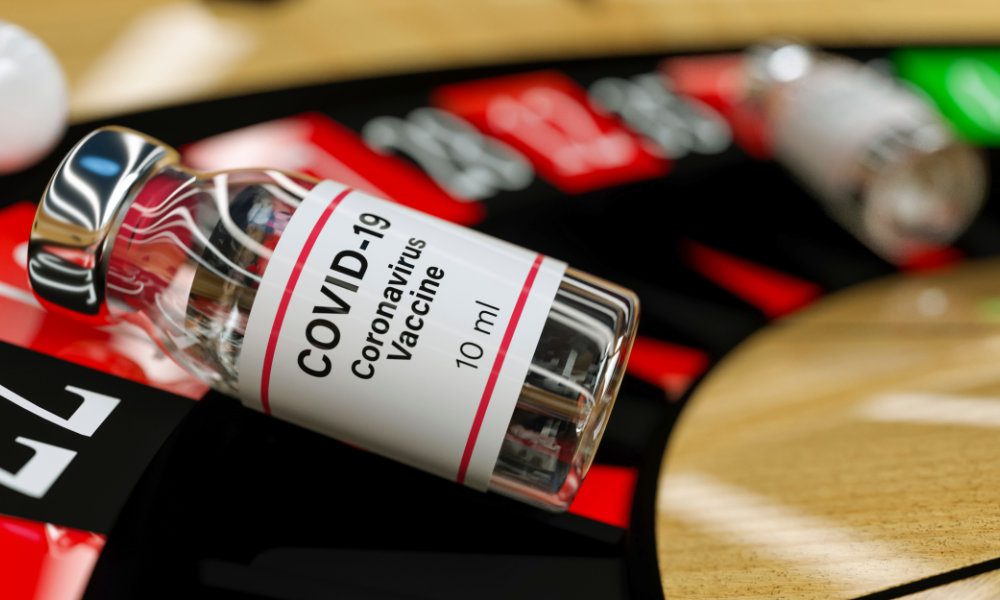

The COVID-19 pandemic has changed the trajectory of casinos and how they operate. Most have fewer slot machines on rearranged floors, some have gone smokeless, others have eliminated buffets, and many have new customers coming through their doors. Some moves will be temporary and others are expected to be permanent. Others will be wait-and-see.
That’s the message imparted by the panel discussion at the TribalNet Conference & Tradeshow, “Gaming and Hospitality Pandemic Changes — What Will Stay and What Will Go.”
Some casinos have used the opportunity to plan for the likelihood that gaming revenues, which rebounded strongly in 2021, will not sustain that level when the pandemic ends.
“We’re adding more amenities, because there’s a lot of revenue to be derived from the non-gaming side and other properties are doing the same thing,” said Fran Moore, director of IT at Wildhorse Resort & Casino in northeast Oregon. “We’ve added a bowling alley and a movie theater. We already had a golf course. The non-gaming side is where a lot of revenue is going to start coming from.”
Others, however, are seeing the strong gaming element and are doubling down to take advantage of it.
Steve Neely, general manager at Rolling Hills Casino north of Sacramento, said he heeds the lesson by the late Mike Metzka, the market-research analyst, who often said, “It’s the gambling, stupid” and how the industry loses sight of that.
“Think about how much money we spend in casino marketing and amenities and have good profit potential,” Neely said. “For us, we had to get realigned and re-focused on what we’re actually here for and what it takes to provide the best possible experience with our primary product.”
Neely said they bought new slot machines and chairs for a more pleasurable player experience. There’s no reason to put up unnecessary barriers between the customers and the gambling product, he added.
“When you dumb it down, it’s a pretty simple thing,” Neely said. “Be nice to people. Give them a game they want to play, give them a comfortable chair, and make them feel safe. We’ve struggled with all of those in the last year and a half.”
Rolling Hills is also converting its buffet into a food court. The buffet wasn’t profitable and didn’t make sense to staff when other areas needed support, Neely said.
“We looked every year on why we should keep this place open and the answer was always our customers wanted it. In the back of our mind was, if we close it, will the customers revolt and not come in? Here’s a news flash. The customers still came in without the buffet. The key is that if you overdeliver on the promise, they’ll remain loyal to you.”
The casino added a Rock & Brews and Fatburger, the only ones in the area.
“It’s a cheeseburger,” Neely said. “The food isn’t dramatically different from anywhere else, but it’s on the higher end of cost. People have found this discretionary income (to gamble), and it’s going to run out eventually. It’s our hope the experience we’re offering will continue to appeal to a broader range of folks as well.”
Patrick Tinklenberg, vice president of IT at Sycuan Casino in Southern California, said Sycuan’s buffet is closed, but management continues to have conversations on whether it should be brought back. Two area casinos have done so and if others do as well, they may have to as well, for competitive reasons, he said.
The pandemic helped Sycuan take advantage of outdoor space that hadn’t been used; pre-COVID, they wanted to keep people inside the casino playing games. The need for social distancing made that happen, and they turned their pool area into a place for events, like movies.
“It was a huge hit and we’re going to keep doing it,” Tinklenberg said. “We were trying to give people an experience they couldn’t get anywhere else, because movie theaters were closed. It drove people out there. I think outdoor dining and outdoor events, such as concerts and movies, a lot of people are looking at that or already doing it.”
Several tribal casinos eliminated or strictly limited smoking during the pandemic. Several said at the conference they have no plans to go back to it.
Tinklenberg said they eliminated smoking at table games, a move the dealers loved. “The guests haven’t complained too much about it either, which surprised me.”
The pandemic has provided many valuable lessons for the industry.
Moore said casinos like theirs learned during the pandemic that being the only game in town, they could cultivate people who rarely or never came before. “They were coming out to experience the dining options and lo and behold, they become new gambling customers as well.”
Neely joked about how many educational sessions people have sat through over the last five years to learn how to get Millennials to gamble. “Who knew all it would take was a world-wide pandemic?”
Sycaun no longer has banks of 12 to 14 slot machines, limiting them to six, Tinklenberg said. Even with fewer games and more space, revenue hasn’t decreased.
“The most important things in the last twelve to fourteen months are analytics and looking at the changing demographics of our guests,” Tinklenberg said. “While that has always been important, we have a renewed appreciation for our analytics team and how that impacts the business. We saw a complete shift of the type of customers coming into the casino, especially early on. We were the only game in town. People who hadn’t come in for years or maybe once every other month were now showing up weekly. We wanted to have a deeper look at those customers, then figure out how to keep them. The analytics team went from two to ten employees in the last six months.”
Not everything, however, is about profit.

For Neely, one of the most important lessons of the pandemic has been the importance of an Employee Assistance Program that offers confidential assessments, short-term counseling, referrals, and follow-up services to employees who have personal or work-related issues.
“Through it all, the one thing that was consistent was we were reminded of the value of human life,” Neely said. “That has been a profound lesson for me personally, after furloughing people and affecting lives. We’ve had teams who end up in ICUs and worse. We have someone right now in bad shape. You feel great about all the advances that have been made, but are reminded how fast it can go the other way. If you’re not an advocate for EAP for your team, where have you been? Get on board with it and embrace it and encourage it. Doing that will have a long-term positive effect.”

